
Listen to this podcast in the app for free: Download for free in the App Store
radio.net
Sleep timer
Save favourites
Made for Health | Peptides | Lyme | Chronic Infections | Long Covid | Insulin Resistance | Hypermobility
Aaron Hartman, MD
Latest episode
190 episodes
Gut Microbiome & Healthy Aging: Menopause, GLP-1s & Gut Health with Dr. Julia Malkowski | E190
26/10/2026 | 43 mins.Back-to-school season brings changing routines, new exposures, and added demands on the whole family. Support your family’s health this season with Richmond Integrative & Functional Medicine’s Back-to-School 2026 resources.
Back-to-School 2026:
https://richmondfunctionalmedicine.com/lp/back-to-school-2026/
What if healthy aging is influenced not only by the number of birthdays you’ve celebrated, but also by the ecosystem living inside your gut?
In this insightful episode of Made for Health, Dr. Aaron Hartman sits down with Dr. Julia Malkowski, ND, DC, a naturopathic doctor, doctor of chiropractic medicine, and clinical educator at Doctor’s Data whose work focuses on the gut microbiome and functional diagnostics.
Dr. Malkowski’s path into medicine began with a deeply personal experience. When her infant son developed a persistent skin rash, she sought answers beyond the explanations she had been given. She shares how seeing his skin improve after a dietary change redirected her career and inspired her to pursue naturopathic medicine.
Today, that same curiosity shapes her work exploring “biome aging”—the idea that changes in the gut microbiome may offer insight into biological aging and health across the lifespan. Together, she and Dr. Hartman discuss microbiome diversity, inflammation, estrogen metabolism, perimenopause, menopause, GLP-1 medications, intestinal barrier function, and the influence of food and environmental exposures.
The conversation ultimately returns to a practical message: supporting gut health begins with everyday foundations. From greens, beans, and berries to movement and time outdoors, Dr. Malkowski shares the habits she prioritizes before reaching for more complex interventions.
Key Topics Covered
The personal experience that led Dr. Julia Malkowski into naturopathic medicine
What she means by “biome aging” and the gut’s biological clock
Microbiome diversity and changes across the lifespan
Gut health, inflammation, telomeres, and epigenetic aging clocks
Why perimenopause is an important transition in her approach to gut health
The estrobolome, estrogen metabolism, and beta-glucuronidase
Menopause-associated changes in cholesterol and metabolic health
Fiber as a foundation for feeding the gut microbiome
Naturally produced GLP-1 versus GLP-1 medications
Why nutrition quality still matters when appetite decreases on GLP-1 therapy
Fiber, polyphenols, and maintaining beneficial gut bacteria
Keystone microbes, including Bifidobacterium, Lactobacillus, and Faecalibacterium prausnitzii
Akkermansia muciniphila and its role in the gut ecosystem
Short-chain fatty acids and how microbes support one another
What microbiome testing can reveal—and why repeat results need context
Intestinal permeability, zonulin, tight junctions, aging, and stress
The speakers’ clinical experiences and research questions involving peptides
Questions about food additives, environmental exposures, and gut health
Dr. Malkowski’s research comparing microbiome patterns across regions
Early-life microbiome development, birth mode, and maternal influences
Simple food priorities: greens, beans, and berries
Movement, outdoor exposure, and social connection
Vitamin D, turmeric, olive oil, and individualized probiotic considerations
GI360 stool testing and interpreting findings with a qualified clinician
In This Episode, You Will Learn
How her son’s health experience changed Dr. Malkowski’s career and approach to medicine
What she means by a gut microbiome’s “age,” and why she pays attention to diversity rather than chronological age alone
How she connects estrogen metabolism, microbial diversity, and intestinal barrier function when thinking about perimenopause and menopause
Why she emphasizes feeding the microbiome with fiber and polyphenol-rich foods during a GLP-1 medication journey—not focusing only on protein or reduced appetite
How thinking about the microbiome as an interconnected ecosystem changes the conversation about individual bacteria and probiotics
Why microbiome test results are a snapshot, and how diet and consistency matter when interpreting repeat testing
Why she considers intestinal barrier function and individual tolerance before assuming a probiotic is the right next step
How greens, beans, berries, movement, and time outdoors fit into her practical approach to supporting gut health
What functional stool testing can contribute to a conversation with your clinician, and why results need to be considered alongside symptoms and medical history
Resources & Links
Dr. Aaron Hartman – Richmond Functional Medicine:
richmondfunctionalmedicine.com
LinkedIn – Dr. Aaron Hartman: Connect Here
YouTube – Richmond Functional Medicine: Watch Here
Back-to-School 2026: Back-to-School Bundle
Connect With Dr. Julia Malkowski
Professional Website – Doctor’s Data:
doctorsdata.com
Instagram:
@drjuliamalkowski
LinkedIn:
Connect With Dr. Julia Malkowski
Facebook:
Dr. Julia Malkowski
Modern Human Podcast – Instagram & Updates:
@themodernhumanpodcast
Mentioned in this episode:
25% Off Back to School Support for Parents
Back to school asks a lot of parents, too. Support your body through the season with three physician-reviewed, foundation-first essentials: Twice Daily Multi, Quercetin + Nettles, and NAC.
For a limited time, save 25% on the Back to School Support Bundle.
Visit the link below ⬇️ Shop the Back to School Sale
Back to School Support for Parents
25% Off Back to School Support for Parents
Back to school asks a lot of parents, too. Support your body through the season with three physician-reviewed, foundation-first essentials: Twice Daily Multi, Quercetin + Nettles, and NAC.
For a limited time, save 25% on the Back to School Support Bundle.
Visit the link below ⬇️ Shop the Back to School Sale
Back to School Support for ParentsThiamine Deficiency & High-Calorie Malnutrition: Could Hidden Nutrient Deficiencies Be Why You’re Still Sick? | E189
23/10/2026 | 12 mins.🎒 Back-to-school season brings changing routines, new exposures, and added demands on the whole family. Support your family’s health this season with Richmond Integrative & Functional Medicine’s Back-to-School 2026 resources.
Back-to-School 2026:
https://richmondfunctionalmedicine.com/lp/back-to-school-2026/
In this Made for Health solo minisode, Dr. Aaron Hartman continues asking the question at the center of this series:
Why are you still sick? Why are you stuck even after addressing Lyme disease, mold, MCAS, gut dysfunction, nervous-system dysregulation, and other potential drivers?
This time, Dr. Hartman looks at something much more fundamental: Are you actually getting—and using—the nutrients your cells need?
He explores thiamine, or vitamin B1, deficiency, including the possibility of milder functional deficiencies that may not resemble classic severe beriberi but could still overlap with symptoms such as fatigue, neurological complaints, dysautonomia, and POTS. He then expands the conversation to a larger concept: high-calorie malnutrition, where someone may consume plenty of calories while still being deficient in vitamins, minerals, and other micronutrients required for normal cellular energy production.
For Dr. Hartman, this raises another important possibility for people who have made progress but still feel stuck:
What if part of the problem is not another disease—but a body that simply does not have enough of the raw materials it needs to function well?
Key Topics Covered
Why nutrient deficiencies may be overlooked in chronic illness
Thiamine, or vitamin B1, deficiency
Functional versus severe nutrient deficiency
Wet and dry beriberi
Thiamine and neurological function
Thiamine and cardiovascular function
Dysautonomia and POTS
Chronic fatigue and fibromyalgia
Mitochondrial dysfunction
Cellular energy production
Why some patients may respond to B1 supplementation
The concept of high-calorie malnutrition
Processed food and micronutrient density
B-vitamin deficiencies
Magnesium and potassium
Vitamin D
Omega-3 fatty acids
Micronutrients and the Krebs cycle
Why calories alone do not equal nutrition
Food fortification and nutrient loss from food processing
IV vitamin C and the additional nutrients often included with it
B-complex vitamins
Nutrient testing in complex chronic illness
Why rebuilding nutrient status may take time
Returning to foundational nutrition and real food
In This Episode, You Will Learn
✅ Why Dr. Hartman routinely evaluates thiamine and other nutrient levels in complex patients
✅ How vitamin B1 deficiency can affect the nervous system, cardiovascular system, and energy production
✅ Why some symptoms associated with POTS, dysautonomia, chronic fatigue, and neurological dysfunction may prompt him to consider nutrient status
✅ What Dr. Hartman means by high-calorie malnutrition
✅ How someone can eat plenty of food while still lacking essential vitamins and minerals
✅ Why heavily processed carbohydrates may increase metabolic demand while providing fewer of the micronutrients needed to process them
✅ Why mitochondria require multiple vitamins and minerals to efficiently produce cellular energy
✅ Why feeling better after a multivitamin, B-complex, or nutrient replacement may sometimes provide an important clue
✅ Why improving one nutrient may not be enough if several deficiencies are present
✅ Why Dr. Hartman keeps returning to the same foundational recommendation: eat real, nutrient-dense food
Resources & Links:
🌐 Dr. Aaron Hartman – Richmond Functional Medicine: richmondfunctionalmedicine.com
🌐 LinkedIn – Dr. Aaron Hartman: Connect Here
📺 YouTube – Richmond Functional Medicine: Watch Here
🎒 Back-to-School 2026: Back-to-School Bundle
Mentioned in this episode:
25% Off Back to School Support for Parents
Back to school asks a lot of parents, too. Support your body through the season with three physician-reviewed, foundation-first essentials: Twice Daily Multi, Quercetin + Nettles, and NAC.
For a limited time, save 25% on the Back to School Support Bundle.
Visit the link below ⬇️ Shop the Back to School Sale
Back to School Support for Parents
25% Off Back to School Support for Parents
Back to school asks a lot of parents, too. Support your body through the season with three physician-reviewed, foundation-first essentials: Twice Daily Multi, Quercetin + Nettles, and NAC.
For a limited time, save 25% on the Back to School Support Bundle.
Visit the link below ⬇️ Shop the Back to School Sale
Back to School Support for ParentsThe Metabolic Approach to Cancer: Trauma, Terrain, Mitochondria & Integrative Oncology with Dr. Nasha Winters | E188
19/10/2026 | 1h 2 mins.🎒 Back-to-school season brings changing routines, new exposures, and added demands on the whole family. Support your family’s health this season with Richmond Integrative & Functional Medicine’s Back-to-School 2026 resources.
Back-to-School 2026:
https://richmondfunctionalmedicine.com/lp/back-to-school-2026/
What if cancer is not simply an isolated enemy to attack, but also a signal to look more closely at the terrain in which disease developed?
In this powerful episode of Made for Health, Dr. Aaron Hartman sits down with Dr. Nasha Winters, ND, FABNO, L.Ac, Dipl.OM, a naturopathic doctor and Fellow of the American Board of Naturopathic Oncology whose work focuses on metabolic and integrative oncology.
Dr. Winters’ interest in cancer is deeply personal. At just 19 years old, after years of unexplained health problems, she was diagnosed with advanced ovarian cancer involving multiple areas of her body and was told she may have only months to live. That experience ultimately redirected her education, clinical career, and understanding of health. Pasted text(20261018-195841)
More than three decades later, she shares how that diagnosis changed the way she thinks about cancer, trauma, metabolism, environmental exposures, mitochondria, hormones, and the relationship between a person's biography and biology.
Key Topics Covered
Dr. Nasha Winters’ stage IV ovarian cancer diagnosis at age 19
Why her early symptoms were repeatedly attributed to existing diagnoses
What changed when one physician recognized that something was different
Her prognosis and the moment she decided she wanted to understand cancer rather than simply “fight” it
The unexpected experiences she believes influenced her early survival
Fasting and metabolic stress in cancer
Childhood trauma and the Adverse Childhood Experiences, or ACE, framework
Big-T and little-T trauma
EMDR and trauma processing
Psychedelic experiences and confronting mortality
Psychoneuroimmunology
The relationship between emotions, stress, nervous-system signaling, and physical health
Cancer as a disease of the individual “terrain”
Environmental exposures and the exposome
Mitochondrial health
Metabolic dysfunction and cancer
Insulin and growth signaling
Hormone metabolism
Integrative approaches to prostate cancer
Integrative considerations in breast cancer
Colon cancer and the rising burden of cancer in younger adults
Why Dr. Winters believes patients should understand their individual terrain
How integrative oncology can work alongside conventional cancer care
Why patients may have more influence over their health than they realize
In This Episode, You Will Learn
✅ How Dr. Winters went from a 19-year-old pre-med student with advanced cancer to spending decades studying integrative and metabolic oncology
✅ Why finally having someone believe that “something is different” was an important moment in her diagnosis
✅ How childhood experiences and unresolved trauma became part of the way she understood her own illness
✅ Why she considers metabolic health, immune function, nervous-system regulation, environmental exposures, and emotional health together rather than viewing cancer through one pathway
✅ What she means when she talks about a person's “terrain”
✅ Why Dr. Winters evaluates factors such as insulin signaling, hormone metabolism, environmental burden, inflammation, and mitochondrial function
✅ How she approaches different cancer types through an individualized lens rather than assuming every person with the same diagnosis has the same underlying terrain
✅ Why she believes conventional oncology and integrative oncology do not need to exist in opposition
✅ How patients can begin learning about their own health patterns even before facing a cancer diagnosis
Resources & Links:
🌐 Dr. Aaron Hartman – Richmond Functional Medicine: richmondfunctionalmedicine.com
🌐 LinkedIn – Dr. Aaron Hartman: Connect Here
📺 YouTube – Richmond Functional Medicine: Watch Here
🎒 Back-to-School 2026: Back-to-School Bundle
Connect With Dr. Nasha Winters
🌐 Website:
https://drnasha.com/
🎙️ Podcast:
Tend the Terrain
Mentioned in this episode:
25% Off Back to School Support for Parents
Back to school asks a lot of parents, too. Support your body through the season with three physician-reviewed, foundation-first essentials: Twice Daily Multi, Quercetin + Nettles, and NAC.
For a limited time, save 25% on the Back to School Support Bundle.
Visit the link below ⬇️ Shop the Back to School Sale
Back to School Support for Parents
25% Off Back to School Support for Parents
Back to school asks a lot of parents, too. Support your body through the season with three physician-reviewed, foundation-first essentials: Twice Daily Multi, Quercetin + Nettles, and NAC.
For a limited time, save 25% on the Back to School Support Bundle.
Visit the link below ⬇️ Shop the Back to School Sale
Back to School Support for ParentsNervous System Dysregulation: Could Trauma, Limbic Kindling & Vagal Dysfunction Be Why You’re Still Sick? | E187
16/10/2026 | 11 mins.🎒 Back-to-school season brings changing routines, new exposures, and added demands on the whole family. Support your family’s health this season with Richmond Integrative & Functional Medicine’s Back-to-School 2026 resources.
Back-to-School 2026:
https://richmondfunctionalmedicine.com/lp/back-to-school-2026/
In this Made for Health solo minisode, Dr. Aaron Hartman continues his ongoing series asking a deceptively simple question:
Why are you still sick? Why does your body seem stuck even after you’ve addressed so many other pieces?
After years of working with patients dealing with mold illness, Lyme disease, autoimmune issues, gut dysfunction, SIBO, hormonal problems, brain fog, mast-cell activation, and other complex conditions, Dr. Hartman says one pattern increasingly stands out: the nervous system itself may remain dysregulated even after other contributors have been addressed. Pasted text
This episode explores what he calls a nervous-system triad involving limbic-system dysregulation, mast-cell activation, and vagal dysfunction, along with trauma, multiple chemical sensitivity, the “cell danger response,” and why some patients paradoxically feel worse when given treatments that seem biochemically appropriate. Pasted text
The central idea is not that chronic illness is “all in your head.” It is almost the opposite: your brain, nervous system, immune system, mitochondria, and stress-response pathways may all be communicating with one another—and sometimes the body has difficulty returning to a state that feels safe enough for recovery.
Key Topics Covered
Why nervous-system dysregulation may keep some chronically ill patients feeling stuck
Why “it’s all in your head” can be a damaging oversimplification
Big-T trauma, little-T trauma, and healthcare-related trauma
Limbic-system hypervigilance
The amygdala, memory, emotion, and threat perception
Multiple Chemical Sensitivity and TILT
Mast Cell Activation Syndrome as part of the nervous-system picture
Vagal dysfunction and autonomic regulation
Fight, flight, freeze, shutdown, and overwhelm
Polyvagal concepts discussed in the episode
Chronic stress and the body’s sense of safety
The “cell danger response” framework
Mitochondria and inflammatory signaling
Why some patients feel worse from supplements or detoxification protocols
Reactions to glutathione, methyl donors, and other treatments discussed in the episode
Brain retraining and nervous-system regulation
EMDR, somatic therapy, parts work, breathwork, and tapping
Why trauma work may sometimes need to happen earlier in the healing process
Why foundational work involving stress, sleep, environment, and nervous-system regulation still matters
In This Episode, You Will Learn
✅ Why Dr. Hartman believes nervous-system dysregulation can remain even after mold, Lyme, gut, hormonal, or autoimmune contributors have been addressed
✅ How limbic hypervigilance may lower the threshold at which the body perceives something as threatening
✅ Why sensitivities to foods, fragrances, chemicals, detergents, supplements, or capsule ingredients may sometimes occur alongside nervous-system dysregulation
✅ How vagal dysfunction may influence patterns of shutdown, overwhelm, autonomic symptoms, and recovery
✅ Why trauma does not have to mean one catastrophic event
✅ How illness itself—and even difficult experiences within the healthcare system—can become physiologically stressful
✅ Why some patients can react poorly to treatments that appear “correct” on paper
✅ Why Dr. Hartman increasingly considers nervous-system work alongside detoxification, infection treatment, nutrition, and other functional-medicine strategies
Resources & Links:
🌐 Dr. Aaron Hartman – Richmond Functional Medicine: richmondfunctionalmedicine.com
🌐 LinkedIn – Dr. Aaron Hartman: Connect Here
📺 YouTube – Richmond Functional Medicine: Watch Here
🎒 Back-to-School 2026: Back-to-School Bundle
Mentioned in this episode:
25% Off Back to School Support for Parents
Back to school asks a lot of parents, too. Support your body through the season with three physician-reviewed, foundation-first essentials: Twice Daily Multi, Quercetin + Nettles, and NAC.
For a limited time, save 25% on the Back to School Support Bundle.
Visit the link below ⬇️ Shop the Back to School Sale
Back to School Support for Parents
25% Off Back to School Support for Parents
Back to school asks a lot of parents, too. Support your body through the season with three physician-reviewed, foundation-first essentials: Twice Daily Multi, Quercetin + Nettles, and NAC.
For a limited time, save 25% on the Back to School Support Bundle.
Visit the link below ⬇️ Shop the Back to School Sale
Back to School Support for ParentsMedical Gaslighting Doesn’t Stop in the Exam Room: How to Trust Yourself and Build the Right Care Team with Dr. Efrat LaMandre | E186
12/10/2026 | 40 mins.🎒 Back-to-school season brings changing routines, new exposures, and added demands on the whole family. Support your family’s health this season with Richmond Integrative & Functional Medicine’s Back-to-School 2026 resources.
Back-to-School 2026:
https://richmondfunctionalmedicine.com/lp/back-to-school-2026/
In this deeply personal episode of Made for Health, Dr. Aaron Hartman sits down with Dr. Efrat “Dr. E” LaMandre, a family nurse practitioner, PhD in Integrative Medicine, host of the Medical Disruptor podcast, and a leading voice on medical gaslighting.
What begins as a conversation about why patients feel dismissed when their tests come back “normal” becomes something much more personal. Dr. E shares that she was recently diagnosed with stage IV lung cancer after months of back pain that she repeatedly minimized herself. The experience transformed her from a clinician who teaches patient advocacy into a patient navigating the healthcare system firsthand. Pasted text
Together, Dr. Hartman and Dr. E explore a rarely discussed side of medical gaslighting: the ways patients can begin gaslighting themselves. We may apologize for taking a clinician’s time, downplay symptoms, assume normal tests mean nothing is wrong, or ignore the internal sense that something has changed.
Their message is not to reject conventional medicine. It is to understand what each clinician can and cannot provide, continue investigating when symptoms persist, and build a healthcare team capable of looking at the whole picture.
Key Topics Covered
What medical gaslighting actually means
Why normal laboratory results do not automatically mean a patient feels well
Why patients may feel dismissed even by well-intentioned clinicians
Populations most affected by medical gaslighting
Why women may be especially likely to minimize their symptoms
Fatigue, migrating pain, unusual sensations, and GI complaints that can be difficult to fit into conventional diagnostic categories
The habit of “pre-apologizing” before describing symptoms
How patients learn to become “good patients”
Why people sometimes trust test results more than their own bodily experience
Intuition as a form of pattern recognition
The importance of knowing when something is different from your normal
Why self-advocacy does not mean rejecting doctors
Understanding the limitations of individual medical specialties
Why conventional testing still matters
How to build a multidisciplinary healthcare team
Choosing clinicians and researchers over unqualified health advice
Avoiding overwhelm when facing a complex diagnosis
Why healing plans may need to be implemented gradually
The emotional and mental challenges of serious and chronic illness
Hope, family, purpose, and continuing to move forward
In This Episode, You Will Learn
✅ What medical gaslighting can look like even when the clinician has good intentions
✅ Why being told “your tests are normal” should not automatically end the conversation when symptoms persist
✅ How patients can unknowingly participate in their own medical gaslighting by dismissing or minimizing what they feel
✅ Why Dr. E now tells patients to get concerning symptoms checked instead of talking themselves out of evaluation
✅ Why self-advocacy is not the same as being confrontational or distrustful of medicine
✅ How intuition can reflect years of subconscious pattern recognition
✅ Why every specialist has a particular role—and why complex health problems may require an entire team
✅ How to decide whose medical advice deserves your attention when everyone around you has an opinion
✅ Why you do not have to make every lifestyle or treatment change at once
✅ What becoming a patient taught Dr. E about exhaustion, uncertainty, hope, and the emotional burden of illness
Connect With Dr. Efrat LaMandre
🌐 Website:
https://www.drefratlamandre.com/
🎙️ Medical Disruptor Podcast:
https://www.drefratlamandre.com/e-podcasts
Dr. E shares additional education and updates under Dr. Efrat LaMandre across her social platforms. Her official website describes the Medical Disruptor podcast as a show featuring credentialed clinicians who examine the limits of conventional care while exploring integrative solutions. Dr E.
Resources & Links:
🌐 Dr. Aaron Hartman – Richmond Functional Medicine: richmondfunctionalmedicine.com
🌐 LinkedIn – Dr. Aaron Hartman: Connect Here
📺 YouTube – Richmond Functional Medicine: Watch Here
🎒 Back-to-School 2026: Back-to-School Bundle
Mentioned in this episode:
25% Off Back to School Support for Parents
Back to school asks a lot of parents, too. Support your body through the season with three physician-reviewed, foundation-first essentials: Twice Daily Multi, Quercetin + Nettles, and NAC.
For a limited time, save 25% on the Back to School Support Bundle.
Visit the link below ⬇️ Shop the Back to School Sale
Back to School Support for Parents
25% Off Back to School Support for Parents
Back to school asks a lot of parents, too. Support your body through the season with three physician-reviewed, foundation-first essentials: Twice Daily Multi, Quercetin + Nettles, and NAC.
For a limited time, save 25% on the Back to School Support Bundle.
Visit the link below ⬇️ Shop the Back to School Sale
Back to School Support for Parents
More Education podcasts






Trending Education podcasts


















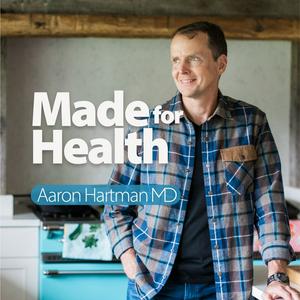
About Made for Health | Peptides | Lyme | Chronic Infections | Long Covid | Insulin Resistance | Hypermobility
You were made for health—vibrant, thriving, and full of possibility. But navigating today’s broken healthcare system, endless misinformation, and confusion can feel overwhelming. On Made for Health, Dr. Aaron Hartman cuts through the noise to deliver science-backed solutions that restore your health and reignite your hope.
Join us each week for expert insights, practical tips, and inspiring conversations that empower you to harness your body’s incredible power to heal. Whether you're seeking clarity, direction, or just a trusted voice, this podcast is your roadmap to the vibrant life you were made for.
Podcast websiteListen to Made for Health | Peptides | Lyme | Chronic Infections | Long Covid | Insulin Resistance | Hypermobility, The Mel Robbins Podcast and many other podcasts from around the world with the radio.net app
Get the free radio.net app
- Stations and podcasts to bookmark
- Stream via Wi-Fi or Bluetooth
- Supports Carplay & Android Auto
- Many other app features
Get the free radio.net app
- Stations and podcasts to bookmark
- Stream via Wi-Fi or Bluetooth
- Supports Carplay & Android Auto
- Many other app features

Made for Health | Peptides | Lyme | Chronic Infections | Long Covid | Insulin Resistance | Hypermobility
Scan code,
download the app,
start listening.
download the app,
start listening.
 Ireland
