

Listen to this podcast in the app for free: Download for free in the App Store
radio.net
Sleep timer
Save favourites
45 episodes
Nutrition Foundations for Hypermobility with Jennifer Parkinson
08/06/2026 | 35 mins.Host Dr. Libby Hinsley welcomes Jennifer Parkinson, a certified functional nutrition practitioner and founder of EDS Nutritionist, who supports people with Ehlers-Danlos Syndrome, MCAS, and POTS.
Jennifer shares her long journey from early joint pain, repeated shoulder surgeries, gut and gynecologic surgeries, dizziness and brain fog, and eventual EDS diagnosis after years of dismissal, to pursuing functional nutrition training. She explains differences among nutrition professionals, emphasizing individualized, root-cause approaches rather than one-size-fits-all diets.
Key themes include stabilizing blood sugar, assessing mineral patterns, histamine “bucket” concepts, and iron dysregulation. She also highlights how mineral balance can impact pain, muscle-building, and subluxations alongside physical therapy.
00:00 Welcome to Zebra Talks
00:35 Meet Jennifer Parkinson
01:50 Early Symptoms and Surgeries
03:50 Finally Naming EDS
06:09 Finding Functional Nutrition
09:35 Credentials and Training Paths
11:10 Nutrition Is Individual
12:48 Minerals Explained
15:04 Foundations Beyond Food
16:22 Sensitive Bodies and Normal Labs
17:55 Iron and Next Steps
18:00 Iron Testing Pitfalls
19:07 Iron Overload Clues
20:16 Liver Link to Iron
22:33 Liver Support Basics
23:36 Castor Oil Packs
24:46 Minerals and Blood Sugar
27:30 Protein and Meal Timing
29:22 Signs of Dysregulated Glucose
30:20 Minerals for Joint Stability
33:46 Whole Body Approach
34:17 Where to Find Jennifer
34:48 Final Wrap UpScoliosis and Hypermobility: Symptoms, Treatment, and Moving Without Fear with Dr. Laura Glazebrook
01/06/2026 | 28 mins.Host Dr. Libby Hinsley welcomes physical therapist Dr. Laura Glazebrook to discuss scoliosis, especially its overlap with hypermobility. Laura shares her own history of rapidly progressing scoliosis, undergoing a spinal fusion at age 11, and later realizing she likely falls on the hypermobility spectrum.
They review scoliosis prevalence in the general population, current thinking on adolescent development, and why Cobb angle doesn’t reliably predict pain. Glazebrook describes typical signs and symptoms and outlines scoliosis-specific exercise approaches like the Schroth method using breath, pressure management, and progressive stabilization. They discuss surgical thresholds (often >46°), evolving views on quality of life at higher angles, and counter fear-based messaging by emphasizing safe, individualized movement and strength.
00:00 Welcome to Zebra Talks
00:35 Meet Dr. Laura Glazebrook
02:04 Laura’s Scoliosis Story
04:12 Fusion Surgery Aftermath
04:56 How Common Is Scoliosis
06:14 Why Scoliosis Develops
07:58 Degrees vs Symptoms
09:46 Common Signs and Clues
12:02 Schroth Method Basics
14:48 What Improves With Therapy
16:17 When Surgery Is Considered
19:05 Fusion and Tethering Options
19:52 Hypermobility Overlap Patterns
22:05 Movement Fear and Confidence
25:08 Activity Myths Debunked
27:19 Where to Find Dr. Glazebrook
28:11 Final Thanks and GoodbyeBendy Menopause: Impacts of Hypermobility on Menopause with Vanessa Weiland
25/05/2026 | 36 mins.Dr. Libby Hinsley welcomes menopause specialist and nurse practitioner Vanessa Weiland, founder of Phases Clinic and creator of Bendy Menopause, who also has hypermobile EDS and MCAS.
Their conversation covers why hypermobility symptoms can shift with hormonal changes, how perimenopause is driven by fluctuating ovarian hormones, and why blood tests are often unhelpful in perimenopause except in specific situations. They discuss HRT in perimenopause, contraception considerations, benefits and risks of modern hormone therapy (including heart and bone health), and the possible role of testosterone. Vanessa emphasizes the importance of individualized symptom-based care, and notes nuances like MCAS sensitivity and progesterone intolerance.
00:00 Welcome to Zebra Talks
00:35 Meet Vanessa Weiland
01:16 Her Menopause Journey
03:53 Discovering hEDS
05:00 Hypermobility Meets Menopause
07:25 Why Symptoms Shift
10:35 Defining Perimenopause
12:48 Do Hormone Tests Help
14:26 HRT in Perimenopause
15:56 Tracking and Advocacy Tips
18:23 HRT Risks and Benefits
21:38 Bones and Brain Fog
24:58 Testosterone Talk
28:25 Avoiding Misinformation
33:36 Progesterone Intolerance
35:15 Where to Find Vanessa
36:02 Final Thanks and Wrap UpAbbey Phillipson on Visibility & Advocacy for Rare Types of EDS
18/05/2026 | 36 mins.Host Dr. Libby Hinsley interviews Abbey Phillipson, a classical Ehlers-Danlos syndrome (EDS) advocate and Paralympic strength and conditioning coach at the University of Michigan. Abbey shares her experience with early signs, diagnosis via genetics (COL5A1), and serious complications of Classical EDS.
She discusses why some rare EDS types may be diagnosed earlier yet still missed, de novo mutation rates, and definitions and prevalence of rare vs ultra-rare EDS types. Abbey describes founding the patient-led Collagen Advocacy Network to connect people with rare subtypes, critiques how growing EDS awareness can create misunderstanding of rare types, and proposes more nuanced naming to support individualized care amid anticipated 2026 criteria changes.
She also shares a bit about her inspiring work in adaptive sports and disability-inclusive fitness.
00:00 Welcome to Zebra Talks
00:35 Meet Abbey Phillipson
01:59 Classical EDS Diagnosis Story
04:07 Symptoms and Complications
05:55 When Rare Types Get Diagnosed
07:46 De Novo Mutations Explained
08:42 Rare vs Ultra Rare Prevalence
11:51 Building a Rare Types Group
13:21 Making Rare Real Together
14:36 Awareness Boom and Erasure
19:21 A More Nuanced Future
22:54 Renaming and Reorganizing EDS
26:34 Criteria Changes and 2026
30:58 Collagen Advocacy Network
32:08 Paralympic Coaching and Adaptive Sport
34:34 Strength Training and Joyful Movement
35:48 Final Thanks and GoodbyePelvic Floor Dysfunction & Hypermobility with Dr. Amy Stein
11/05/2026 | 35 mins.Host Dr. Libby Hinsley interviews pelvic floor physical therapist and author Dr. Amy Stein, founder of Beyond Basics Physical Therapy. Stein discusses the strong overlap she sees between hypermobility and pelvic floor dysfunction (estimating about 70% of her patients), including patterns of pelvic floor gripping used for stability, pelvic pain, prolapse, hernias, constipation/IBS symptoms, possible pelvic congestion, and bladder, bowel, and sexual dysfunction across all genders.
She emphasizes a multimodal approach: calming tissues, building stability gradually with isometrics and deep core work, modifying exercise, and prioritizing nervous system regulation and mindfulness. Stein also addresses perimenopause/menopause and their effects on symptoms, tissue elasticity, muscle health, and the role of hormone therapy and topical creams. She describes her Wellness By Nature CBD products and advises seeking experienced pelvic floor PTs with thorough assessment.
Highlights of this episode include:
00:00 Welcome to Zebra Talks
00:35 Meet Amy Stein
01:45 Hypermobility overlap
03:59 Amy’s bendy story
05:57 Common pelvic patterns
07:26 Multimodal treatment
09:47 Pelvic floor basics
12:07 Stability and exercise
15:35 Bowel and congestion
18:18 Perimenopause and hormones
22:48 Tissue changes and creams
24:18 CBD products explained
27:37 Lifestyle and whole body
31:27 Finding the right pelvic PT
33:40 Wrap up and resources
More Health & Wellness podcasts



Trending Health & Wellness podcasts




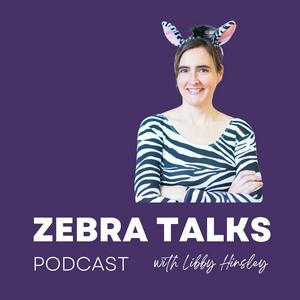
About Zebra Talks: Living Your Best Bendy Life
Dr Libby Hinsley and guests help people with hypermobility live their best bendy lives.
Podcast websiteListen to Zebra Talks: Living Your Best Bendy Life, The Good Glow and many other podcasts from around the world with the radio.net app
Get the free radio.net app
- Stations and podcasts to bookmark
- Stream via Wi-Fi or Bluetooth
- Supports Carplay & Android Auto
- Many other app features
Get the free radio.net app
- Stations and podcasts to bookmark
- Stream via Wi-Fi or Bluetooth
- Supports Carplay & Android Auto
- Many other app features
Zebra Talks: Living Your Best Bendy Life
Scan code,
download the app,
start listening.
download the app,
start listening.
 Ireland