

Listen to this podcast in the app for free: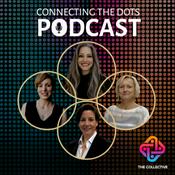 Download for free in the App Store
radio.net
Sleep timer
Save favourites
78 episodes
MIT Top 20 AI Startup Founder Dania Valladares Unpacks the AI Coaching Opportunity
04/10/2026 | 43 mins.Elite coaching has always been limited by the coach's calendar. Dania Valladares, founder of Agora Fitness and one of the top 20 startups selected at the AI Powered Women 2026 conference at MIT, is building AI agents trained on each coach's own methods. Her aim is for that expertise to reach clients who would never get a slot.
Jen Halsall co-hosts with Nathan Hyland of The Collective. Their guest is a software engineering leader whose career began with a computer science degree in Havana. Dania traces her path from Cuba to Mexico to engineering leadership in the US. She describes how her father's terminal diagnosis, arriving as she was expecting her first child, led her to Ashtanga yoga, meditation and breathwork, and to the mission behind Agora.
The conversation looks at why static PDFs and pre-recorded programmes have been the only way coaches could scale. Dania explains why she sees AI as the next digital surface after websites, social media and apps. She describes how a coach's agent is built from their client notes, programmes and ebooks, and how the agent questions the coach to find gaps in the method. Training, nutrition and biometric data then flow back to the coach, so the method keeps improving.
Jen and Nathan put the questions coaches and operators are asking. What does this mean for gyms where most members never buy personal training? How is quality protected when so much general guidance underserves women? How does a client's context carry across a team of coaches? Where does the agent stop and hand over to a human or a medical professional?
Chapters
00:00 Introduction
01:10 From Havana to engineering leadership in the US
03:42 A turning point: family, yoga and the mission behind Agora
05:45 The calendar bottleneck for coaches and clients
08:00 Why coaches rarely treat their offer as a product
09:54 AI as the next digital surface for coaching
12:04 What the experience looks like for the client
13:57 Personalisation, cohesion and how a coach's agent is built
17:50 Closing the feedback loop when life gets in the way
19:34 Building a team of coaches with one shared client context
21:16 What it means for gym operators
24:01 Quality control and the gaps in women's health guidance
27:53 Early feedback from coaches
31:28 Rethinking the hours-for-income model and trainer churn
33:48 When you can't make your session
34:22 Adherence and daily conversations with your coach
35:56 Scope of practice, guardrails and handing over to humans
38:05 Building in AI as a woman and Latina founder
40:35 Collective spotlight
41:56 Closing thoughts
Resources
Dania Valladares on LinkedIn: https://www.linkedin.com/in/dania-rosa-valladares/
Agora Fitness: https://agora.fitness
The Collective: https://wearethecollective.world
All episodes: https://wearethecollective.world/podcast
Connecting the Dots is the B2B podcast from The Collective, covering women's health, leadership and innovation across fitness, health and wellness.What Good Looks Like: Rebuilding the Fitness Professional Career Path, Part 2
28/09/2026 | 43 mins.In the second of two episodes on the fitness professional career path, part of The Collective's What Good Looks Like series, Jen Halsall continues playing boss of the world with Aimee Barry, Chief Operating Officer of Les Mills UK.
Aimee began on the operator side, working in women-only clubs in Australia, before moving to the UK and the supplier side of the industry. Her focus today is bringing more instructors into fitness and building better career pathways for them. She describes a disconnect at the heart of the problem. Operators say they cannot find enough instructors, while instructors say they cannot find the right work.
The conversation covers how people now enter the industry, from freelance routes to the academies that larger operators are building to train members and front-line staff from the ground up. Aimee sets out the foundation every new instructor needs, which is safety and quality, with continuing education built on top. Jen makes the case that education should be matched by progression in pay. Aimee argues that the industry undervalues group exercise because it rarely measures the return a great instructor brings through retention and referrals, and that measuring it is the route to fairer pay.
Jen and Aimee then turn to personal training and make the case for a hybrid fitness professional who teaches groups, trains clients and welcomes members at the door. Aimee describes a class she visited in Japan, where the instructor greeted more than a hundred participants by name and the experience continued over tea afterwards. They also discuss:
how to make qualification levels meaningful to members
why fitness departments are often under-resourced compared with operations and sales
which operators are getting it right
The episode closes with Aimee's plan for a new talent pipeline built with colleges and employers, and her spotlight on a young founder in her team.
Chapters
00:00 Welcome and episode framing
01:06 Aimee's path from operator to supplier
02:06 Why the career path is broken for every stakeholder
03:59 Group fitness vs personal training: what should instructors be paid for?
05:15 New routes in: operator academies and awareness
06:39 Is entry too easy? Safety, quality and continuing education
08:13 Linking education to pay
09:46 Fair pay and the shift to coaching and mind-body formats
11:22 Fitness as a side hustle for Gen Z
13:03 Measuring the return on a great instructor
14:46 What happens when group exercise disappears
17:36 Personal trainers at the front of the class
19:27 Breaking down the silos: the hybrid fitness professional
21:12 Hospitality and the first welcome
23:01 Lessons from a Japanese health club
25:21 Making qualification levels visible to members
29:08 Choice across mid-market and boutique
30:08 Resourcing the fitness department
32:42 Employed and freelance markets
33:43 Flipping the resourcing ratio for retention
34:21 Operators getting it right
36:35 Boss of the world: building a new talent pipeline
39:00 A people industry in the age of AI
39:41 Connecting the dots
41:40 Spotlight on women doing great work
42:33 Close
Resources
Aimee Barry on LinkedIn: linkedin.com/in/aimee-barry-94278128
The Collective: wearethecollective.world
More episodes: wearethecollective.world/podcastWhat Good Looks Like: Rebuilding the Fitness Professional Career Path, Part 1
28/09/2026 | 51 mins.In the first of two episodes on the fitness professional career path, part of The Collective's What Good Looks Like series, Jen Halsall plays boss of the world with Rosanna Tucker, founder and CEO of CoverMe, the workforce operating system built for health and fitness.
Rosanna has worked across the industry as a personal trainer, in sales, as a studio owner and now as a technology founder. She argues that the current system fails instructors, members and operators at once, and that the root cause is disconnection. Fitness professionals move between gyms, brands and roles with nothing that travels with them. Meanwhile, operators who can quote their cost per acquisition in seconds struggle to say who is teaching on Thursday.
Together they take apart the personal training model, from licence fees and commission-only pay to the sales playbooks that sent trainers to wait for members at the changing room door. Rosanna shares CoverMe's research into when members want personal training, which pointed to later in the membership than the traditional first fortnight. They also discuss:
matching members to trainers by skill rather than availability
why introductory sessions should be paid
how a portable, skills-based profile could open up hybrid roles combining group exercise, personal training and new work in recovery, travel and healthcare
On group exercise, the conversation turns to cover gaps, the unpaid hours behind every 45-minute class, and what cancelled classes do to a member's sense of value. Jen proposes a KPI that links class attendance to customer lifetime value. The episode closes with Rosanna's end-to-end design for hiring and developing fitness professionals, and her spotlight on four women shaping the industry.
Chapters
00:00 Welcome and episode framing
00:57 Rosanna's path from personal trainer to tech founder
03:08 Who counts as a fitness professional?
05:09 The red flags: a disconnected career path
08:12 Hybrid roles and the gig economy of group exercise
11:11 The licence model, selling pressure and trainer churn
13:24 Operators can't optimise what they can't see
14:18 The legacy sales playbook
16:58 When should a trainer meet a new member?
21:31 Matching member needs to trainer skills
23:22 Defining personal training and the cost-cutting trap
27:10 Staff churn and competition from longevity and preventative health
28:48 Fixing PT pay in employed and licence models
30:49 Member choice, quality and ratings
33:29 The influence of the freelance team
34:45 Group exercise: cover gaps and invisible preparation
39:57 A KPI for the value of a class
40:39 The hidden cost of cancelled classes
43:24 Boss of the world: designing the role end to end
47:31 Spotlight on women doing great work
50:14 Close
Resources
CoverMe: covermeapp.co
The Collective: wearethecollective.world
More episodes: wearethecollective.world/podcastThe Art of Flow- A Playbook for Time Management and Prioritisation
14/09/2026 | 28 mins.Rhea Serna trained in management accounting and spent her early career in bookkeeping and tax. When remote working opened up in 2020 she started picking up operations, systems and communications alongside the admin she had been hired for, and ended up in strategy. She is now a core team member of The Collective, working across several time zones at once.
In this episode she walks Jen Halsall de Wit through the system that keeps it all moving. She writes everything down. She breaks large pieces of work into smaller ones with room left to revise. She sorts a full list by deadline, by impact, and by who else is waiting on her before she touches anything.
She also shares the three questions she asks before taking on a task. Does this need to be done? Does it need to be done by me? Does it need to be done now?
Jen shares her own method for clearing a crowded head, and the two compare notes on what gets them from overwhelm back into function.
Chapters
00:00 Introduction
01:47 From accounting to strategy
04:46 Staying organised without a perfect system
06:58 Urgent, important, or neither
10:01 Much too much muchness
11:59 Brain dumps: notebooks, voice notes and AI
14:01 What to drop, delay or delegate
16:08 Where to start on a very long list
19:08 Wellness, energy and being more than your output
22:06 The next chapter
23:24 Trusting that the dots connect
26:01 Collective spotlight
Connecting the Dots is the podcast from The Collective. New episodes every Tuesday.
https://www.wearethecollective.world/podcast
Connect with Rhea: https://www.linkedin.com/in/rheagserna/Connection as Medicine: Discover Noēsis and the Unconference
11/09/2026 | 58 mins.Thomas Weidlich is the founder of Noēsis, the Longevity Collective, a peer mastermind for people building in longevity. He returns to Connecting the Dots almost a year after his first appearance to talk about what the collective has become, what he has failed to hand over, and why he is putting 40 people in a room in Budapest with no stage and no keynote speakers.
The middle of the episode is powerful. Weidlich describes spending five days a week alone with his laptop, spiralling on problems he could not solve, and how long it took him to tell his own community that he was struggling with loneliness again. He talks about co-regulation, about what changed within days of asking for help, and about the rational case for speaking up when you are stuck.
He is equally direct about where Noēsis has fallen short. A year in, membership has grown from 12 to nearly 30, but he is still the main builder, the pricing model does not sustain him full time, and the shift from creation to co-creation has not happened. Jennifer Halsall de Wit pushes on why that handover is so difficult for founders.
The Unconference in Budapest is his answer to a different problem. Every conference attendee names the same highlight, and it is never the keynote. So Weidlich has removed the stage entirely. Day one builds connection, day two turns that into work on live problems, day three is designed for integration. A clinician working on trauma healing measurement will take nervous system readings at the start and the end. The cap is 40 people, and he explains why the number is both a design decision and a room size.
On trends, Weidlich points to longevity hospitality as one of the fastest growing sub-sectors, to biotech as the field most likely to deliver interventions that beat the basics, and to the social wellness movement that Othership helped start. He takes on the argument that longevity has already peaked and become a word emptied of meaning. He also makes the case for mental health as the next large opening, with somatic therapy as the bridge between brain and body.
The episode closes with a high frequency human. Weidlich names Melissa Loseke Ablett, a Noēsis member working on peptide regulation and trauma healing.
Chapters
00:00 Welcome back
01:00 A village of 300 and what came after
04:00 The empty space in longevity
06:00 What Noēsis means
07:55 What makes a community a community
12:30 Loneliness, anxiety and co-regulation
15:40 Asking for help when belonging is your business
17:50 Stay stuck or change
20:05 One year in: what has worked
22:40 Creation versus co-creation
27:40 The Unconference in Budapest
29:45 Designing for the in-betweens
33:35 Why the cap is 40
36:35 The conference business model
39:05 Who it is for and how to apply
42:20 Hospitality, biotech and the peak longevity debate
46:45 Making healthy living mainstream
49:20 Overestimating the size of the market
53:20 Designing for people who are not in the marketing
56:25 High frequency human: Melissa Loseke Ablett
Resources
The Unconference, Budapest, 21 to 24 January 2027: https://noesis-longevity.com/unconference
Thomas Weidlich on LinkedIn: https://www.linkedin.com/in/thomasweidlich/
Noesis, the Longevity Collective: https://noesis-longevity.com/
Charles Vogl, The Art of Community: Seven Principles for Belonging
About Connecting the Dots
Connecting the Dots is the podcast from The Collective, a network of independent consultants working across fitness, wellness, nutrition, technology and supplements. New episodes every Tuesday.
All episodes: https://www.wearethecollective.world/podcast
More Business podcasts
Trending Business podcasts






About Connecting the Dots by The Collective
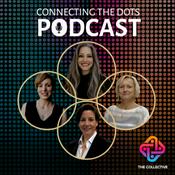
Connecting the Dots by The Collective is a podcast exploring business-to-business strategy through the lens of sport, science, and innovation. Each series focuses on a different theme, pairing guests from diverse sectors to uncover insights, tackle challenges, and share what’s driving impact across industries. Our latest series dives into longevity and regenerative health, spotlighting science-backed B2B solutions shaping the future of preventative care.
Podcast websiteListen to Connecting the Dots by The Collective, Unhedged and many other podcasts from around the world with the radio.net app
Get the free radio.net app
- Stations and podcasts to bookmark
- Stream via Wi-Fi or Bluetooth
- Supports Carplay & Android Auto
- Many other app features
Get the free radio.net app
- Stations and podcasts to bookmark
- Stream via Wi-Fi or Bluetooth
- Supports Carplay & Android Auto
- Many other app features

Connecting the Dots by The Collective
Scan code,
download the app,
start listening.
download the app,
start listening.
Connecting the Dots by The Collective: Podcasts in Family
 Ireland