
Listen to this podcast in the app for free: Download for free in the App Store
radio.net
Sleep timer
Save favourites
102 episodes
I Sold My House to Make a Horse Docu-Series UNBRIDLED | Noëlle Floyd with Yellowstone's Jen Landon
20/10/2026 | 26 mins.What does it cost to go and find out who you are?
For me, it cost a house.
I sold mine to travel 25,000 miles across North America with my horses, Lady and G, and I filmed all of it. That road became Unbridled, a six-part horse documentary series. Episodes 1 and 2 are on YouTube now.
This time the microphone turned around.
Jen Landon, actor, Yellowstone cast member, horsewoman, and the person who owns Shorty, took the host's chair and asked me the questions I usually ask everyone else.
She asked why I nearly stopped filming. So many times on that trip I looked at the footage and heard the same three sentences. I'm not good enough. This isn't good enough. No one's gonna care.
I kept the cameras rolling anyway. I'm so glad I did.
Jen tells the story of how Unbridled reached her. My husband, Ben, looked at me and made me promise to send it to her. I thought that was gauche. I sent it. She planned to watch two episodes as a favor to a new friend, and she watched the whole season.
She compared it to Chef's Table. Jen calls herself a bad cook, and she still walked away from every episode of that show with something for her own life and her craft as an actor. She says Unbridled did the same for her. The horses are the backdrop for a bigger lesson.
That is my hope for this horse documentary. That someone who has lived their whole life away from horses watches it and sees who I became because of the way Lady and G live as horses, every single day.
We talk about process-based horsemanship and outcome-based horsemanship, and how far that idea reaches past the arena.
"If you focus on the process, then the outcome is more expansive than you could possibly imagine. But if you focus on the outcome, then you're limited to the outcome you can imagine as the person you are in the moment."
Then we go to Texas.
Florida humbled me. I left it feeling small. And then I cut cows with Lyndi Birch and Barbra Schulte, on Jen's own horse, Shorty, who carried me like the all-star he is. Barbra is nurture. Lyndi is nature. Two sides of one coin, and between them I learned what I now call cowgirl confidence. Thinking confident is one thing. Being confident lives in the body.
Jen adds the piece I keep coming back to. Cowgirl confidence has fun in it.
When you sell the house, where do you find home?
Inside ourselves. In our horses. In the people who show up for us.
If you have a big, scary dream, you are more capable than you think. And you will be amazed by the allies, the people and the animals, who arrive to support you on your hero's journey.
Episodes 1 and 2 of Unbridled are on my YouTube channel. Episodes 3 through 6 live on NF+, and you can buy Season 1 on its own, separate from membership. Episode 4 is Texas: Shorty, the cows, Lyndiy and Barbra.
Watch Unbridled Episodes 1: https://youtu.be/XI6lxdaSM7Y
and Episode 2: https://youtu.be/X0xOcksn7TQ
Buy Unbridled all 6 Episodes of Season 1 on NF+: https://noellefloyd.com/pages/noelle-floyd-unbridled
Watch the trailer: https://youtu.be/IpBkLxUk8AA
About Jen
Jen Landon is an actor and horsewoman known to Yellowstone audiences. She worked cattle on her horse, Shorty, between takes on the Yellowstone set, and Shorty appears in Unbridled Episode 4 in Texas with Lyndy Burch and Barbra Schulte. She is a recent NF+ member who watches lessons before heading to the barn.
Episodee Sponsored by: YETI
Made for early mornings in the barn and long days in the saddle. Whether you're hauling feed, chasing daylight on the trail, or loading up for a weekend on the road, YETI coolers and drinkware are built to handle it.
No shortcuts. No compromise.
Just gear that works as hard as you do.
Explore more at YETI.com | @YETI | facebook.com/YETI
Interested in more from Noëlle?
Noëlle's writing again — head to her Substack for essays, observations, and the kind of thinking that doesn't fit in an episode. https://noellefloyd.substack.com
Every episode is also on YouTube, where the conversation continues in the comments.
https://www.youtube.com/@noellefloyd_plus
And if you're ready to go deeper, NF+ is where the real work happens — masterclasses, curated content, and a community that takes horses seriously. https://noellefloydplus.com
You can also download the app - NF+ App
Thank you for your listening!The Real Reason I Walked Away From Horses | UNBRIDLED Official Trailer
13/10/2026 | 1 mins.Is the horse-human bond the ultimate secret to better training?
Watch the trailer as professional horsewoman Noëlle Floyd launches her new six-part documentary series NOËLLE FLOYD: UNBRIDLED.
🐴 Subscribe for more horse training & equestrian insights:
https://noellefloyd.com
💻 Catch the SEASON PREMIERE on Youtube MONDAY, OCTOBER 19 AT 4PM ET and binge the whole season! at NF+ https://noellefloyd.com/pages/noelle-floyd-unbridled
Created and hosted by Noëlle Floyd, this groundbreaking documentary series explores the deep connection between horse and rider through adventure, master class training, and essential equestrian skills.
Discover powerful answers and insights that have the potential to completely transform the equestrian community.
Interested in more from Noëlle?
Noëlle's writing again — head to her Substack for essays, observations, and the kind of thinking that doesn't fit in an episode. https://noellefloyd.substack.com
Every episode is also on YouTube, where the conversation continues in the comments.
https://www.youtube.com/@noellefloyd_plus
And if you're ready to go deeper, NF+ is where the real work happens — masterclasses, curated content, and a community that takes horses seriously. https://noellefloydplus.com
You can also download the app - NF+ App
Thank you for your listening!When the Bridle Comes Off, the Truth Comes Out | A Letter to Lady (Unbridled)
06/10/2026 | 15 mins.I wrote my mare a letter the day she came to me. Out in the field with her, with G grazing nearby, I read it to her out loud for the first time. It is the most honest thing I have said about horsemanship in fourteen years.
Fourteen years I spent interviewing the horse world's best — the trainers and riders everyone turns to for answers. Then Lady arrived, more wild than tame, and I stepped in front of the camera to say the one thing the interviewer's chair never let me say: I don't know.
That admission is where Unbridled begins.
This is the solo letter underneath the whole series — the private writing that became the reason I made it. Lady came to me more questioning than compliant, unwilling to perform a smaller version of herself for anyone's comfort. Loving her made it impossible to stay safely behind the microphone. She asked me harder questions than any guest ever had. Not "can you make me do this," but "how can you meet me if you will not meet yourself?"
Somewhere in there my horsemanship began to change, and so did I. I call it rewilding — taking the bridle off my horse and the invisible one off myself at once. Fit in. Obey. Be manageable. Do not become too much. Lady answers every one of those instructions by simply being who she is.
When the bridle comes off, the truth comes out. Without the equipment and the familiar measures of success, what remains? Two bodies. Two nervous systems. Two living beings trying to understand each other across the line between species.
This letter is about worthiness — and how Lady taught me it was never a thing I earn by knowing enough. It lives in the willingness to listen, to repair, to begin again.
If you have ever loved a horse who would not let you hide, this one is for you.
Unbridled is a six-part series following me and my horses across North America, asking whether partnership can go somewhere freer than control. Lady is the reason it exists.
▶️ Watch Unbridled — Catch the SEASON PREMIERE on Youtube MONDAY, OCTOBER 19 AT 4PM ET
and binge the whole season! at NF+ https://noellefloyd.com/pages/noelle-floyd-unbridled
In This Episode:
Why she almost didn't make Unbridled — the fear that fourteen years of interviews still left her unworthy of her own horse.
The gap between a horse obeying you and a horse choosing you, and why only one survives the bridle coming off.
What Lady asks that no technique can answer: how can you meet me if you will not meet yourself?
Rewilding horsemanship — taking the restraints off the horse and off yourself in the same motion.
Why "I don't know" became the beginning of her authority instead of the end of it.
The promises she wrote to a horse she had dreamed about before they ever met.
Chapters :
0:00 — Out in the field with Lady (and G)
1:00 — Why she writes letters to her horses
2:31 — "Dear Lady" — the letter begins
3:52 — The mare unlike any she'd met
5:10 — When the bridle comes off, the truth comes out
8:00 — Rewilding her horsemanship, rewilding herself
9:00 — The Fool, the threshold, the heroine's journey
11:37 — What Unbridled actually became
13:02 — "You did not come here to heal me"
14:50 — Worthiness, and the horsewoman she's becoming
Interested in more from Noëlle?
Noëlle's writing again — head to her Substack for essays, observations, and the kind of thinking that doesn't fit in an episode. https://noellefloyd.substack.com
Every episode is also on YouTube, where the conversation continues in the comments.
https://www.youtube.com/@noellefloyd_plus
And if you're ready to go deeper, NF+ is where the real work happens — masterclasses, curated content, and a community that takes horses seriously. https://noellefloydplus.com
You can also download the app - NF+ App
Thank you for your listening!The Horse Husband: How Evan Went From Terrified to the Barn Every Day ] No Stupid Questions with Evan the Groom
29/09/2026 | 55 mins.The same patience it takes to earn a horse's trust is the patience Evan the Groom brings to teaching the rest of us. He came to horses the way most people never do — from the outside, with no background, terrified of the biggest one in the barn — and turned that beginner's-eye view into an education. Today he does the horse grooming and horse care in his wife's dressage business, and the horse world knows him as the viral comedian who makes the barn make sense to people who have never touched a horse.
This is a No Stupid Questions episode, and it is one of my favorites we have done. Evan explains horses the way he once needed them explained to him — no jargon, no ego, just plain answers to the things beginners are too embarrassed to ask out loud.
He was an engineer turning algae into protein. Then marketing. Then the pandemic took his job, his wife Ashley needed help at the barn, and he picked up a camera. The videos were meant to make his own family laugh — people who knew nothing about horses. Instead they built a following, and somewhere in there Evan became something he never trained to be: an educator.
We get into the skill he rates above all others and hears discussed least — observation, watching for the thing that is off today — and how six years of it on the ground is only now showing up in the saddle. His advice for every "horse husband" and non-horse partner out there: just support that. Why he would rather make a video so ridiculous you remember it than one only horse people understand, and how a loogie teaches you the word "hock." The groom's real job when no one is watching: being the horse's constant. And the mare who taught him the most — a year to earn her trust, and then, he says, she gives you everything.
There is also a talking pony named Piper, a children's book about a lost little bird, and — as of last week — his first ride off the lunge line.
If someone in your life doesn't understand the horse thing — or if you're the one at the rail — send them this.
Evan is a groom, content creator, and horse-care specialist in Southern California, where he works alongside his wife, dressage trainer Ashley Donant. He built his following making horses funny and reachable for people who have never touched one.
Total Feeds
Our mission to provide quality nutrition to people and animals puts us in contact with all manner of interesting folks. Whether you're interested in our animal feed, or the people involved in the animal industry: you'll find it at Total Feeds!
Check out our line of Quality Animal Feeds here: https://totalfeeds.com
Interested in more from Noëlle?
Noëlle's writing again — head to her Substack for essays, observations, and the kind of thinking that doesn't fit in an episode. https://noellefloyd.substack.com
Every episode is also on YouTube, where the conversation continues in the comments.
https://www.youtube.com/@noellefloyd_plus
And if you're ready to go deeper, NF+ is where the real work happens — masterclasses, curated content, and a community that takes horses seriously. https://noellefloydplus.com
You can also download the app - NF+ App
Thank you for your listening!How Steffen Peters Trains a Horse: Self-Carriage, Groundwork & a New Stallion (Part 2)
21/09/2026 | 53 mins.A horse has two choices. Learn to accept the bit, or fight it for the rest of its life.
That's Steffen Peters, and this is the half where his hands are on the reins. If you heard Part 1, you met the man — six Olympics, the dark place, the way back. This one is the horse training — the groundwork up through Grand Prix. Forty years of it, distilled into the way he starts a five-year-old and the way he brought a brand-new stallion into the ring after two weeks together.
Here's the thing that runs through all of it: he doesn't push a horse into the bridle. Ever. He thinks ninety-five percent of horses are ridden with too much contact, and he'll tell you why "more hind legs, more into the hand" was never the answer for him. What he wants is suppleness, self-carriage, lightness — a soft rein you can see, and a horse that carries itself instead of leaning on your hand.
We get into where that starts, and it is earlier than you would think. The groundwork — on a lead rope, in a halter — the horse that stops when you stop without a pull on the rope. He calls it cooperation, not submission, and he means the difference exactly. From there it's the walk work most riders rush past, the half halt that becomes a reflex, the spur as a reminder and never a crutch, and the three aids he says are the only tools you really have.
There's the new stallion — fourteen, extremely smart, the horse that trained his rider to say "don't quit." There's Totilas, and what it takes to watch someone beat you and mean it when you call it good. And there's the compliment two vets paid him without knowing he could hear: at Steffen's barn, they can't make any money — because of the walk breaks, and what they save.
If Part 1 was how he learned to manage himself, this is how he manages the conversation with the horse. Same man. Now the method.
Steffen Peters is a German-born American dressage rider, a six-time Olympian and multiple Olympic medalist, and one of the most decorated dressage athletes in United States history. He returned to competition this year, opening his season aboard a new stallion with wins across the Prix St. Georges, the Intermediaire I, and the Grand Prix.
Chapters:
0:00 Riding Becomes Training
01:39 Flow State With New Stallion
02:19 Suppleness Over Hind Legs
04:37 Stop the Nagging Leg
05:52 Feel Over Looks
08:16 How Much Contact
11:57 Western Lightness Lessons
13:45 Warmup Is Training
17:30 Mindful Aids and Tools
20:38 Reliable Tests and Nerves
22:32 Refining Pressure Release
25:05 Walk Work and Discipline
27:12 Quiet Coaching Shift
27:54 Trainer Judge Clinics
29:06 From Thinking To Reflex
31:02 Flow State In Competition
34:09 Building Presence On Ground
37:46 Mindfulness In Daily Life
41:04 Rapid Fire Questions
47:59 New Stallion Partnership
50:26 Walk Breaks And Longevity
Want to go deeper into the training behind a clean, confident flying change?
In his new NOËLLE FLOYD Masterclass, six-time Olympian Steffen Peters breaks down the entire process—from developing the right canter, balance and response to the aids to introducing the change and troubleshooting tension, anticipation, crookedness and changes that are late behind.
Learn more and watch Training the Flying Change with Steffen Peters:
https://noellefloyd.com/pages/flying-changes-with-steffen-peters
Interested in more from Noëlle?
Noëlle's writing again — head to her Substack for essays, observations, and the kind of thinking that doesn't fit in an episode. https://noellefloyd.substack.com
Every episode is also on YouTube, where the conversation continues in the comments.
https://www.youtube.com/@noellefloyd_plus
And if you're ready to go deeper, NF+ is where the real work happens — masterclasses, curated content, and a community that takes horses seriously. https://noellefloydplus.com
You can also download the app - NF+ App
Thank you for your listening!
More Education podcasts
Trending Education podcasts


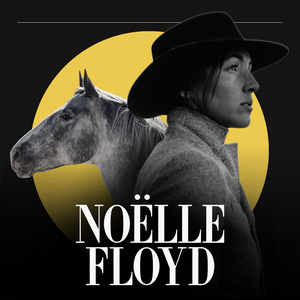
About The NOËLLE FLOYD Podcast
Join Noëlle each week, as she embarks on a journey to explore the vast and diverse world of horses, delving into the many sub-communities and cultures that shape our shared passion.
This podcast is about more than just riding styles or training techniques; it's about celebrating the deep connection between humans and horses, and understanding the common threads that tie us together.
Whether you're a seasoned rider or just starting out, you'll find inspiration, knowledge, and a sense of belonging in every episode.
Subscribe or follow, wherever you get your podcasts with episodes dropping weekly.
Podcast websiteListen to The NOËLLE FLOYD Podcast, The Mel Robbins Podcast and many other podcasts from around the world with the radio.net app
Get the free radio.net app
- Stations and podcasts to bookmark
- Stream via Wi-Fi or Bluetooth
- Supports Carplay & Android Auto
- Many other app features
Get the free radio.net app
- Stations and podcasts to bookmark
- Stream via Wi-Fi or Bluetooth
- Supports Carplay & Android Auto
- Many other app features

The NOËLLE FLOYD Podcast
Scan code,
download the app,
start listening.
download the app,
start listening.
 Ireland
