

Listen to this podcast in the app for free: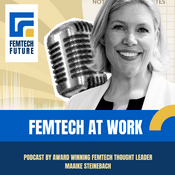 Download for free in the App Store
radio.net
Sleep timer
Save favourites
82 episodes
How a Startmate Launch Club Founder Built an AI Companion to Help Mothers Skip the Doomscroll
30/07/2026 | 21 mins.Most new mothers aren't short on information about pregnancy and birth, they're drowning in it, and that's the real problem this episode of Femtech At Work Podcast digs into. Gemma Campbell, founder of the motherhood app Mae, joins us to talk about what happens when a lonely, fragmented birth experience becomes the spark for a startup.
If you've ever felt like the "village" mothers talk about just isn't there anymore, this one will stay with you.
Key Takeaways:
Why does Gemma believe new mothers aren't ill-informed, but overwhelmed by something else entirely
Discover the moment that convinced Gemma that an information app is needed to feel like a warm conversation, not a search engine.
Find out how being picked for Startmate’s pre-accelerator Launch Club completely reshaped how Gemma built Mae
What made Gemma abandon her "ship fast" plan for Mae and launch a totally different product instead
Learn why Gemma calls the solo founder journey "the ultimate hustle" and what keeps her going through it
Resources:
Gemma Campbell: LinkedIn
Mae: LinkedIn | Tiktok | Instagram
Mae: askmae.app/
Pearl: pearlbirth.com
Pearl: Instagram
Maaike Steinebach: LinkedIn
Website Femtech Future: femtechfuture.com
Instagram Femtech Future: @femtech_future
If any of this made you nod along, the late nights, the information overload, the feeling of doing it all alone, please know you're not the only one, and conversations like this exist so you never have to feel that way for long. If Gemma's story gave you even a little comfort or a new way to think about your own journey, the kindest thing you can do is leave a 5-star review, like and share this with your network because it genuinely helps more mothers and more founders like Gemma find this show. Thank you so much for being here!Pelvic Organ Prolapse Recovery: Why 40% of Women Still Suffer Years Later
16/07/2026 | 32 mins.She burst into tears the first time she tried on pelvic floor support wear that was supposed to help her — instead, it fell off and left her in more pain.
On this episode of Femtech At Work, a women's health innovation podcast, Rosie Dumbrell, Founder of Everform Therapywear and a pelvic-health-trained physiotherapist, shares how that moment set her on a five-year journey to build something better. If you're building something in femtech, watch closely — Rosie's story is a real lesson in solving a problem nobody else wanted to touch. And her honesty about what it's cost her, personally, is the kind of thing that sticks with you long after you've stopped listening.
Key Takeaways:
Why do most postpartum compression garments actually make pelvic floor symptoms worse instead of better
Discover what happened when Rosie pitched incontinence and pelvic pain to a room of fifty male investors
Find out how one dismissed GP appointment led a physio to diagnose her own perimenopause at 42
Learn why teenage gymnasts and AFLW athletes face a surprisingly high risk of leaking, even without giving birth
What percentage of Australian women are still living with pelvic floor problems years after having their babies
Resources:
Rosie Dumbrell: LinkedIn
Everform: LinkedIn | Instagram
Everform: everformwear.com.au/
Maaike Steinebach: LinkedIn
Website Femtech Future: femtechfuture.com
Instagram Femtech Future: @femtech_future
If any part of Rosie's story landed for you- the fear of being dismissed, the exhaustion of advocating for your own body, the relief of finally being believed, you are far from the only one who's felt that way, and this show exists because those stories deserve to be told out loud. If this episode gave you that feeling, the best way to help us reach more women who need to hear it is to leave a 5-star review on whatever platform you're listening on, share with a friend and your network, and then subscribe so you never miss the next founder's story. Thank you so much for being here. See you next week.From Crippling Anxiety to a 700K Community-Funded App
09/07/2026 | 33 mins.On this episode of Femtech At Work, Mary Doube, civil engineer turned competitive strongwoman and co-founder/CEO of Aviiana, shares how being told her crippling perimenopause symptoms were "trauma" pushed her to build the app she couldn't find anywhere else. After VCs passed, Mary and her co-founder turned to their community, raising $700,000 in a crowdfunding round that closed in 48 hours flat. Now backed by a health-tech growth partner, Aviiana is building a women's health innovation platform combining a symptom tracker, a doctor-ready health passport, and a vetted directory of professionals. This is a masterclass in investing in women's healthcare — not from a boardroom, but from a mum of three who nearly didn't make it through her own perimenopause. If you've ever been told you're "fine" while your body says otherwise, you need to hear this.
Key Takeaways:
Why did one doctor's diagnosis send this founder into a mental health crisis instead of an answer?
Find out how a civil engineer with no medical background ended up building a health tech platform used by thousands of women
Discover what happened in the 48 hours after this founder asked her community for money instead of investors
What did the VCs get wrong when they passed on funding this founder — twice?
Use this founder's story to rethink what you assume about your own "unexplained" symptoms
Resources:
Mary Doube: LinkedIn
Aviiana: LinkedIn
Aviiana: LinkedIn | Instagram | Facebook |
Aviiana: aviiana.com.au/
Maaike Steinebach: LinkedIn
Website Femtech Future: femtechfuture.com
Instagram Femtech Future: @femtech_future
If this episode made you sit with the memory of a doctor telling you "you're fine" while your body was screaming otherwise, you are not alone, and you are not imagining it — Mary's story is proof that the answers exist even when the system hasn't caught up yet, and if this conversation gave you even a flicker of recognition, do one thing right now: leave a 5-star review on whatever platform you're listening on, because it takes 30 seconds and it's the single most powerful way to help Femtech At Work reach the women who need to hear a story like Mary's, so subscribe on Spotify or Apple Podcasts so you never miss a founder story like this one, and thank you so much for being here. See you next week.Women's Metabolic Health: The CGM Platform Fixing What Healthcare System Ignores
02/07/2026 | 40 mins.What happens when one of Australia's leading integrative GPs starts scaling women's metabolic health to thousands? Dr. Michelle Woolhouse, founding medical doctor at Vively and author of The Wonder Within, joins Femtech At Work to answer exactly that.
The healthcare system is built for disease management, not for the woman who feels exhausted, hormonally stuck, and told she is fine when she knows something is deeply wrong. Dr. Michelle spent 25 years in integrative medicine, watching this play out, and built something different. Vively combines CGMs, personalized blood testing, and lifestyle coaching, and with 8,500 members and 2,500 active in coaching, holistic data-driven care for women is proving it can scale.
If diets have failed you and your doctor has dismissed you, this is the femtech conversation that changes the way you think about your health.
Key Takeaways:
Why does your body keep fighting back, no matter how clean you eat, how hard you train, or how disciplined you think you are
Discover what the healthcare system you have trusted your whole life was actually built to do and why your long-term health may never have been the real priority
Find out how a pattern millions of women have called a personal weakness their entire lives might finally have a biological, data-driven explanation that changes everything
Learn what a real model of preventative care for women actually looks like and why it looks nothing like what most of us have ever had access to
What is the one tool you can start using right now to finally understand what is actually happening inside your own body and why the results might surprise you
Resources:
Michelle Woolhouse: LinkedIn
Vively: LinkedIn
Vively: Instagram
Vively: vively.com.au/
The Wonder Within by Dr. Michelle Woolhouse : Buy here
Maaike Steinebach: LinkedIn
Website Femtech Future: https://www.femtechfuture.com
Instagram Femtech Future: @femtech_future
You just spent time inside a conversation that most women will never find and that matters. Every episode of Femtech At Work exists because founders like Dr. Michelle are doing the work, and because listeners like you keep showing up to hear it.
If something in this episode stayed with you — a question it raised, a shift it started, a thought you cannot stop thinking about — turn that into one action right now. Leave a 5-star review on whatever platform you are listening on. It takes 30 seconds, and it is how Femtech At Work keeps finding and amplifying the voices that women across Asia actually need to hear. Subscribe on Spotify or Apple Podcasts so the next conversation reaches you first — and thank you so much for being here. See you next week.Progressive Period Care and the Problem Nobody Was Solving: Mia Klitsas on Innovation in Women's Health through Moxie
25/06/2026 | 39 mins.It started with a lone tampon rolling around at the bottom of a handbag. That was the moment,
Mia Klitsas, the Co-founder of Moxie, Australia's progressive period care brand on a mission to make women feel genuinely seen through products that are functional, beautiful, and built around real needs that have been overlooked for far too long.
In this episode, Mia takes us behind twenty-one years of building a brand from the ground up, bootstrapped, battle-tested, and unapologetically focused on women. From cracking major retail at 22 with nothing but cold calls and conviction, to developing Australia's first purpose-built pad for endometriosis, there is a lot in this conversation that goes well beyond period care.
If you are building something, selling something, or simply trying to understand what it really takes to create a product women actually need, the answers are in here. Let’s dive in!
Key Takeaways:
Find out how a tampon rolling around in a handbag sparked a business idea that a 21-year-old turned into a launch in just six months with nothing but guts, cold calls, and a dog-with-a-bone attitude
Discover why Moxie calls itself progressive period care and what that actually means when it comes to the way they talk about women's bodies, periods, and pain
Learn what Mia personally uncovered when she sat down with 43 people living with endometriosis, and why what she heard completely changed how Moxie thinks about product development
Find out what Australia's first purpose-built pad for endometriosis actually does differently
Find out why Mia believes the future of women's health innovation isn't just about building products for women and the two words that she thinks should sit at the centre of every founder's process
Find out why Mia thinks most people building in women's health are still getting it fundamentally wrong and the uncomfortable truth she's not afraid to say out loud
Resources:
Mia Klitsas: LinkedIn
Moxie: Instagram | TikTok | YouTube
Moxie: Website
Maaike Steinebach: LinkedIn
Website Femtech Future: https://www.femtechfuture.com
Instagram Femtech Future: @femtech_future
Mia didn't wait for permission to change the conversation around periods, she just started having it. Loudly, honestly, and without apology. And in doing so, she built something that millions of women around the world didn't even know they were waiting for. That's what happens when you stop designing around what's comfortable and start designing around what's real.
If this episode resonated with you, share it with a woman in your life who deserves to feel seen in her health. Like it, leave a review, and help us keep amplifying the founders who are quietly and not so quietly changing the face of women's health. See you next week for another episode of Femtech At Work.
More Business podcasts









Trending Business podcasts





















About Femtech At Work
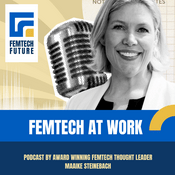
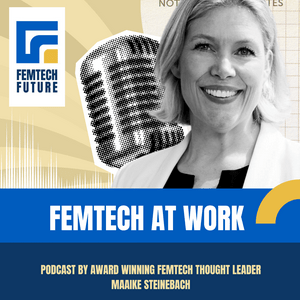
Femtech At Work is a new podcast that showcases inspiring femtech founders, corporate champions of women’s health in the workplace, and ecosystem innovators. Starting off in Hong Kong we will travel across Asia and Oceania and the rest of the world to explore the most innovative new women’s health solutions around reproductive health and diseases that disproportionately affect women, talk about the challenges and opportunities of starting a women’s health company and the role of the workplace for impact and change.
Podcast websiteListen to Femtech At Work, The Entrepreneur Experiment and many other podcasts from around the world with the radio.net app
Get the free radio.net app
- Stations and podcasts to bookmark
- Stream via Wi-Fi or Bluetooth
- Supports Carplay & Android Auto
- Many other app features
Get the free radio.net app
- Stations and podcasts to bookmark
- Stream via Wi-Fi or Bluetooth
- Supports Carplay & Android Auto
- Many other app features

Femtech At Work
Scan code,
download the app,
start listening.
download the app,
start listening.
 Ireland