
Listen to this podcast in the app for free: Download for free in the App Store
radio.net
Sleep timer
Save favourites
161 episodes
162. How to Prepare for Daylight Savings Time With a Vestibular Disorder
20/10/2026If you hadn’t heard yet, Daylight Saving Time is coming up on November 1st. If you have a vestibular disorder, that one-hour shift can do a number on your routine, sleep, and symptoms.
I don’t want you or your vestibular system to be caught off guard, which is why I share this info twice a year.
In this episode, I’m walking through exactly how to prepare for the Fall time change in a way that makes sense for your body—with gradual shifts, routine modifications, and practical prep so the morning-of you’re not feeling like your whole world’s been thrown off.
In this episode, we’ll dig into:
How “gaining” an hour can still negatively affect your health
Why consistency in wake and sleep time matters so much with a vestibular disorder
How to effectively shift your schedule gradually leading up to the time change
How prepping the night before can be supportive
Practical modifications for the week of the time change
How this approach can also work for the Spring time change and travel across time zones
Remember: start small, stay consistent, and your body will thank you.
Links Mentioned:
Vestibular Group Fit (code GROUNDED at checkout for 15% off!): https://thevertigodoctor.com/vestibular-group-fit
Free Resources:
The 4 Steps to Managing Vestibular Migraine: https://thevertigodoctor.myflodesk.com/cb5js0y78n
The PPPD Management Masterclass: https://thevertigodoctor.myflodesk.com/new-pppd
What your Partner Should Know About Living with Dizziness: https://thevertigodoctor.myflodesk.com/partnership
The FREE Mini VGFit Workout: https://thevertigodoctor.myflodesk.com/minifit
The FREE POTS – safe Workouts: https://thevertigodoctor.myflodesk.com/pots
Connect with Dr. Madison (@TheVertigoDoctor): https://instagram.com/thevertigodoctor
Work with Dr. Madison:
For 1:1 Vestibular Rehabilitation Therapy, email madison@thevertigodoctor.com
Otherwise, I’ll see ya in Vestibular Group Fit!
Connect with Dr. Jenna (@dizzy.rehab.therapist): https://www.instagram.com/dizzy.rehab.therapist/
Learn about the Oak Method: http://thevertigodoctor.com/why-vestibular-group-fit
Love what you heard?
Consider leaving a review on your favorite podcast platform to help us reach more vestibular warriors like you!
This podcast is for informational purposes only and may not be the best fit for you and your personal situation. It shall not be construed as medical advice. The information and education provided here is not intended or implied to supplement or replace professional medical treatment, advice, and/or diagnosis. Always check with your own physician or medical professional before trying or implementing any information read here.
how to prepare for daylight savings time, end of daylight saving time, start of daylight saving time, vestibular migraine, VM, dizziness, PPPD, living with vestibular disorder, vestibular group fit, VGF, lifestyle changes, living with chronic illness, mindfulness for chronic illness161. Activities With Family When You Have a Vestibular Disorder
13/10/2026One of the most common things I hear from people with vestibular disorders is how hard it feels to do things with family (especially kids).
You want to be present, you want to participate, but you’re also trying to manage your symptoms and not make things worse. In this episode, I’m sharing a list of ideas to have on hand for those moments.
Whether you’re having a higher symptom day or an easier one, these activities are designed to be low-demand, flexible, and (gasp) fun! Save this episode, come back to it, and remember, you’ve got this.
In this episode, we’ll dig into:
Tips for making movie night more manageable
Card games for lower symptom days
Easy painting and drawing activities
Options for building or scrapbooking
Cooking and food-related ideas
Instagram accounts to follow for more ideas
Showing up, in whatever way you can, is more than enough for those who love and care about you.
Related Episodes:
Go-To Activity List for High Symptom Days: https://thevertigodoctor.com/podcast/152-activity-list-for-high-symptom-days-living-with-vestibular-disorder/
Links Mentioned:
Vestibular Group Fit (code GROUNDED at checkout for 15% off!): https://thevertigodoctor.com/vestibular-group-fit
Loops: https://amzn.to/4kbPhPa
CampSnap digital camera: https://www.campsnapphoto.com/
Kiwi Co subscription boxes: https://www.kiwico.com/
Crunch Labs build-a-box subscription: https://www.crunchlabs.com/products/build-box-subscription
Petals and Profanity coloring book: https://amzn.to/49VMBTC
Card games:
Sagrada board game: https://amzn.to/4fMGN2l
Carcassonne board game: https://amzn.to/4ejqbgk
Flip 7 card game: https://amzn.to/4vHK5su
Five Crowns card game: https://amzn.to/44bNuUw
Instagram accounts to follow:
https://www.instagram.com/heyazka/
https://www.instagram.com/brambila_bits/
https://www.instagram.com/parentingwithmigraine
Free Resources:
The 4 Steps to Managing Vestibular Migraine: https://thevertigodoctor.myflodesk.com/cb5js0y78n
The PPPD Management Masterclass: https://thevertigodoctor.myflodesk.com/new-pppd
What your Partner Should Know About Living with Dizziness: https://thevertigodoctor.myflodesk.com/partnership
The FREE Mini VGFit Workout: https://thevertigodoctor.myflodesk.com/minifit
The FREE POTS – safe Workouts: https://thevertigodoctor.myflodesk.com/pots
Connect with Dr. Madison (@TheVertigoDoctor): https://instagram.com/thevertigodoctor
Work with Dr. Madison:
For 1:1 Vestibular Rehabilitation Therapy, email madison@thevertigodoctor.com
Otherwise, I’ll see ya in Vestibular Group Fit!
Connect with Dr. Jenna (@dizzy.rehab.therapist): https://www.instagram.com/dizzy.rehab.therapist/
Learn about the Oak Method: http://thevertigodoctor.com/why-vestibular-group-fit
Love what you heard?
Consider leaving a review on your favorite podcast platform to help us reach more vestibular warriors like you!
This podcast is for informational purposes only and may not be the best fit for you and your personal situation. It shall not be construed as medical advice. The information and education provided here is not intended or implied to supplement or replace professional medical treatment, advice, and/or diagnosis. Always check with your own physician or medical professional before trying or implementing any information read here.
activities with family, activities with family at home, living with vestibular disorder, vestibular migraine, VM, chronic dizziness, PPPD, vestibular group fit, VGF, psychosocial impact of chronic vestibular disorder, living with VM160. Treatment Options Guide for Vestibular Disorders
06/10/2026In this episode, we’re going to cover some common questions about advocating for treatments at the doctor’s office, which can occur for a few different reasons.
Having research to help advocate for your needs not only helps you educate future people, it also helps provide objective evidence for your specific needs.
Areas we’re gonna talk about are: CGRPs, why tryptans are often less effective for the dizziness side of VM, benefits of Botox, benefits of Timolol eye drops, and VM masquerading as BPPV. We’re also talking about the triad of VM, hypermobility, MCAS, and POTS. And then BPPV, MDDS, and PPPD.
Save this episode! You’re going to want to listen to it more than once because there is so much good stuff in here.
In this episode, we’ll dig into:
Why having research helps you advocate for your specific needs at the doctor
CGRPs for vestibular migraine
Why tryptans are often less effective for the dizziness part of a VM attack
What the research says about Botox for vestibular migraine
What studies show about Timolol eye drops
Why vestibular migraine is commonly misdiagnosed as BPPV
Why VM, hypermobility, POTS, dysautonomia, and MCAS so often appear together
What to ask about if you keep getting recurrent BPPV
A 2024 MdDS treatment protocol that had a 64% improvement rate
How a sleep apnea assessment helps both VM and BPPV patients
Knowledge is one of the most powerful tools you have when it comes to advocating for your care—and now you have a little more of it.
Related Episodes:
What is Optimal Bloodwork?: https://thevertigodoctor.com/podcast/98-optimal-vs-normal-bloodwork/
How to Get a Dizziness Diagnosis: https://thevertigodoctor.com/podcast/154-how-to-get-a-dizziness-diagnosis-with-a-bonus-resource-guide/
Links Mentioned:
Vestibular Group Fit (code GROUNDED at checkout for 15% off!): https://thevertigodoctor.com/vestibular-group-fit
Guide with links from the episode in this Canva doc: https://www.canva.com/design/DAHQDflgIhM/TiRFvtDhQ9AY2hPv2SkBRA/edit
Free Resources:
The 4 Steps to Managing Vestibular Migraine: https://thevertigodoctor.myflodesk.com/cb5js0y78n
The PPPD Management Masterclass: https://thevertigodoctor.myflodesk.com/new-pppd
What your Partner Should Know About Living with Dizziness: https://thevertigodoctor.myflodesk.com/partnership
The FREE Mini VGFit Workout: https://thevertigodoctor.myflodesk.com/minifit
The FREE POTS – safe Workouts: https://thevertigodoctor.myflodesk.com/pots
Connect with Dr. Madison (@TheVertigoDoctor): https://instagram.com/thevertigodoctor
Work with Dr. Madison:
For 1:1 Vestibular Rehabilitation Therapy, email madison@thevertigodoctor.com
Otherwise, I’ll see ya in Vestibular Group Fit!
Connect with Dr. Jenna (@dizzy.rehab.therapist): https://www.instagram.com/dizzy.rehab.therapist/
Learn about the Oak Method: http://thevertigodoctor.com/why-vestibular-group-fit
Love what you heard?
Consider leaving a review on your favorite podcast platform to help us reach more vestibular warriors like you!
This podcast is for informational purposes only and may not be the best fit for you and your personal situation. It shall not be construed as medical advice. The information and education provided here is not intended or implied to supplement or replace professional medical treatment, advice, and/or diagnosis. Always check with your own physician or medical professional before trying or implementing any information read here.
Citations
Russo, C. V., Saccà, F., Braca, S., Sansone, M., Miele, A., Stornaiuolo, A., & De Simone, R. (2023). Anti-calcitonin gene-related peptide monoclonal antibodies for the treatment of vestibular migraine: A prospective observational cohort study. Cephalalgia : an international journal of headache, 43(4), 3331024231161809.
Hoskin, J. L., & Fife, T. D. (2022). New Anti-CGRP Medications in the Treatment of Vestibular Migraine. Frontiers in neurology, 12, 799002. https://doi.org/10.3389/fneur.2021.799002
Staab JP, Eggers SDZ, Jen JC, et al. Rizatriptan vs Placebo for Attacks of Vestibular Migraine: A Randomized Clinical Trial. JAMA Neurol. 2025;82(7):676–686. doi:10.1001/jamaneurol.2025.1006
Oh, S. Y., Kang, J. J., Kim, S., Lee, J. M., Kim, J. S., & Dieterich, M. (2022). A preliminary trial of botulinum toxin type A in patients with vestibular migraine: A longitudinal fMRI study. Frontiers in neurology, 13, 955158. https://doi.org/10.3389/fneur.2022.955158
Migliazzo, C. V., & Hagan, J. C., 3rd (2014). Beta blocker eye drops for treatment of acute migraine. Missouri medicine, 111(4), 283–288.
Cossack M, Nabrinsky E, Turner H, Abraham A, Gratton S. Timolol Eyedrops in the Treatment of Acute Migraine Attacks: A Randomized Crossover Study. JAMA Neurol. 2018;75(8):1024–1025. doi:10.1001/jamaneurol.2018.0970
Hac, N. E. F., & Gold, D. R. (2024). Advances in diagnosis and treatment of vestibular migraine and the vestibular disorders it mimics. Neurotherapeutics : the journal of the American Society for Experimental NeuroTherapeutics, 21(4), e00381. https://doi.org/10.1016/j.neurot.2024.e00381
Blitshteyn S. (2023). Dysautonomia, Hypermobility Spectrum Disorders and Mast Cell Activation Syndrome as Migraine Comorbidities. Current neurology and neuroscience reports, 23(11), 769–776. https://doi.org/10.1007/s11910-023-01307-w
Libonati, G. A., Leone, A., Martellucci, S., Gallo, A., Albera, R., Lucisano, S., Bavazzano, M., Chiarella, G., Viola, P., Galletti, F., Freni, F., Ciodaro, F., Marcelli, V., Tortoriello, G., di Santillo, L. S., Picciotti, P. M., Galli, J., Vitale, S., Quaranta, N., Cavallaro, G., … Graziano, G. (2022). Prevention of Recurrent Benign Paroxysmal Positional Vertigo: The Role of Combined Supplementation with Vitamin D and Antioxidants. Audiology research, 12(4), 445–456. https://doi.org/10.3390/audiolres12040045
Schoenmaekers C, Jillings S, De Laet C, Zarowski A and Wuyts FL (2024) Guideline for standardized approach in the treatment of the Mal de Debarquement syndrome. Front. Neurol. 15:1359116. doi: 10.3389/fneur.2024.1359116
Beh, S. C., Chiang, H. S., & Sanderson, C. (2021). The Interconnections of Mal de Débarquement Syndrome and Vestibular Migraine. The Laryngoscope, 131(5), E1653–E1661. https://doi.org/10.1002/lary.29214
Xue, H., Wang, B., Meng, T., Zhao, S., Wang, Q., Zhang, X., Kang, M., & Xiang, W. (2021). Differences of Sleep Disorders Between Vestibular Migraine and Benign Paroxysmal Positional Vertigo. Frontiers in psychiatry, 12, 726038. https://doi.org/10.3389/fpsyt.2021.726038
treatment for vestibular migraine, botox for vestibular migraine, living with vestibular migraine, VM, CGRP medications, CGRPs for migraine, BPPV, PPPD, chronic dizziness, vestibular group fit, VGF, migraine management159. Is MCAS or Histamine Intolerance Genetic?
29/09/2026Histamine and MCAS are everywhere on the internet right now, but there’s a huge piece missing from the conversation. Genetics.
In this episode, I’m joined by two board-certified genetic counselors, Natalie Samson and Sarah Upp of Golden Genetics. They’re here to break down what’s going on at a DNA level when it comes to histamine intolerance, MCAS, connective tissue disorders, and the symptoms so many vestibular warriors are navigating.
The biggest takeaway might just be how you can start advocating for yourself with your providers (especially if these things are new to them). This one is dense, practical, and unlike any conversation I’ve had on this podcast before.
In this episode, we’ll dig into:
How genetic changes affect how your body works
How your environment and genetics work together
The pentad super syndrome
Why weak connective tissue may be at the root of these overlapping conditions
What happens when the DAO and HMT genes aren’t working well
Where histamine comes from and how to empty it
The barn analogy for understanding mast cell stabilization
Why a low histamine diet isn’t meant to be forever
Foods to add in that lower histamine
The two panels Golden Genetics recommends
Why methylation matters for histamine breakdown
What to do when testing for MCAS doesn’t give clear answers
How to advocate for yourself when a provider dismisses MCAS as a social media diagnosis
The ongoing research between Golden Genetics and the vestibular migraine community
How to use the 2026 MCAS guidelines flowchart at your next appointment
Histamine intolerance and MCAS aren’t just about what you’re eating.
They’re rooted in your genetics, and understanding your specific DNA can help you stop guessing and start identifying the right interventions for your body.
Related Episodes:
Toxic Products That May Be Making Your Dizziness Worse w/ Dr. Zach Spiritos: https://thevertigodoctor.com/podcast/53-toxic-products-that-may-be-making-your-dizziness-worse/
Meet Natalie Samson & Sarah Upp
Natalie Samson and Sarah Upp are both board-certified genetic counselors and the team behind Golden Genetics, an integrative genetic counseling practice. They specialize in helping people understand their DNA, order the right tests and turn results into a personalized action plan—with a special focus on histamine, inflammation, connective tissue, and nutrigenomics.
Natalie founded Golden Genetics to bring genetics into the integrative health conversation, and together she and Sarah are currently conducting research on the genetic links to vestibular migraine.
Connect w/ Natalie Samson & Sarah Upp:
Website: www.goldengeneticshealth.com
What is a logistics call with Golden Genetics? https://goldengenetics.practicebetter.io/#/652843bfc5600d631946d7b9/bookings?r=67d88822ff4b8cf37956c65d&step=services
Book a logistics call with Golden Genetics: https://www.goldengeneticshealth.com/book-a-discovery-call-1
Pre-test session with Sarah: https://goldengenetics.practicebetter.io/#/687574970c2232e0dccceef5/bookings?r=69bb16570d392e7826c8903b
Instagram: https://www.instagram.com/goldengeneticshealth
Links Mentioned:
Vestibular Group Fit (code GROUNDED at checkout for 15% off!): https://thevertigodoctor.com/vestibular-group-fit
2026 MCAS Guidelines flowchart: https://www.mastcellaction.org/assets/_/2025/04/01/d6de24e1-f6f6-4248-a3f4-12866d7bf713/mast-cell-activation-syndrome-mcas-a-primary-care-guide-final.pdf
Free Resources:
The 4 Steps to Managing Vestibular Migraine: https://thevertigodoctor.myflodesk.com/cb5js0y78n
The PPPD Management Masterclass: https://thevertigodoctor.myflodesk.com/new-pppd
What your Partner Should Know About Living with Dizziness: https://thevertigodoctor.myflodesk.com/partnership
The FREE Mini VGFit Workout: https://thevertigodoctor.myflodesk.com/minifit
The FREE POTS – safe Workouts: https://thevertigodoctor.myflodesk.com/pots
Connect with Dr. Madison (@TheVertigoDoctor): https://instagram.com/thevertigodoctor
Work with Dr. Madison:
For 1:1 Vestibular Rehabilitation Therapy, email madison@thevertigodoctor.com
Otherwise, I’ll see ya in Vestibular Group Fit!
Connect with Dr. Jenna (@dizzy.rehab.therapist): https://www.instagram.com/dizzy.rehab.therapist/
Learn about the Oak Method: http://thevertigodoctor.com/why-vestibular-group-fit
Love what you heard?
Consider leaving a review on your favorite podcast platform to help us reach more vestibular warriors like you!
This podcast is for informational purposes only and may not be the best fit for you and your personal situation. It shall not be construed as medical advice. The information and education provided here is not intended or implied to supplement or replace professional medical treatment, advice, and/or diagnosis. Always check with your own physician or medical professional before trying or implementing any information read here.
is histamine intolerance genetic, genetics and mcas, genetics and histamine, genetic counselors, vestibular migraine, VM, chronic dizziness, PPPD, nervous system regulation, migraine management, vestibular group fit, VGF158. Hashimoto’s, Gut Health, & Vestibular Disorders w/ Alisha Knicely
22/09/2026If you have a vestibular disorder, there’s a good chance your thyroid is part of the story.
You know I love bringing in other qualified professionals to dig deeper on these more nuanced topics, so for this conversation we have Registered Dietitian and fellow Hashimoto’s patient, Alisha Knicely!
She breaks down all things thyroid—what Hashimoto’s is, how it’s different from hypothyroidism, what optimal labs look like, how gut health and leaky gut are connected to autoimmune conditions, and what you can do about all of this.
We also touch on gluten, dairy, mold, and water quality. You’re going to want to bookmark this one because it’s jam packed!
In this episode, we’ll dig into:
How Alisha became a Hashimoto’s patient turned registered dietitian
Hyperthyroidism vs. hypothyroidism
What’s included in a full thyroid panel
How to understand optimal vs. conventional lab ranges
When to consider medication
How thyroid hormones impact every single cell in the body
Chronic vs. acute inflammation
Practical, sustainable steps to lower inflammation naturally
The elimination diet and reintroduction approach
The best way to address leaky gut
Why you should consider the GI Map stool test
Why water quality matters especially for thyroid patients
Alisha’s personal mold story and how she cleared her mycotoxin levels
Air quality, infrared sauna, and other mold detox resources
Whether it’s your thyroid, your gut, your water, or the air you’re breathing, the root causes are addressable and you don’t have to figure it out alone.
Related Episodes:
Ep 91 Mold & Dizziness: https://thevertigodoctor.com/podcast/91-mold-dizziness-what-you-need-to-know/
Meet: Alisha Knicely, RD
Alisha Knicely is a Registered Dietitian, certified in Integrative and Functional Medicine, and a fellow Hashimoto’s patient of nearly a decade. Her own experience navigating an autoimmune thyroid diagnosis (and not getting the answers she needed) led her to specialize in thyroid and hormonal health. She helps clients get to the root of their Hashimoto’s through nutrition, gut health, lifestyle and functional testing so they can finally start feeling like themselves again.
Connect w/ Alisha Knicely:
Instagram: https://www.instagram.com/lisha_thyroid_rd/
TikTok: https://www.tiktok.com/@lisha_thyroid_rd
Links Mentioned:
Vestibular Group Fit (code GROUNDED at checkout for 15% off!): https://thevertigodoctor.com/vestibular-group-fit (which is where you’ll find the Histamine Webinar with Isabel Smith where we talked water filters)
Alisha’s Instagram post on optimal labwork mentioned: https://www.instagram.com/p/Dbqf3TqjoAD/
Dr. Jill Crista’s mold detox resource: https://drcrista.com/
Free Resources:
The 4 Steps to Managing Vestibular Migraine: https://thevertigodoctor.myflodesk.com/cb5js0y78n
The PPPD Management Masterclass: https://thevertigodoctor.myflodesk.com/new-pppd
What your Partner Should Know About Living with Dizziness: https://thevertigodoctor.myflodesk.com/partnership
The FREE Mini VGFit Workout: https://thevertigodoctor.myflodesk.com/minifit
The FREE POTS – safe Workouts: https://thevertigodoctor.myflodesk.com/pots
Connect with Dr. Madison (@TheVertigoDoctor): https://instagram.com/thevertigodoctor
Work with Dr. Madison:
For 1:1 Vestibular Rehabilitation Therapy, email madison@thevertigodoctor.com
Otherwise, I’ll see ya in Vestibular Group Fit!
Connect with Dr. Jenna (@dizzy.rehab.therapist): https://www.instagram.com/dizzy.rehab.therapist/
Learn about the Oak Method: http://thevertigodoctor.com/why-vestibular-group-fit
Love what you heard?
Consider leaving a review on your favorite podcast platform to help us reach more vestibular warriors like you!
This podcast is for informational purposes only and may not be the best fit for you and your personal situation. It shall not be construed as medical advice. The information and education provided here is not intended or implied to supplement or replace professional medical treatment, advice, and/or diagnosis. Always check with your own physician or medical professional before trying or implementing any information read here.
hashimoto’s and gut health, integrative functional medicine, autoimmune thyroid condition, thyroid dietitian, graves disease, vestibular migraine, chronic dizziness, hormone health, gut issues, lifestyle changes, optimal lab values, migraine management
More Health & Wellness podcasts






Trending Health & Wellness podcasts











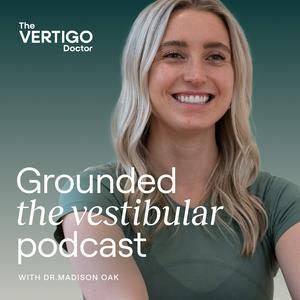
About Grounded | The Vestibular Podcast
Vestibular Physical Therapist, and the founder of The Vertigo Doctor
Podcast websiteListen to Grounded | The Vestibular Podcast, The Good Glow and many other podcasts from around the world with the radio.net app
Get the free radio.net app
- Stations and podcasts to bookmark
- Stream via Wi-Fi or Bluetooth
- Supports Carplay & Android Auto
- Many other app features
Get the free radio.net app
- Stations and podcasts to bookmark
- Stream via Wi-Fi or Bluetooth
- Supports Carplay & Android Auto
- Many other app features

Grounded | The Vestibular Podcast
Scan code,
download the app,
start listening.
download the app,
start listening.
Grounded | The Vestibular Podcast: Podcasts in Family
 Ireland
