PodcastsBusinessInternet of Nature Podcast

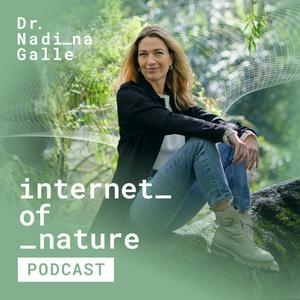
Internet of Nature Podcast

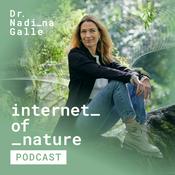
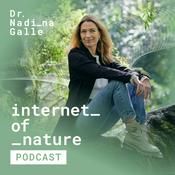
Dr. Nadina Galle
Internet of Nature Podcast
Latest episode

62 episodes

  • Internet of Nature Podcast

    S6 Bonus Episode: “This Used to Be Concrete” — Lessons from One of London’s Most Unexpected Pocket Forests with Adrian Wong of SUGi

    28/12/2025 | 19 mins.
    What happens when you plant a forest where nothing should grow?
    In this bonus, end-of-season episode, I’m joined by Adrian Wong of SUGi inside a dense pocket forest tucked into London’s Southbank Centre—surrounded by brutalist concrete, cultural landmarks, and constant city noise.
    Just two years ago, this space was solid concrete. Today, it’s six metres tall, alive with insects, birds, bats, and its own cooling microclimate.
    Recorded entirely on location, we talk about:
    how a 130 m² pocket forest transformed one of London’s hardest urban landscapes

    urban acupuncture and why small interventions can have outsized ecological impact

    the Miyawaki method and forest succession at speed

    ecoacoustics and what sound can tell us about biodiversity returning

    what this forest proves about nature’s ability to rebound when given space—above and below ground

    You’ll hear drilling, footsteps, and the city all around us—because this forest doesn’t exist outside the city, but right in the middle of it.
    A reflective bonus episode to close out a beautiful Season 6 of the Internet of Nature Podcast.
    Follow SUGi’s work at @sugiproject on Instagram.
  • Internet of Nature Podcast

    S6E10: “Mushrooms Aren’t a Death Sentence” — Fungumentals for Arborists Who Diagnose Before They Cut with Kyle McLoughlin of Ironwood Arboricultural

    14/12/2025 | 50 mins.
    A mushroom on a tree isn’t a verdict — but in arboriculture, it’s often treated like one.
    In this episode, Nadina Galle talks with Kyle McLoughlin, a Board Certified Master Arborist and founder of Ironwood Arboricultural, from his two-acre, tree-filled property in St. George, Ontario. Together, they unpack why fungi should be foundational knowledge for anyone caring for trees — and why “there’s a mushroom, cut it down” is more often fear than good practice.
    They explore Armillaria and other misunderstood fungi, how decay actually affects tree risk and failure probability, and why arborists should think more like physicians: diagnosing before treating. The conversation also examines how many urban fungal problems are created not by nature, but by how we design, dig, drain, and pave our cities.
    Nadina and Kyle discuss the tools that could help shift tree care from reactive removals to proactive preservation — including pneumatic excavation, sonic tomography, and ground-penetrating radar — while returning to a core insight: better growing conditions matter more than any technology.
    This episode will resonate with arborists, urban foresters, city managers, and anyone involved in tree risk, urban tree preservation, or the future of urban nature. By the end, you’ll never look at a mushroom on a tree the same way again.
    Find Kyle and Ironwood Arboricultural at ironwoodarboricultural.ca and @ironwoodarboricultural on Instagram.
  • Internet of Nature Podcast

    S6E9: Trees on Top — How Stress Tests, Substrate & Sensors Green “Impossible” Places with Daan Grasveld of The Urban Jungle Project

    07/12/2025 | 46 mins.
    On a rooftop disguised as a public square outside Amsterdam’s public library, Nadina sits down with Daan Grasveld, co-founder of Urban Jungle Project, to explore how trees can thrive in the most unlikely urban places. What looks like a normal city square is actually the top of a parking garage—once barren, hot, and lifeless. Today, thanks to modular “jungle blocks,” it’s a cool, shaded micro-jungle alive with bees, birds, and people.
    Daan breaks down his “three S’s” — stress tests, substrate, and sensors — and explains how Urban Jungle Project lifts fully grown trees onto roofs, squares, balconies, and other “impossible” sites where traditional planting can’t go. We talk about green-as-a-service and why maintaining living systems is as important as installing them, the role of citizen science through QR-coded monitoring, and why the long-term goal is actually less technology through passive, resilient systems that let nature do the work.
    Together, we explore how modular forests cool cities, create instant biodiversity, and turn overlooked spaces into places people want to be. If you’ve ever looked at a roof, garage, or forgotten corner and wondered what it could become, this episode opens a new window into the future of urban nature.
  • Internet of Nature Podcast

    S6E8: “National Park City” — What If the Whole City Were a Park? with Mark Cridge of National Park City Foundation

    30/11/2025 | 54 mins.
    In this episode, Nadina meets Mark Cridge just off Oxford Circus, inside a quiet, plant-filled HQ that serves as the visitor centre for something radical: a city that calls itself a park. London was the first place in the world to become a National Park City—but what does that actually mean when you’re standing in the middle of one of the busiest urban intersections on Earth?
    Mark shares the story behind the National Park City idea, from the map that rewired how London sees itself to the moment the city formally embraced a new identity as a living landscape. We talk about how over 50% of London is already green and blue space, why perception matters as much as policy, and how reframing a city can unlock entirely new conversations about health, belonging, biodiversity, and the future of urban life.
    At the heart of the movement are the community Rangers—ordinary people running extraordinary local projects, from tracing hidden fruit trees across neighbourhoods to turning allotments into spaces of healing, mental health support, and connection. Together, we explore how these small, human-scale interventions quietly reshape entire neighbourhoods from the ground up.
    We also dig into the deeper questions beneath the movement: the global collapse of human connection to nature, why teenagers so often lose that bond, what it means to raise nature-connected children in dense cities, and whether cities—rather than rainforests or remote wilderness—may now be the most important battleground for reconnection.
    This is an episode about maps, movements, rights to grow and swim, and what happens when a city stops treating nature as decoration and starts treating it as its backbone.
  • Internet of Nature Podcast

    S6E7: “Urban Acupuncture” — How Pocket Forests Heal Our Cities with Adrian Wong of SUGi

    23/11/2025 | 58 mins.
    In this episode, Nadina sits down with Adrian Wong, SUGi’s UK Forest Lead, in the middle of the Forest of Thanks—a 10,000 m² Miyawaki forest planted in one of London’s most under-resourced boroughs. What was once a simple lawn is now a thriving woodland of oaks, elders, cherry trees, brambles, birds, and even resident foxes.
    Adrian explains the Miyawaki method, a powerful approach to creating fast-growing, self-sustaining native forests in urban areas by planting densely, rebuilding living soils, and embracing the natural “messiness” of ecological succession. With 31 SUGi forests across London, most no bigger than a tennis court, Adrian shares how tiny forests can improve biodiversity, clean the air, soften noise, cool neighborhoods, and help stitch ecological corridors back into the city.

    We also explore the human side of this work—from greening schoolyards next to airport runways, to kids planting their first-ever trees, to how daily access to nature boosts mental health and builds community resilience. Along the way, we discuss bioacoustics, iNaturalist, parakeets, fox dens, community gardening, and why messy forests may be the future of urban greening.
    This is an episode about what happens when you loosen your grip on a piece of land—and watch life flood back in.

More Business podcasts

About Internet of Nature Podcast

How can we make our communities wilder, greener, healthier, and happier—and which technologies can help us along the way? Ecological engineer and National Geographic Explorer Dr. Nadina Galle—best-selling author of THE NATURE OF OUR CITIES and pioneer of the Internet of Nature®—shares stories of people using tech to bring the wild back into streets, schools, and homes. This is where the wild meets the wired.
Podcast website

Listen to Internet of Nature Podcast, Ask About Wealth and many other podcasts from around the world with the radio.net app

Get the free radio.net app

  • Stations and podcasts to bookmark
  • Stream via Wi-Fi or Bluetooth
  • Supports Carplay & Android Auto
  • Many other app features

Internet of Nature Podcast: Podcasts in Family

Social
v8.5.0 | © 2007-2026 radio.de GmbH
Generated: 2/6/2026 - 5:37:41 AM