
Listen to this podcast in the app for free: Download for free in the App Store
radio.net
Sleep timer
Save favourites
418 episodes
JON ACUFF: Turn Intention into Action
14/10/2026 | 58 mins.You can be extremely capable—leading teams, hitting deadlines, maintaining good habits—while still living as an expert procrastinator. Most of us can find some gap between what we intend to do (and who we intend to be) and the lives we actually lead. And often, the things we put off are the very things that bring us the greatest satisfaction.
In this episode, Michael and Megan sit down with Jon Acuff, New York Times bestselling author of Procrastination Proof, Finish, and Soundtracks, to explore why procrastination is really a way of avoiding a feeling, how to separate fear-driven delay from intentional sequencing, and why a thriving marriage, a healthy body, and deep friendships take the same deliberate effort as a successful business. If that gap sounds familiar, this conversation will help you start closing it.
Memorable Quotes
“Depth takes more time than I might like to admit. And for me to be really good at an idea or a thing takes a level of depth—and depth takes time.”
“I love when I don’t do things intentionally because I’ve put some wisdom and some time and some thought into it. I don’t like when I don’t do things out of fear, and I can tell when fear is driving a delay versus intentionality.”
“Where is there insecurity that’s kinda speaking versus wisdom?… If you’re hustling so hard, you can’t even notice that. And then the other challenge, in my opinion, is the more successful you get, the worse they let you behave.”
“When I approach any part of my life from a service perspective, it reduces the pressure on me. It tamps down that ego, and… the client has an amazing experience because they’re like, ‘Oh, you really were invested in the success of this thing.’”
“I think that ultimately your success will be determined by your capacity to feel feelings you don’t like, uh, for the sake of something you want more than that.”
“My definition of procrastination is really simple: it’s when your actions don’t match your intentions… And a remarkable life, in my opinion, is when your intentions overlap with your actions, when who you say you wanna be is who you’re being.”
“Belief comes by one of three ways: they’re born, they’re borrowed, or they’re built… I just don’t think enough of us know you get to build your beliefs. You get to build the life you want. Regardless of where you came from or where you started from, you get to do that.”
“My favorite definition of discipline is: make tomorrow easy today.”
Key Takeaways
Procrastination Solves a Problem. Putting something off protects you from an experience you’d rather avoid—like criticism, rejection, or the finality of ending something. But it also keeps you from the success and growth waiting on the other side of that discomfort.
Some Waiting Is Wise. Sequencing a project so you can focus on the next right thing, waiting for information you need, or canceling a workout to protect a family weekend are all deliberate, wise choices. Discerning whether intention or fear is driving your delay takes self-awareness.
Raise Your Tolerance for Discomfort. The hard feelings around a decision probably won’t become pleasant. The work is to get convinced enough of what you want that you act anyway, and let your capacity to tolerate the discomfort grow over time.
Ambition Has a Price Tag. You don’t have to shrink your ambition, but you do have to know what you’re willing to pay for it. Past a certain level, more success adds more responsibility without returning the kind of deep-level satisfaction we’re all after.
You Can Build Your Beliefs. Some of your beliefs come from family, and others are absorbed from the culture around you. But there’s a third option. Anytime a belief isn’t supporting where you want to go, you can rewrite it on purpose.
Resources
Procrastination Proof by Jon Acuff
Finish by Jon Acuff
Soundtracks by Jon Acuff
All It Takes Is a Goal (Podcast)
This episode was produced by Sarah Vorhees Wendel of VW SoundLUKE BURGIS: Discerning What You Actually Want
30/09/2026 | 58 mins.Most ambition advice is about how to reach the top of the mountain. Luke Burgis points out that many of us have an upstream problem: we’re climbing a mountain we don’t actually care about. Michael and Megan sit down with Burgis, a Wall Street suit turned entrepreneur turned philosopher, father, and author of several books on desire. They unpack why not all desires are created equal, how to unearth the ones that lead to real satisfaction, and what the monastic tradition offers those of us who will never be monks. This conversation gives you a way to separate what you actually want from the noise of mimetic desire.
Memorable Quotes
“Ambition without a sense of self or a differentiation of self is just a highly sophisticated form of conformity.”
“You can get really good at achieving goals without wondering whether they’re the right goals in the first place.”
“A simple exercise is just: Name the models of your desire. Who are the people who have given you your own desires?”
“One of the easiest ways to kind of determine whether a desire is thin or thick is: Does it persist through different seasons of life, through different environments, through different friend groups, through different relationships?”
“A lot of people go straight to productivity and organization… before asking the most important question: Should I even be trying to integrate this at all?”
“Each person has an unrepeatable calling, something that only they can do with their unique history and situation and context. I think our thickest desire is oriented towards living out of a personal vocation... Thick desire is a signpost to a calling which can be lived out in and through our work.”
“Being in communion means learning how to be a differentiated self with a calling while also being part of something bigger. And sometimes that creates a little bit of tension, and our instinct is to flee any form of tension or any anxiety. And I think there’s a lot to be learned from sitting in the tension to be a part and to be oneself.”
“Which kinds of communities and groups flatten any kind of distinctiveness? And which ones actually allow people to evolve and to be part of the whole, or to be part of the body without demanding that they be something that they’re not, or demanding that they sacrifice their integrity?”
Key Takeaways
Your Ambition Might Be Borrowed. Mimetic desire means we absorb what we want from the people we watch. Whose careers do you track closely, with mixed feelings? Naming our models of desire creates helpful distance for effective discernment.
Thin Desires Are Short-Lived. We might feel thin desires strongly, but they erode when the context shifts. A thick desire persists across seasons, relationships, and jobs. Write down what you want, then wait: Is the desire durable?
The Tension of Communion. Being in communion requires being a differentiated self and participating in the larger whole—which creates an enduring, unresolvable tension. We must have the courage to decide who we will be without fleeing or falling into crowd instinct.
Every Check Comes with Terms. A financially sound decision can still be the wrong one if it commits you to work you don’t believe in. When there’s money on the line, weigh the funder’s desires for alignment with your own before you agree to terms.
You Might Need a Rule. There’s a reason the Rule of Saint Benedict has governed communal life for fifteen hundred years. Setting your own rules of engagement within your organization or just for yourself can equip you to navigate complex situations before you’re in the middle of one.
Discernment is a Community Endeavor. Blind spots are invisible from the inside. Recruit the people closest to you—whether within formal groups or informal relationships—to offer feedback on complex decisions. (But be sure to filter for communities that invite you to become yourself rather than requiring conformity.)
Resources
Wanting: The Power of Mimetic Desire in Everyday Life by Luke Burgis
The One and the 99: Forging Identity in the Age of Social Contagion by Luke Burgis
Unrepeatable: Cultivating the Unique Calling of Every Person by Luke Burgis and Joshua Miller
lukeburgis.com
The Courage to Be by Paul Tillich
LifeFocus
This episode was produced by Sarah Vorhees Wendel of VW SoundRYAN LEVESQUE: Real Life in an Artificial Age
16/09/2026 | 1h 10 mins.Chaos always prompts us to search for something solid. Confronted by the upheaval of economic reckoning, ecological exhaustion, and existential uncertainty, our souls are reaching for anything tangible and true. We want what’s real. That’s the core message of Ryan Levesque, a seven-time Inc. 5000 CEO who walked away from his former life to move with his family to a farm in Vermont. He joins Michael and Megan to talk about his book Return to Real and how we can respond wisely to the hunger felt in our souls and in the marketplace within an artificial, digital age. He unpacks how we can craft moments—at work and at home—that reward what makes us uniquely human. Because that’s what we’re all longing and looking for.
Memorable Quotes
“The double craving—what your body, your heart, what your spirit is starving for right now—is also what much of the market is starving for. And when you can find the intersection… there’s economic opportunity. What’s good for your biology can also be good for your bottom line.”
“The last decade, in many ways, in business was a story about dopamine… ‘Create an app that’s addictive so people keep coming back to it.’ But if we look at most of the maladies of modern life—loneliness, disconnection—they are symptoms of a lack of the neurotransmitter oxytocin. Oxytocin is a neurotransmitter of trust, of love.”
“We’re swimming in this sea of artificial everything, and we’re seeking truth. We live in an era of a default state of distrust… We no longer trust our eyes and ears, our sensory experience, when we are experiencing the world through a screen.”
“The truth is in the tension. It’s not ‘Throw AI in a bin.’ It’s not ‘Go 100% analog.’ It’s about picking the right moments and the right places to insert it.”
“People will pay for work that’s been attached to a real human life… When people see the work and the effort that’s gone into something, they value it. That’s the provenance premium.”
“Just because the technology is capable of doing something doesn’t necessarily mean that that’s how we should be using that technology.”
“I tell my kids all the time: ‘Choose your hard, otherwise your hard will choose you.’ What we’ve done and what we’re doing is not easy… but all things in life worth doing are hard.”
“If you are not analog by design, you will become digital by default… There are trillion-dollar technology companies that will not stop until every moment of human attention has been consumed and monetized… So if you're not fighting against those forces actively… then you will be consumed by the digital vortex.”
Key Takeaways
Your Craving and Your Market’s Are the Same. What your body and spirit want right now also reflect what much of your market wants. That double longing reveals economic opportunity.
Optimize for Oxytocin. Dopamine has long been stealing the headlines, but the neurotransmitter of the next decade is oxytocin, which signals trust and love. How can you make your business more human?
Don’t Advertise Your AI. Deploy AI away from customer-facing environments. The technology we use helps power what’s possible, but the work people value is attached to human effort and human lives.
Defying Digital Requires Intention. In a world built on and by technology where trillions are spent on directing our attention, we must seek out ways to reintegrate what’s real—to choose analog by design.
A Rhythm You Can Try Today. Slowing for a few moments can shift an entire day. Ryan Levesque suggests a simple resolution from Ali Jafarian: Touch earth before touching a screen.
Resources
Return to Real: The Last Human Advantage in an Age of Artificial Everything by Ryan Levesque
The Digital Contrarian (Ryan’s Weekly Newsletter)
The Full Focus Insider (Megan Hyatt Miller’s Newsletter)
Braiding Sweetgrass by Robin Wall Kimmerer
This episode was produced by Sarah Vorhees Wendel of VW SoundCARL HONORE: Living at the Right Speed
02/09/2026 | 54 mins.Most of us know we’re moving too fast, but can’t figure out how to stop. In this episode, journalist and author Carl Honoré joins Michael and Megan to explain how we got addicted to speed, what we’re missing out on as a result, and why slowing down is a skill that requires practice. They dig into the warning signs that you’re living too fast and the hidden math that makes quick fixes more expensive than slow ones. Our world moves fast. The good news is, you don’t have to.
Memorable Quotes
“There’s an intimate bond between slowness and remembering… Everything just moves very fast, nothing sticks, and you don’t remember anything.”
“Slow is a byword for lazy, boring, stupid, unproductive, all the things nobody wants to be associated with. And this taboo works like this: It means that even when we can feel in our bones that it’d be good for us to put on the brakes, even when we’re yearning to slow down, we don’t do it, because the taboo makes us feel ashamed, guilty, afraid.”
“People often say, ‘We don’t have time for a slow fix. We only have time for a quick fix,’ right?... But then later on, when the quick fix proves to have failed and blows up in our face, we always find time then to pick up the pieces and deal with the fallout, don’t we?”
“In this road runner culture, we are all marinated in adrenaline… I think we are now chemically, emotionally, physically, and biologically addicted to the rush of speed, and that drives us into the arms of the quick fix.”
“We need to build in little rituals—whether it’s meditation, reading a bit of poetry, sketching, whatever it is—that reacquaint us with slower, deeper rhythms… It kind of inoculates you against the virus of hurry… and allows you to come back into the fray with a mindset that is more still, more calm, more focused, more able to see the big picture.”
“It’s about doing things at, at the right speed. Musicians have a beautiful term for this. They call it the tempo giusto, right? The correct tempo for each piece of music… It’s putting quality before quantity. It’s being present, being in the moment… Slow is about doing everything not as fast as possible, but as well as possible.”
“One of the best ways to find that deeper, slower, healthier, richer rhythm, is spending time in nature. Because nature is the ultimate cradle of slowness. Everything happens in nature at the right pace.”
“Judiciously applied slowness can fire up creativity, can supercharge innovation, can deepen communication, and can avoid costly mistakes.”
Key Takeaways
Live in Tempo. There’s no one right speed, and slower isn’t always better. Musicians have a word for what we’re after: tempo giusto, the correct tempo for the piece. Sometimes, that tempo is fast! The skill is discerning the right speed, and moving at that pace.
Your Body Sends the Bill. Constant exhaustion, sloppy mistakes at work, and weeks you can’t quite recall are all symptoms of a life lived in overdrive. Your body isn't built to sustain that pace. Sooner or later, the bill comes due.
Quick Fixes Are Expensive. We reach for the fast solution because we believe we don’t have time for the slow one. But quick fixes usually create costly problems. Investing in slowness up front saves us hours and dollars.
Pull the Andon Rope. In Toyota factories, any worker at any rank could pull a rope and stop the entire production line when they spotted a problem. Everyone had permission to slow down and go find the root cause. What would that make possible in your company?
Slowness Requires Practice. Deciding to slow down won’t undo decades of speed. Slowing requires intentional practice. Choose hobbies or activities that require you to downshift—and don’t be surprised if you feel restless at first.
Resources
In Praise of Slowness by Carl Honoré
The Slow Fix by Carl Honoré
carlhonore.info
This episode was produced by Sarah Vorhees Wendel of VW SoundSUMMER REPLAY: RICH LITVIN: Finding What You Want
19/08/2026 | 1h 4 mins.This episode was produced by Sarah Vorhees Wendel of VW Sound
More Business podcasts




Trending Business podcasts










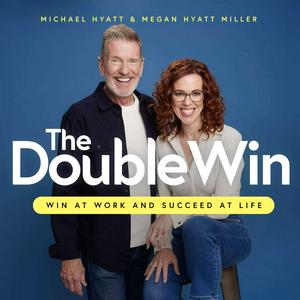
About The Double Win
Work-life balance isn’t a myth—it’s a mission. At The Double Win Podcast we believe that ambitious, high-growth individuals can experience personal and professional fulfillment simultaneously. Hosted by the creators of the Full Focus Planner, Michael Hyatt and Megan Hyatt Miller, The Double Win Podcast is your go-to resource for unlocking secrets to productivity, wellness, and work-life balance. The Double Win Podcast features insightful weekly conversations with thought leaders, executives, and entrepreneurs sharing fascinating personal stories and actionable ideas for balancing professional success with personal well-being. Whether you're looking for motivation to achieve your goals or strategies to harmonize your career and life, The Double Win Podcast provides the perspectives and tools you need.Michael and Megan focus on the nine domains of life—body, mind, and spirit, love, family, community, money, work, and hobbies—offering practical advice to help you thrive. Discover how to integrate purposeful productivity and overall wellness into your daily routine, stay motivated, and experience a life of joy and significance. Hit subscribe and embark on your journey to winning at work and succeeding at life.
Podcast websiteListen to The Double Win, Unhedged and many other podcasts from around the world with the radio.net app
Get the free radio.net app
- Stations and podcasts to bookmark
- Stream via Wi-Fi or Bluetooth
- Supports Carplay & Android Auto
- Many other app features
Get the free radio.net app
- Stations and podcasts to bookmark
- Stream via Wi-Fi or Bluetooth
- Supports Carplay & Android Auto
- Many other app features

The Double Win
Scan code,
download the app,
start listening.
download the app,
start listening.
 Ireland
