
Listen to this podcast in the app for free: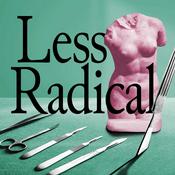 Download for free in the App Store
radio.net
Sleep timer
Save favourites
15 episodes
Episode 3: Microbe Hunters and Magic Bullets
19/10/2026 | 30 mins.In 1958, Bernie Fisher participated in the first randomized clinical trial in patients with breast cancer. The trial was a disaster, leading most surgeons to abandon the idea of using chemotherapy to cure more patients. Bernie, however, noticed something different. This put him on a path that would change the course of cancer treatment forever.
This is a public episode. If you would like to discuss this with other subscribers or get access to bonus episodes, visit cancerculture.substack.comEpisode 2: The Knife is the Cure
12/10/2026 | 25 mins.At the end of the 19th century, a New York surgeon determined that the only way to cure breast cancer was with radical surgery. For the next hundred years, millions of breast cancer survivors bore the mark of his disfiguring approach.
This is a public episode. If you would like to discuss this with other subscribers or get access to bonus episodes, visit cancerculture.substack.comThe Cost of Courage
05/10/2026 | 26 mins.Our story begins exactly fifty years ago. On a fall weekend in late September 1974, a former dancer from Michigan and a young surgeon from Pittsburgh met just outside Washington, DC. The treatment of breast cancer would never be the same.
This is a public episode. If you would like to discuss this with other subscribers or get access to bonus episodes, visit cancerculture.substack.comWhat exactly IS the NIH? And is it worth saving?
29/06/2026 | 47 mins.What IS the NIH? And is it worth saving? A conversation with a 20-year-NIH veteran and a new researcher with an uncertain future.
Elizabeth Ginexi's Substack
Michael Green's Substack
The Addiction Science Under Siege Report
What Can You Do? Liz's summary of the current OMB Proposal that replaces scientific review of NIH grants with political approval provides specific actions anyone can take to stop this devastating change.
This is a public episode. If you would like to discuss this with other subscribers or get access to bonus episodes, visit cancerculture.substack.comCan One Person Change the World of Cancer?
06/10/2025 | 33 mins.In a recent conversation with Dan Pfeiffer, historian Heather Cox Richardson discussed the American deification of self-reliance, represented by the loner cowboy from the 1950’s on. “The myth of the American cowboy,” Richardson posited, “is that he is a true American and wants nothing from the government but to be left alone. He dominates women; he dominates the minorities around him; and he’s good with a gun.”
Richardson reminds us, however, that the rough and tough cowboy was really a mirage. Most cowboys were non-white, relied on each other and lived in a world where guns had to be surrendered to enter a town.
Richardson feels the American story is instead, represented by another image, “That was to be somebody who believed in community and believed in making sure that you protected your weakest members and made it possible for everybody to have a shot at equal access to resources so they could work hard and rise.”
In America, according to Richardson, “if you are an individual, you have the power to change the country. You have the power to change your life, you have the power to change the world by working together the way people did during World War II, or the strikers did in the late 1890s, or the civil rights workers did in the 1960s.”
I believe this is true in cancer as well. Cancer is a disease that impacts an individual, but it is experienced in community. Whether in a family, friend group, religious community or workplace. Cancer is a communal diagnosis because it will touch each of our lives. It also places the individual among the long line of those that have come before them and those that will come after. Each person has an opportunity to change the future for the next patient.
Some do that locally, supporting friends and strangers who whisper a new diagnosis over coffee. Others form research organizations to find earlier detection tests or better treatments. Still others are propelled to enter the arena and become oncologists, caring directly for cancer survivors and their families.
Thanks for reading Cancer Culture! Subscribe for free to join the conversation.
The last category is the one I will be focusing on during the month of October. These are patients and family members who put their shoulders to the boulder of progress and push it forward. In some cases, these activists moved cancer out of dark corners and into the public light. In others, they demanded a voice in their care. And still others provided millions of dollars in research funding and organized publicity campaigns
I will be turning over the Cancer Culture Substack to biographer, Judy Pearson. Judy is a breast cancer survivor, author and friend whose new book, Radical Sisters, highlights the impact of three incredible women who dedicated their lives to changing the world of breast cancer. Shirley Temple Black, Rose Kushner and Evelyn Lauder ignited a movement that changed the world.
Susan G. Komen founder Nancy Brinker remembers working alongside these women, “We worked at a time when the word breast could scarcely be uttered in public, let alone printed in mass media advertising. Our paths were shaped by shared goals but also marked by occasional differences. We competed, debated and sometimes squabbled, but beneath it all, there was a deep and abiding respect. Though we came from different places, with different stories, our purpose united us: To life the veil of silence surrounding breast cancer and to create a world where this disease no longer threatened the lives of women.”
As Cox-Richardson reminds us of and these three women demonstrate, WE all have the power to change our lives and the world around us by working together.
To orient yourself to these stories, I recommend listening to the Bonus Episode of Less Radical which I’ve reposted above. As always, I look forward to hearing your thoughts.
This is a public episode. If you would like to discuss this with other subscribers or get access to bonus episodes, visit cancerculture.substack.com
More Health & Wellness podcasts





Trending Health & Wellness podcasts













About Less Radical
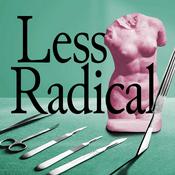
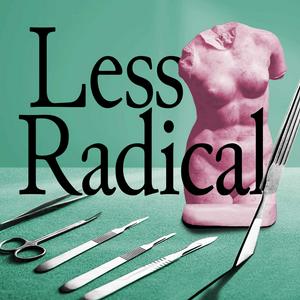
Less Radical is the story of Dr. Bernie Fisher, the surgeon-scientist who not only revolutionized breast cancer treatment, but also fundamentally changed the way we understand all cancers. He was an unlikely hero-- a Jewish kid from Pittsburgh who had to make it past antisemitic quotas to get into med school. And the thanks he received for his discoveries? A performative, misguided Congressional hearing that destroyed his reputation and haunted him until his death.
Over six episodes, radiation oncologist Dr. Stacy Wentworth will take you into operating rooms, through the halls of Congress, and into the labs where breakthrough cancer treatments were not only developed, but discovered.
If you or someone you know has had breast cancer, Bernie is a part of your story-- and you’re a part of his. cancerculture.substack.com
Podcast websiteListen to Less Radical, Ready To Be Real by Síle Seoige and many other podcasts from around the world with the radio.net app
Get the free radio.net app
- Stations and podcasts to bookmark
- Stream via Wi-Fi or Bluetooth
- Supports Carplay & Android Auto
- Many other app features
Get the free radio.net app
- Stations and podcasts to bookmark
- Stream via Wi-Fi or Bluetooth
- Supports Carplay & Android Auto
- Many other app features

Less Radical
Scan code,
download the app,
start listening.
download the app,
start listening.
 Ireland

