
Listen to this podcast in the app for free: Download for free in the App Store
radio.net
Sleep timer
Save favourites
24 episodes
Women’s Health Weekly: Forever Chemicals, Pregnancy Anxiety & Eating Disorders
10/11/2026 | 11 mins.Welcome to this week’s Women’s Health Weekly, a bite-sized round-up of some of the latest research, news and developments shaping women’s health.
This week, we’re exploring the potential link between forever chemicals and breast cancer, a promising new digital therapy for anxiety during pregnancy, and research predicting a rise in eating disorders worldwide.
New research examines the relationship between PFAS, often called forever chemicals, and oestrogen receptor-negative breast cancer.
Why researchers found higher rates of this breast cancer subtype among women with greater exposure to certain PFAS chemicals.
What the findings mean for women's health, and why an association doesn't necessarily mean these chemicals cause cancer.
A new King's College London clinical trial explores whether digital psychological support could help prevent anxiety from worsening during pregnancy and after birth.
How a four-week programme called RELAX helped participants manage repetitive negative thinking and reduce anxiety symptoms.
Why earlier, more accessible mental health support could make a meaningful difference to maternal wellbeing.
New research estimates that 18.1 million people worldwide were living with anorexia or bulimia in 2023, with projections reaching 21.8 million by 2050.
Why women account for approximately 69% of estimated cases, and how eating disorders affect people well beyond adolescence.
The importance of challenging stereotypes, recognising symptoms earlier and improving access to specialist care.
1. Forever Chemicals & Breast Cancer
Journal of Clinical Oncology, November 2026.
Research examining associations between PFAS exposure and breast cancer, including differences by hormone receptor status.
Read the research
2. Pregnancy Anxiety & Digital Therapy
King's College London, 4 November 2026.
A randomised clinical trial investigating whether a short digital psychological intervention could help prevent anxiety from worsening during pregnancy and after childbirth.
Read the research summary
3. Eating Disorders & Global Health
JAMA Psychiatry, November 2026.
A global analysis of anorexia nervosa and bulimia nervosa across 204 countries and territories, including projections of their future prevalence.
Read the research
Follow Owning Space wherever you're listening so you don't miss the next Women’s Health Weekly, released every Monday morning.
If you're enjoying the podcast, I'd be so grateful if you could leave a written review on Apple Podcasts or a rating on Spotify. As an independent podcast, your support genuinely makes a difference, helping the show reach more listeners and improve its visibility.
For more conversations around women's health, our bodies and the stories that deserve more space, follow @owningspacepodcast on Instagram and TikTok.
And if there's a story, study or development you think I should cover in a future episode, or a subject you'd like me to explore in more depth, drop me a message.
Until next week, keep taking up space. 💛
#WomensHealth #BreastCancerResearch #MaternalMentalHealth #EatingDisorderAwareness #WomensHealthWeeklyWomen’s Health Weekly: Extreme Heat & Pregnancy, Autism & Menopause, and The Science of Period Blood
02/11/2026 | 10 mins.Welcome to this week’s Women’s Health Weekly, a bite-sized round-up of some of the latest research, news and developments shaping women’s health.
This week, we’re exploring whether extreme heat could increase the risk of premature birth, why autistic people may experience menopause differently, and how menstrual blood could become a valuable source of medical information.
IN THIS WEEK’S EPISODE
Extreme Heat & Pregnancy
A major Reuters investigation examines millions of birth records from Mexico and finds an association between extreme heat exposure and premature birth.
Why the reported 18% relative increase in premature births matters, and why the findings don’t establish that heat directly causes premature delivery.
How climate change, working conditions and unequal access to cooling could affect maternal health.
Autism & Menopause
New research involving 901 participants explores differences in menopausal experiences between autistic and non-autistic people.
Why autistic participants reported more severe menopause symptoms, greater anxiety and depression, and poorer quality of life.
How sensory sensitivities, masking and gaps in personalised healthcare may affect the menopause experience, and what researchers still need to understand.
The Science of Period Blood
Why scientists are investigating menstrual fluid as a potential source of biological information.
How researchers are exploring menstrual blood biomarkers for conditions including endometriosis.
The potential for less invasive diagnostic approaches, alongside the important limitations of research that is still developing.
RESEARCH & FURTHER READING
1. Extreme Heat & Premature Birth
Reuters, 30 October 2026.
An investigation examining the relationship between extreme heat exposure and premature births in Mexico, highlighting the potential implications of climate change for maternal health.
Read the investigation and methodology
2. Autism & Menopause
Autism in Adulthood, 27 October 2026.
Research exploring menopausal symptoms & Autism
3. The Science of Period Blood
Allure, 30 October 2026.
An exploration of emerging research into menstrual blood as a source of biological information, including its potential role in developing diagnostic tests for reproductive health conditions.
Read the article
Follow Owning Space wherever you’re listening so you don’t miss the next Women’s Health Weekly, released every Monday morning.
If you’re enjoying the podcast, please consider rating and reviewing the show. It helps more people discover these conversations.
For more conversations around women’s health, our bodies and the stories that deserve more space, follow @owningspacepodcast on Instagram and TikTok.
And if there’s a story, study or development you think I should cover in a future episode, or a subject you’d like me to explore in more depth, drop me a message.
Until next week, keep taking up space. 💛
#WomensHealth #MaternalHealth #AutismAndMenopause #MenstrualHealth #WomensHealthResearchWomen’s Health Weekly: Endometriosis & Fertility, Postpartum Recovery & Testosterone
26/10/2026 | 15 mins.Welcome to this week’s Women’s Health Weekly, a bite-sized round-up of some of the latest research, news and developments shaping women’s health.
This week, we’re exploring new research into the relationship between endometriosis pain and fertility, why recovery between pregnancies could matter for long-term health, and what the evidence actually tells us about testosterone therapy for women.
IN THIS WEEK’S EPISODE
Endometriosis & Fertility
New research involving over 1,000 women explores whether the severity of endometriosis-related pelvic pain is associated with live birth outcomes.
Why more severe pain doesn’t necessarily mean poorer fertility outcomes, and what researchers are still investigating.
Postpartum Recovery & Biological Ageing
Emerging research explores how pregnancy affects biological ageing and how the body recovers after childbirth.
Could the time between pregnancies influence long-term maternal health? We look at the evidence and its limitations.
Testosterone Therapy for Women
Why testosterone prescribing is increasing among women, particularly around menopause.
What clinical research supports, where the evidence remains limited, and why long-term safety matters.
RESEARCH & FURTHER READING
Endometriosis, Pelvic Pain & Pregnancy Outcomes
BMC Pregnancy and Childbirth, 24 October 2026.
An observational study examining associations between pelvic pain severity and reproductive outcomes in women with endometriosis, including those conceiving naturally and through assisted reproductive technology.
Read the research
Postpartum Recovery & Biological Ageing
Trends in Endocrinology & Metabolism, 23 October 2026.
Researchers explore the recovery period hypothesis, proposing that the body’s biological recovery following pregnancy could have implications for long-term maternal health. Further research is needed to establish whether the proposed relationship exists.
Read the research summary
Testosterone Therapy for Women
JAMA, 23 October 2026.
A medical news analysis examining rising testosterone prescribing among women, the evidence for treating hypoactive sexual desire disorder, and unanswered questions about wider benefits and long-term safety.
Read the article
Follow Owning Space wherever you’re listening so you don’t miss the next Women’s Health Weekly, released every Monday morning.
If you’re enjoying the podcast, please consider rating and reviewing the show. It helps more people discover these conversations.
For more conversations around women’s health, our bodies and the stories that deserve more space, follow @owningspacepodcast on Instagram and TikTok.
And if there’s a story, study or development you think I should cover in a future episode, or a subject you’d like me to explore in more depth, drop me a message.
Until next week, keep taking up space. 💛
#WomensHealth #Endometriosis #PostpartumHealth #Menopause #WomensHealthResearchThe Grief We Carry: Love, Loss and Learning to Live Alongside It with Mady Miles
23/10/2026 | 1h 37 mins.Content warning: This episode includes discussions of grief, bereavement, death by suicide and the loss of a loved one. Please listen with care.
In this episode, I sit down with Madalena (Mady) Miles, a feminine embodiment and somatic practitioner, to explore grief, loss and what it means to learn to live alongside it.
After losing her brother to suicide almost three years ago, Mady has navigated the complexities of bereavement and the profound ways grief can change our relationship with ourselves, our bodies and the people around us.
We discuss the emotional and physical impact of grief, how loss can reshape friendships and priorities, and why the people around us don't always know how to respond when someone is grieving. Mady shares her personal experiences of navigating guilt, difficult emotions and the expectations that can come with loss, particularly following a death by suicide.
We also explore why grief isn't something we can simply fix or move on from, the pressure to heal on someone else's timeline, and how we can better support people who are grieving without trying to take away their pain.
Drawing on her work as a somatic practitioner, Mady discusses the connection between grief and the body, and why movement, community and shared experiences can offer meaningful spaces for processing loss. We also talk about the grief circles she's creating and the importance of having spaces where people can come together without judgement or expectations.
This is a deeply personal and honest conversation about love, loss, the complexities of grief and learning to make space for it in our lives.
Find out more about Mady and her work:
Website: www.embodied-alchemy.co.uk
Instagram: @madalena.alchemy
If you're enjoying Owning Space, follow the podcast on Spotify and Apple Podcasts so you don't miss future episodes. It really helps the show grow.
Follow on Instagram and TikTok: @owningspacepodcastWomen’s Health Weekly: Autoimmune Misdiagnosis, Menopause Research & Breast Cancer Prevention
19/10/2026 | 10 mins.Welcome to this week’s Women’s Health Weekly, a bite-sized round-up of some of the latest research, news and developments shaping women’s health.
This week, I’m looking at new research revealing how women with autoimmune conditions face greater barriers to diagnosis, a major study uncovering how menopause affects multiple systems throughout the body, and new findings exploring whether an existing medication could help reduce breast cancer risk after pregnancy.
IN THIS WEEK’S EPISODE
Autoimmune conditions and misdiagnosis: what a study involving more than 6,600 people reveals about differences in how women’s and men’s symptoms are interpreted.
Why women are more likely to have autoimmune symptoms attributed to psychological causes, and the impact of delayed diagnoses.
Menopause and the body: what an analysis of more than 300 million laboratory tests reveals about biological changes around the final menstrual period.
How menopause may involve more abrupt changes than previously understood, and what researchers discovered about menopausal hormone therapy.
Breast cancer prevention: new research exploring whether cabergoline, a medication used to suppress milk production, could help reduce breast cancer risk after pregnancy.
What researchers found in human health records and animal studies, and why clinical trials are needed before the medication can be considered for cancer prevention.
RESEARCH & FURTHER READING
Autoimmune Conditions & Gender Differences in Diagnosis
Research from the University of Cambridge and University of East Anglia examining differences in diagnostic experiences, psychological misdiagnosis and delays in treatment among people with autoimmune conditions.
Menopause & the Physiological Cliff
Nature Medicine - Population-scale research examining how menopause affects hormonal, skeletal, liver, kidney and metabolic systems, using more than 300 million laboratory tests.
Cabergoline & Breast Cancer Prevention
Cancer Discovery - Research investigating whether cabergoline, an existing medication used to suppress lactation, could reduce breast cancer risk following pregnancy, with further clinical trials planned.
FOLLOW & SUPPORT OWNING SPACE
Follow Owning Space wherever you’re listening so you don’t miss the next Women’s Health Weekly, released every Monday morning.
If you’re enjoying the podcast, please consider rating and reviewing the show. It helps more people discover these conversations.
For more conversations around women’s health, our bodies and the stories that deserve more space, follow @owningspacepodcast on Instagram and TikTok.
And if there’s a story, study or development you think I should cover in a future episode, or a subject you’d like me to explore in more depth, drop me a message.
Until next week, keep taking up space. 💛
#WomensHealth #AutoimmuneDisease #MenopauseResearch #BreastCancerAwareness #WomensHealthResearch
More Health & Wellness podcasts




Trending Health & Wellness podcasts
















About Owning Space
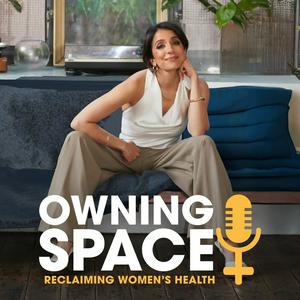
Owning Space is a women’s health podcast reclaiming the narrative around our well-being and helping women take up more space in society, in their bodies and in their stories.
Hosted by Aneka Hindocha, the show explores topics often dismissed, misunderstood or considered too uncomfortable to discuss, from endometriosis and fertility to ADHD, chronic illness and sexual health.
Expect honest, in-depth conversations alongside Women’s Health Weekly, covering the latest news and research shaping women’s health.
Because silence helps no one. Keep taking up space.
Podcast websiteListen to Owning Space, A New Day with Gerry Hussey and many other podcasts from around the world with the radio.net app
Get the free radio.net app
- Stations and podcasts to bookmark
- Stream via Wi-Fi or Bluetooth
- Supports Carplay & Android Auto
- Many other app features

 Ireland

