
Listen to this podcast in the app for free: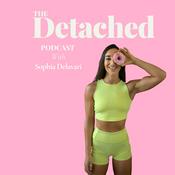 Download for free in the App Store
radio.net
Sleep timer
Save favourites
110 episodes
The 5 Things That Determine How Well You Age
28/09/2026 | 56 mins.Send us Fan Mail
What if the secret to aging well isn’t found inside a medical prescription, but in your kitchen, your breath, and your calendar? We sit down with Dr. Rhea, a UK-trained GP turned longevity and functional medicine specialist in Dubai, to map a clear path to real health span. She shows how small, smart changes like cooking apples into gut-healing pectin, fermenting foods to reshape the microbiome, and eating for blood sugar stability outperform the trends everyone talks about.
Beyond food, we center the five pillars: emotional health, sleep, exercise, nutrition, and connection. Learn how breath work, humming, and cold exposure train the vagus nerve and lift HRV; why device-free windows restore presence at home; and how movement should shift from two hard sessions to frequent low-intensity motion inspired by blue zones.
We also separate evidence from hype on red light therapy, NAD IVs, peptides, and GLP-1 drugs, offering safer, steadier alternatives like vetted sublingual NMN, balanced meals, post-meal walks, and short-term CGMs to expose hidden glucose spikes.
Subscribe, share this with someone who needs a science-backed reset, and leave a review to help more people find their way to better health span.
Check Dr. Rhea on IG - https://www.instagram.com/drrheakotecha?utm_source=ig_web_button_share_sheet&stkn=ZDNlZDc0MzIxNw==
Support the showThe Dark Side of Chasing the Perfect Body
21/09/2026 | 1h 1 mins.Send us Fan Mail
What happens when the life that has made you, suddenly stops feeling like your own?
We sit down with Miles Nazaire for a raw, generous conversation about growing up fast, getting scouted into Made in Chelsea, and spending eight years amplifying real emotions for cameras until the performance blurred with the person. Miles takes us behind the scenes, not to spill tea, but to show how producer-shaped arcs nudge you into turning up the volume on pain, pride, and conflict, and how that conditioning sticks long after the lights cut.
If you’ve ever tried to outgrow your past while your inner critic shouts you down, this conversation offers tools you can use today: If this resonates, subscribe, share with a friend who needs it, and leave a review with one habit you’re ready to unlearn.
Check Miles IG out - https://www.instagram.com/milesjnazaire?utm_source=ig_web_button_share_sheet&stkn=ZDNlZDc0MzIxNw==
Support the showBefore You Buy Another Supplement, Watch This
15/09/2026 | 51 mins.Send us Fan Mail
Your supplement routine should not feel like a daily argument with pills, powders, and a cabinet full of forgotten “health kicks.” We bring on Irish founder Paul O’Connor to talk about the problem hiding in plain sight: most supplements are designed as one size fits all, even though your biology, training load, stress, and sweat loss are anything but average.
Paul shares how two decades inside brands like Unilever and Adidas shaped his execution mindset, then walks us through the moment he decided to leave corporate and build Link, a platform that combines a countertop device, an app, and supplement cartridges. The goal is personalized nutrition in real time: set a baseline from your profile, connect wearables like WHOOP or Oura, and let biometric data inform adjustments to electrolytes, adaptogens, and sleep support.
If you’re into health tech, wearables, personalized supplements, and the real work of entrepreneurship, this one will sharpen how you think. Subscribe, share this with a founder friend, and leave a review with your take: would you trust a machine to run your daily supplement stack?
Check Paul out on IG - https://www.instagram.com/founderpaul?utm_source=ig_web_button_share_sheet&stkn=ZDNlZDc0MzIxNw==
Support the showThe Truth About Grief: How Loss Changes You Forever
07/09/2026 | 54 mins.Send us Fan Mail
Grief doesn’t just hurt, it changes your operating system. After I lost my mam i took a long break from podcasting, I sat down with Mark, who lost his brother only three months ago, to talk about what happens when someone you love is gone and the world still expects you to keep moving.
We get real about the grieving process: the numbness, the sudden anger, the brain fog, and the way time stops making sense. Mark shares what it’s like to care for a brother through years of Hodgkin lymphoma, from hospital nights and relentless treatment to the moment your mind refuses to accept what your eyes are seeing. We talk about why grief is “invisible” like an internal injury, and why common lines like “be strong” and “time will heal” can land as dismissive when you’re barely getting out of bed.
If you’re navigating bereavement, caregiver burnout, or the loss of a parent or sibling, this is a grounded, human listen. Subscribe for more honest conversations, share this with someone who needs it, and leave a review with the one thing you wish people understood about grief.
Find Marc's IG - https://www.instagram.com/marc.abousleiman?utm_source=ig_web_button_share_sheet&stkn=ZDNlZDc0MzIxNw==
Support the showEP : 108 Redefining Aging: Unpacking Longevity
04/03/2026 | 1h 3 mins.Send us Fan Mail
Ever feel buried under longevity headlines that promise everything and deliver little? We invited author and anthropologist Siim Land to unpack what actually extends healthspan and what just drains your wallet. From a military start and early bodybuilding to a decade of research and content creation, Siim brings a calm, data-led voice that favors flexible routines over fragile perfection.
We get specific about where to start: reduce visceral fat, then use targeted bloodwork to direct your effort. Siim outlines the biomarkers that matter most for risk—glucose and insulin sensitivity, inflammation, lipids and lipoproteins, liver and kidney health, and CBC—then explains why your tape measure might be the best first test. We probe weight loss drugs like GLP‑1s, balancing benefits against unknowns, and explore NAD strategies, iron and calcium pitfalls, and when delivery method (oral vs injection) truly changes outcomes.
If you want a practical roadmap to live longer and feel better—without chasing every shiny pill—this is your field guide. Listen, take notes, and if it helps, share it with a friend who’s drowning in health hype. Subscribe for more grounded conversations, and leave a quick review to tell us the one change you’ll make this week.
Support the show
More Business podcasts



Trending Business podcasts








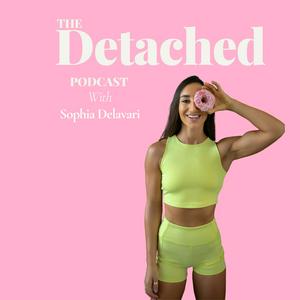
About The Detached podcast
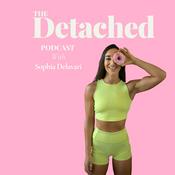
Welcome to the podcast. This is a space where I get to vocalize my thoughts and dive deep into conversations with some truly remarkable individuals. It’s not about surface-level chit-chat—this is where we get into the real stuff. We talk about the things that matter: health, fitness, relationships, and the process of breaking free from the limitations we place on ourselves.I don’t believe in small talk, because nothing meaningful ever comes from it. So, let's dig deep into the topics that can actually change your life. I want to bring you value, provoke your thinking, and help you see the world differently.If you resonate with these conversations, I’d love for you to share the podcast with others. Your support means everything.Let's get into it.Sophia
Podcast websiteListen to The Detached podcast, The Diary Of A CEO with Steven Bartlett and many other podcasts from around the world with the radio.net app
Get the free radio.net app
- Stations and podcasts to bookmark
- Stream via Wi-Fi or Bluetooth
- Supports Carplay & Android Auto
- Many other app features
Get the free radio.net app
- Stations and podcasts to bookmark
- Stream via Wi-Fi or Bluetooth
- Supports Carplay & Android Auto
- Many other app features

The Detached podcast
Scan code,
download the app,
start listening.
download the app,
start listening.
The Detached podcast: Podcasts in Family
 Ireland
