
Listen to this podcast in the app for free: Download for free in the App Store
radio.net
Sleep timer
Save favourites
154 episodes
#152 - Ashley Kowalewski - Imposter Syndrome, Authority & Becoming a Coach Worth Trusting
19/10/2026 | 1h 34 mins.Follow coach AK on IG: https://www.instagram.com/ashleykowalewski/
Links:
Join my free coaches community: https://www.skool.com/hitman-performance-1800/about
Get $25 Off at OVR: https://ovrperformance.com/hitman
In this conversation, Ashley discusses her journey from being a javelin thrower to a strength coach, emphasizing the importance of education, resilience, and building relationships with athletes. She shares her experiences overcoming adversity, her coaching philosophy of providing over proving, and the challenges faced in both collegiate and private training environments. The conversation delves into the critique of various movement methodologies, emphasizing the importance of consistency in training, building trust with athletes, and the role of creativity in coaching.
The speakers argue against quick-fix solutions and highlight the necessity of understanding individual athlete needs for effective training outcomes. The conversation explores various themes in strength and conditioning, emphasizing the importance of diverse training methods, trust in coaching relationships, and the balance between physical and mental training. The speakers share insights on authenticity in social media and the significance of building strong relationships with athletes.
Takeaways
Education is key to success
Building relationships enhances performance Critique of unproven training methods
Consistency is key for success Trust is essential in coaching
Authenticity drives effective communication
Chapters
00:00 Introduction and Background
01:59 The Impact of Early Training Experiences
05:53 Overcoming Adversity and Building Resilience
09:58 The Philosophy of Providing Over Proving
13:58 Building Relationships with Athletes
18:05 Navigating Authority and Confidence in Coaching
22:04 The Challenges of Training in Different Environments
25:50 Addressing Misconceptions in Training Methods
32:38 Critique of Movement Methodologies
39:40 The Importance of Consistency in Training
47:46 Building Trust and Communication with Athletes
56:04 Creativity in Coaching and Problem Solving
01:03:06 Diverse Training Approaches
01:08:47 The Importance of Trust in Coaching
01:14:08 Building Relationships and Communication
01:19:00 Confidence and Adaptability in Performance
01:24:09 Authenticity in Social Media and Coaching
01:30:18 Balancing Physical and Mental Training#151 - Sam Davis - Direct Current, Neuro Readiness & Training With Intent
12/10/2026 | 1h 10 mins.Check out Sam's IG: https://www.instagram.com/neurologicfitness/
Join my free Skool community: https://www.skool.com/hitman-performance-1800/about
Get $25 Off at OVR: https://ovrperformance.com/hitman
In this conversation, Brett Hart and Sam Davis explore the evolution of training methodologies, focusing on neuro-based approaches and the use of the Elite NS1 device in rehabilitation. They discuss the benefits of direct current technology, the Neuro Readiness System, and how these innovations can be integrated into traditional strength training practices.
The conversation delves into the nuances of athletic training, emphasizing the balance between traditional strength training and reactive methods. Key insights include the importance of off-season training, the role of intentionality in exercises, and practical applications of training metrics, particularly in sprinting and isometric exercises.
Takeaways
Neuro-based training enhances recovery
Direct current devices improve performance Balance traditional and reactive training
Intentionality is key in performance
Chapters
00:00 Introduction and Background
02:01 Transition to Neuro-Based Approaches
03:47 Understanding the Elite NS1 Device
07:55 Direct Current vs. Traditional STIM Units
11:55 Benefits of the Volta in Rehabilitation
15:57 Client Experiences and Mental Shifts
19:57 Neuro Readiness System Overview
23:59 Practical Applications of NRS
28:05 Integrating NRS with Traditional Training
32:02 Personal Training Philosophy and Experimentation
37:05 Balancing Traditional and Reactive Training
40:04 The Importance of Off-Season Training
43:18 Understanding Athletic Performance Beyond Barbell Movements
46:06 The Role of Intentionality in Training
51:22 Diving into D B Hammer's Training Philosophy
57:25 Practical Applications of Training Metrics
01:00:19 Sprinting Mechanics and Neurological Considerations
01:05:54 Implementing Isometrics for Performance Enhancement#150 - Ego, Communication & the Reality of Being a Strength Coach
05/10/2026 | 30 mins.In this episode, Brett Hart discusses his experiences and insights as a business owner and strength coach, focusing on the challenges he faces, the importance of effective communication, and reflections on his podcasting journey. He also addresses the complexities of weight management in sports and the realities of compensation in the strength and conditioning field.
Takeaways
Ego impacts business decisions
Effective communication is key
Chapters
00:00 Introduction to Solo Podcast Format
01:54 Challenges of Business Ownership
06:12 The Importance of Communication in Coaching
11:56 Reflections on Podcasting and Collaboration
14:51 Navigating Weight Management in Sports
19:14 Compensation in Strength and Conditioning Coaching#149 - Tommy Hansen - Plyometrics & Philosophy Masterclass
28/09/2026 | 1h 30 mins.Get Tommy's Plyo Course: https://www.perform4lifetrainingsystems.com/plyos-101-homepage
Tommy shares his journey from Instagram to podcasting, the lessons learned from his TCU internship, coaching insights, and the importance of overcoming self-doubt. He emphasizes the power of iteration, storytelling, and creating better human beings through training. Additionally, he discusses the gamification of warm-ups and its impact on athlete engagement. The conversation covers the impact of spike ball on training, lessons from TCU, lower body lifting volume, personal training experience, and categorizing plyometric exercises and programming. Tommy shares insights on integrating spike ball into training, lessons learned from TCU, and the impact of lower body lifting volume on plyometric training. He also discusses his personal training experience and the categorization of plyometric exercises in programming. The conversation delves into the design of plyometric programs, the integration of plyometrics into in-season training, and the role of variability and creativity in training. Tommy emphasizes the importance of immersing oneself in the training methods and being a test subject to understand and develop effective plyometric programs.
Takeaways
The importance of iteration and storytelling in content creation
The gamification of warm-ups and its impact on athlete engagement Spike ball as a training tool
Importance of TCU lessons in training programs
Balancing lower body lifting volume and plyometric training
Personal training experience and vertical jump journey
Categorizing and programming plyometric exercises Immerse yourself in the training methods to develop effective plyometric programs.
Integrate plyometrics into in-season training with consideration for athlete fatigue and recovery.
Chapters
00:00 The Journey to Podcasting
02:51 Lessons from TCU Internship
06:07 Coaching and Philosophical Insights
09:02 Overcoming Self-Doubt
11:57 The Power of Iteration and Storytelling
14:57 Creating Better Human Beings
17:58 Gamifying Warm-Ups
29:55 The Impact of Spike Ball on Training
32:49 Lessons from TCU and Training Programs
34:09 Lower Body Lifting Volume and Plyometric Training
40:27 Personal Training Experience and Vertical Jump Journey
51:22 Categorizing Plyometric Exercises and Programming
01:00:35 Plyometric Program Design
01:03:11 Integrating Plyometrics into In-Season Training
01:24:11 Variability and Creativity in Training
Links:
Join my coaching Community: https://www.launchpass.com/hitman-performance/hitmanperformance
Get $25 Off at OVR: https://ovrperformance.com/hitman
Join my Free Skool Community: https://www.skool.com/hitman-performance-1800/about#148 - Evie Calderon - Say Yes to More Opportunities
21/09/2026 | 1h 12 mins.Follow Evie: https://www.instagram.com/ec.power.speed/
In this episode of The Gap Podcast, I sit down with Evie Calderon, owner of EC Power & Speed, to talk about coaching, training, and the importance of saying yes to opportunities that help you grow.
Evie shares her background in strength & conditioning, the programs that have influenced her most, and why she believes coaches can learn so much from experiencing training firsthand. The conversation also dives into common mistakes coaches make with youth athletes, differences she’s noticed between coaching male and female athletes, and her thoughts on what’s currently overrated and underrated in the S&C world.
If you’re a coach looking to improve your philosophy, gain more experience, and stay open to opportunities that can shape your career, this episode has plenty to take away from.
Links:
Join my coaching Community: https://www.launchpass.com/hitman-performance/hitmanperformance
Get $25 Off at OVR: https://ovrperformance.com/hitman
Join my Free Skool Community: https://www.skool.com/hitman-performance-1800/about
More Fitness podcasts






Trending Fitness podcasts

About The Gap
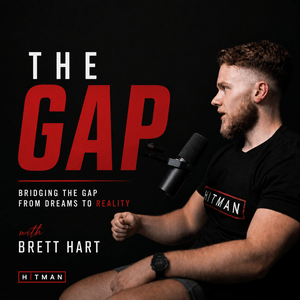
The Gap is about bridging the gap from dreams to reality. Hosted by Brett Hart, the podcast explores performance, coaching, mindset, business, and the lessons learned through pursuing something bigger. Through real conversations with athletes, coaches, entrepreneurs, and high performers, The Gap dives into what it actually takes to turn ambition into actionand action into results.
Podcast websiteListen to The Gap, Mind Pump: Raw Fitness Truth and many other podcasts from around the world with the radio.net app
Get the free radio.net app
- Stations and podcasts to bookmark
- Stream via Wi-Fi or Bluetooth
- Supports Carplay & Android Auto
- Many other app features
Get the free radio.net app
- Stations and podcasts to bookmark
- Stream via Wi-Fi or Bluetooth
- Supports Carplay & Android Auto
- Many other app features

The Gap
Scan code,
download the app,
start listening.
download the app,
start listening.
The Gap: Podcasts in Family
 Ireland
