
Listen to this podcast in the app for free: Download for free in the App Store
radio.net
Sleep timer
Save favourites
94 episodes
I reinvented myself in the last 6 weeks (big life update!)
13/10/2026 | 44 mins.WOW.
Where do I even start here??
How about this: I’m no longer a CEO…
I’m no longer working at my own company. In fact, I no longer even receive a salary from AJ&Smart.
Apart from acting essentially as an occasional freelancer and being part of our Guides community, I’m out. Like OUT OUT.
For the first time in 15 years I am not running a business, i’m not building a business… i’m…
“Making Art” And no, not as a side hustle, not as a fun little detour before I give up and get sucked back into the business world.This new Art thing got very serious very fast, and that’s what this episode is all about.Below you’ll find the youtube vid where I explain it all (and introduce you to my new music project) you can also listen on any podcast app or read the pretty good AI generated summary below the vid.Love you all.Jonny ;)
This is the written version of this week’s episode. The podcast is the full, unedited, chaotic version. This is the good bits, organised by taking the transcript and having an AI tool clean it up.
I gave myself a year to figure out what I’d do next. It took one day.
Not a week. The SAME day.
On the 20th of August I put out an episode called “Goodbye for Now and What’s Next” and told you I was taking a break from everything to go and pursue something more artistic. I didn’t know what. One of the ideas floating around my head was a documentary, maybe. I’m 38, and the whole plan amounted to this: if I don’t pursue this calling now, I am simply going to regret it.
What I didn’t say in that episode, because I still hadn’t properly talked to the team, is the bit I can say now. I am no longer the CEO of AJ&Smart or Facilitator.com. I’m not taking a salary from the company. Laura is the CEO. I am, I suppose, an unscheduled non-CEO.
And on the first day I was officially out, I sat down at my computer and installed Logic. Almost every single day since, I have been writing and recording music, and today the first song goes out into the world. More on that below, band name included (and no, it’s not what you think).
If you’re a business owner who has been “about to” do the creative thing for a decade, this one is about you.
The nuggets (if you only read one section, read this one)
* The safety net was the problem, and money was only part of it. Since I was 20 I’ve tried to balance creative work with running a business, and I have never produced anything I’m proud of. When there’s an easier thing you already know how to do sitting right there, you go back to it.
* The 3 days creative, 2 days business week does not work. Monday to Wednesday on art, Thursday and Friday on Facilitator. By Wednesday nothing is clicking, I’m back doing what I know, and the art gets treated like a side hustle again. Every time.
* “Doing too well to stop” was never going to end on its own. I kept waiting for AJ&Smart to fade out naturally so I’d be forced into something else. It is thriving in ways we never expected, so I had to make the decision myself.
* Burn the boats, then watch what happens the next morning. I expected to aimlessly wander for a year. I’d had the free time before, that was the entire premise of The Unscheduled CEO, and I floated around doing nothing with it. The second the salary and the title were gone, I was recording.
* Treat the new thing like a job, in a workmanlike way. 9:30 or 10 until 6pm, in the studio, nothing else. 4 out of 5 days nothing works. Then one tiny piece of one thing clicks and it was worth the entire week.
* Get it out there as quick as possible and don’t sit on it. That’s the advice from my neighbour, who’s in the music industry, and it’s the same philosophy as this podcast. 5 or 6 songs written, 2 finished, the first one out today.
* The tools are absurdly good now. A studio that would have cost around €200,000 when I was a broke teenager is now about €4,000 at home, not counting the laptop. If you played music as a teenager and stopped when you got serious, go back and look.
Okay. The story.
Waiting for the company to fade (it didn’t)
Part of me was waiting for the problem to solve itself. At some point, I figured, the facilitation thing would fade out naturally and I’d be forced to go and do something else. That wasn’t happening in August. It isn’t happening now. The company is doing too well for there ever to be a natural end point.
And I had a suspicion about why nothing creative had ever come out of me in 18 years of trying. Apart from the possibility that I’m just not talented, there was always the safety net. Creative work has no clean answers, and sometimes you go days without creating something you’re proud of. Weeks, even. So by Wednesday of the split week I’d be thinking, this is not working, and I’d slide back to running a company of our type, which is easier because I know how to do it. The painful part never got done.
The decision: no salary, no title
So 5, 6, 7 weeks ago, whatever it was, I decided to burn the boats. I am no longer taking a salary from AJ&Smart.
I’m still part of it, but in a completely different way. I’m still in the Guides project, our verified facilitator thing, and I’ll keep turning up to the meetups. And I’ll still do the rare, very important corporate things: a client who wants me to show the method to 100 people on the same day, or to the VP level of the company. I did one of those in Canada a couple of weeks ago. The blessing of facilitation work is that I don’t need to prepare for it, I just go and deliver, so I can work on music nonstop all the way up to the one day, even on the plane. One one-day workshop in Q4 covers my expenses for the rest of the year and maybe allows me another guitar, which is where it’s going to get dangerous.
For the record, I’m not going to pretend to be broke to get some sympathy. I’ve been running AJ&Smart since I was 23, I’ve got a good amount of savings, and I am lucky with this situation. I’m just happy I finally took the jump.
Day 1: I installed Logic
Laura can run most of AJ&Smart with or without me, which was the whole premise of this show, and in all that unscheduled time I never found another thing. Then all I did was remove me, and the same day I was recording music, already locked in. The instruments behind me were a potential option, NOT the plan.
Since then, I’ve been treating it like a job. Every day between 9:30 or 10 and 6pm I’m in here making music and doing nothing else. 4 out of 5 days nothing clicks, and then one tiny piece of one thing does and the whole week was worth it. It’s been the most calmly satisfied I’ve been creatively since I was 12 or 13, making comic books all day to show my friends.
I have no idea how to use the recording software. I’ve been asking the AI tools things like “how do I dampen this drum” and watching tons of YouTube tutorials. I edited the video in Final Cut Pro, which I hadn’t touched since college. The whole home studio cost maybe €4,000 without the laptop.
It’s also turned into a social thing, which is rare for me. This morning at 9am Kyle, our finance guy at AJ&Smart, was at my apartment reprogramming drum fills I’d put in and didn’t like, because I’m not a drummer and I don’t know what I’m doing. He played drums on the track. I don’t want to hang out and talk with people. I want to make stuff with people.
And when people ask what I’m doing now that I’ve quit my job, I tell them I’m going to try to be a successful musician. The reactions are quite funny, because I don’t think people usually say that. Kyle’s description of the music, by the way: a combination of Radiohead and The Offspring. I can work with that.
Jonny Woodcock (it’s not a dick joke)
A couple of months ago Laura and I were watching The Phantom Thread, as part of a let’s-watch-every-Daniel-Day-Lewis-movie thing. It’s about a dressmaker who, once the novelty of a new person wears off, starts to get irritated by them. He can hear them chewing. At the end of the film Laura and I looked at each other and, I don’t know who said it first, but let’s say it was Laura: you are Mr Woodcock. And yes, that is how I am when I’m locked onto something. I notice when people are chewing.
That was around June. Then I wrote the second song, which I’d called Woodcock, because it’s about a character who is irritated by everybody and retreating from his friends. In the chorus I sing “people call me Woodcock, tell me who’s shocked.” Then, sitting next to Laura at the airport in New York, I said: what about Jonny Woodcock? Solo artist, friends brought in when possible. She said that’s perfect, and I bought jonnywoodcock.com right there at the gate.
Then Jake Knapp, who I’d sent the song to maybe 4 or 5 weeks ago, messaged to say it was stuck in his head, and then: what do you mean by “people say I would cock”? (W-O-U-L-D.) And I thought, oh no, this is going to cause so much confusion. And then: who cares. I’m not trying to do some deep serious thing here. Jonny Woodcock it is.
The song is called Golden Goose. Eli was busy on Friday, so I filmed the practice room on my phone and edited it myself. The website is one of Laura’s paintings with the video on top, and I asked Claude to put it online. It’s probably a bit janky. It’s a music website with one video on it, which is all it needs to be.
What I do differently now
Make the space first, and make it properly. Not a 3-day week, not a side hustle. Remove the thing you’d fall back to, and see what you do the next morning.
Then treat it like a job. Turn up at the same time every day, accept that 4 out of 5 days produce nothing, and stay for the one that does.
Ship fast. I’ve been shamelessly asking everyone I know in the music industry for advice and connections, and the best advice so far was get it out there and don’t sit on it. From about day 3 I was sending people recordings.
If you’re in it right now
If you’ve been “about to” start the thing for years, I’d just gently point at the pattern above. For 18 years I thought I’d weave it in. The week never had room for the hard, unclear thing when the clear, easier thing was right there.
I will not be offended if you don’t like the music. It’s kind of loud, it’s a demo, I don’t know how to mix properly, and I haven’t really played since my early 20s, so there are probably a ton of mistakes in there.
What I can tell you is that the people I met at the creative retreat in New York a few weeks ago didn’t say “Jonathan, that’s a really risky move.” They said “f**k yeah, do it.” I appreciate that energy more than you know.
I said the last one was the final episode. I think I’ll occasionally still do this, because I enjoy the process and I love the people who listen. Maybe next time I’ll be announcing a little live Jonny Woodcock gig somewhere.
Cheers, Jonathan
P.S. The full episode has the song in it, plus a lot more rambling about pedals. If you know one business owner who’s been sitting on the creative thing for years, send them this one.
P.P.S. If you go to www.jonnywoodcock.com or the Jonny Woodcock YouTube channel, subscribe and leave a comment. If I’m ever talking to record people and they have a look, it would be nice if there was a bit of activity under there. And I hope the chorus gets stuck in your head. A couple of friends say it has.
This is a public episode. If you would like to discuss this with other subscribers or get access to bonus episodes, visit www.unscheduledceo.comGoodbye, for now (and what's next)
20/08/2026 | 17 mins.This is the written version of this week’s episode. The podcast is the full, unedited, chaotic version. This is the good bits, organised by taking the transcript and having an AI tool clean it up.
Hey youuu.
The time has come…
This will be the last episode of The Unscheduled CEO for a while. Forever? Maybe, but definitely for quite some time.
I’m hitting the pause button on The Unscheduled CEO. The indefinite pause button. The podcast, the YouTube channel, all of it.
Unscheduled is about to get truly Unscheduled.
The reason isn’t that the show stopped working. The show is a sure thing for me at this point, it could safely keep generating revenue, and that’s exactly why I’m stopping it. If you’ve ever kept doing something because it’s safe and it pays, this one is about you too.
The nuggets (if you only read one section, read this one)
* The safe thing that makes you money can be the thing keeping you stuck. This show brought in money through masterminds, and people came through it and booked us for consulting work. It’s a sure thing. I’m stopping it BECAUSE it’s a sure thing.
* Half measures don’t work. I stepped back from AJ&Smart and Facilitator in May, but I kept the podcast, the channel, all the safe stuff. I wasn’t giving myself the space, the time, or the financial pressure to figure out what I really want to do.
* Your media consumption is telling you something. When I watch a sculptor like Bobby Fingers pour his heart into something completely impractical, I don’t just think “that’s cool.” I feel this feeling of, I love this. And at the same time it reminds me that I’m not doing what I want to be doing.
* At some point you have to take your own advice. I’ve said on this show, more than once, that doing the safe thing that makes you money is sometimes the wrong move. Time to eat my own dog food.
Okay. The story.
2 job offers and less than €1 in the bank
When I was 22 or 23, I had a week where I got 2 job offers. One was to become a web designer at a small business here in Berlin. The other was to be the assistant role on a film set close to Berlin. The movie was Cloud Atlas (big props to a friend who got me the job offer btw :)
I had been working on small film sets for a while at that point, and this would have been my first big feature. A menial job, very low down in the ranks, minimum wage, up at 6 in the morning to get out to the set. Which is normal for film work when you’re an absolute beginner.
But I was broke. A friend reminded me recently that at one point I had under €1 in my bank account. So I took the design job.
That decision took me on a very interesting, globetrotting journey. It led to building AJ&Smart, it led to building Facilitator, and it gave me a financially successful life that I’m very thankful for. It also took me completely away from the thing I moved to Berlin to do in the first place, which was make art. Movies, music, pointless stuff. Doesn’t mean any of it would have been good. It’s just the thing that has always interested me more than business.
Why this show existed in the first place
The Unscheduled CEO started maybe 2 years ago, could be 3, as a sometimes once every 6 weeks, sometimes once every 6 months outlet. I was transitioning out of the CEO role at AJ&Smart into more of a board member role, and I needed a place to talk through what I was interested in and figure out what I wanted to do. Also, I just like making videos, even the technical side of putting a show together.
Last year I decided to do it weekly, and we’ve kept that up almost perfectly. Along the way I started the Thursday videos, the more business focused ones, and here’s the interesting thing: those videos do better than everything else. And I don’t really care. I don’t feel much when I look at them.
The Offset, and the 8% problem
Last year I did an episode about an idea I called “The Offset.” The short version: my life had become much too practical. The business world had broken me down into a money making machine, and between that and the responsibilities of adult life, having a kid, being the breadwinner in my extended family, I had drifted very far from why I started any of this.
I talked about it on the show with my mentor Blake, and he’s the one who convinced me to actually pursue it. He said I need to at least go and f*****g explore the creative stuff, or it will be a regret on my deathbed. He’s right, but I’m kind of a scaredy cat. I don’t have anyone to fall back on financially, I need to earn money or manage my money well, and I have this very big fear of walking away from something that can safely make me money.
Not that I think I’m going to make something great. It’s just that I want to work on things that use my WHOLE being, and not just 8% of myself. It feels a bit depressing to spend your days on things that are very easy but not very satisfying.
30 people vs 1,000,000 views
In February I ran my first creative art retreat, Area X. The retreat itself was almost like its own little art installation. It cost a huge amount of money to put on and it broke even, essentially. So it’s not a business.
But I loved it. I loved the people I met there, I loved the things we did there. Only 30 something people were at it, and the memories and the things that came from it still have an impact on me, in a way that a video with a million views never did.
And the whole time since, I’ve been going: yeah, but how would I even do more of that? I can’t support myself making things like that, I can’t support anybody. This is not practical, this is not safe, but it feels right, and it feels like I have to use a higher percentage of my abilities to make it happen.
A Saturday breakfast at 11:30
I’m recording this on a Saturday. I was sitting having a very pensive breakfast with Laura, going around the same loop I’ve been on all year: I want to do something different, but I’m cutting myself off from the sure thing again. AJ&Smart is a sure thing for me. Even this podcast is a sure thing for me at this point.
But it’s not what I want to do. That was this morning. It’s 11:30 now, and here we are.
What happens now
I’m stopping the podcast, and I’m going to stop thinking about it. Same for the YouTube channel. I already stepped back from AJ&Smart and Facilitator in May, and Laura is running things now. And I’m going to explore some much, much stranger, very different things.
All of the ideas are completely insane and completely impractical, and the payoff would be measured in years, not weeks. I’ve been lucky: I built up savings from running AJ&Smart for so many years, and the business will pay me some royalties. But that’s not going to support the crazy stuff I want to explore. So we’ll see how I do that.
I keep coming back to the people I look up to, and it’s usually their second act I’m watching. Bobby Fingers used to be in a very well known TV duo in Ireland, the Rubber Bandits. I never paid attention to any of that. But Bobby Fingers the sculptor fascinates me. I’ve been talking about the book The Second Mountain all year, and that’s what I’m trying to do here. Maybe I won’t manage it. Maybe I’ll pussy out and end up back doing exactly what I was doing. But at least I’ll have explored it, and I’m exploring it in public.
I have no idea what I’ll be doing this time next year. I think that’s kind of cool.
If you want to see where this goes, sign up for the Substack at unscheduledceo.com. That’s where I’ll post if and when I do something again, or when I have something to tell you about what comes next.
And thank you. Everyone who listened over the last year or 3, I really appreciate you guys. I’ll be in touch when I have something to talk about.
Cheers, Jonathan
P.S. A lot of these revelations came from a new workshop I designed for myself and my friends, it’s called “What You Already Know” and after I run it a few more times i’ll share it with you guys.
This is a public episode. If you would like to discuss this with other subscribers or get access to bonus episodes, visit www.unscheduledceo.comHow I deal with haters
11/08/2026 | 36 mins.This is the written version of this week’s episode. The podcast is the full, unedited, chaotic version, this is just the rundown of what we talked about, cleaned up from the transcript with an AI tool.
Hey,
UUugghhhhh i’m tired lads.
Too much travel the last few weeks. My brain is sludgy, but i’m back in the studio!
I had a completely different topic planned for this one, but I ended up talking about what’s on my mind, which is why this thing is called The Unscheduled CEO.
What was on my mind was what it’s actually like when strangers start showing up in your comments, because the channel is growing and new people keep arriving with zero context on me. It’s a good one if you create anything online, or you’ve been thinking about starting.
Anyway, here’s what we talked about in the episode:
Where the show actually is right now: the YouTube side did 984+ new subscribers and 30,000 views in the last 28 days, the channel is at 4,600 subscribers, and the total number of people listening across all the platforms is coming in on the 10,000 mark. Total, not weekly. My initial goal of getting each episode to approximately 10,000 listens is NOT going to happen, and I talk through why the Thursday videos grow fast while the main show grows slowly, and why that’s the right way for this to work.
The trade nobody warns you about: the closer your content is to something real, the more people connect with it, and the more people get irritated by it. The book funnel video is at 14,000 views and brought in a wave of new people, including a full grown adult male getting b****y in the comments about my hair not being cut.
Criticism vs trolling, and how I tell them apart: a guy on LinkedIn told me the colours on the Substack made it hard to read, he was right, and I changed it immediately. A different guy commented “I don’t believe you” under a video he clearly hadn’t watched, and I made the mistake of trying to reason with him until I found him complaining about my haircut further up the thread. If the bigger videos keep growing, Eli will start removing the excessively trolley comments before I ever see them so I don’t just give up making them out of sheer annoyance.
Why I keep doing it anyway: I quit Instagram in 2020 and LinkedIn last year, and YouTube is the one platform I still enjoy. Creating stuff makes me feel good, consuming stuff all the time makes me feel bad, and the show brings new people into the orbit of our businesses, which beats relying on partnerships and paid ads. Tim Ferriss’s point about audio-only shows comes up too: way fewer people getting weird about you, but the video version just does so much better.
Bobby Fingers, and a little tease: one of my favourite creators of all time has a new video called “Who Crapped in Johnny Depp’s Bed?”, and if you’ve never seen his stuff, start with the Jeff Bezos one. This turns into a tease for a series I want to try on the channel called “works of art,” where I respond to things other creators have poured their heart and soul into.
If you only listen to one section of the episode, make it the criticism vs trolling one.
Cheers, Jonathan
P.S. If you know one business owner or creator who’d enjoy having this on in the background, send them this episode.
P.P.S. A letter from a listener named Nicholas arrived at the office mid-recording. Nicholas, I’ll read it.
This is a public episode. If you would like to discuss this with other subscribers or get access to bonus episodes, visit www.unscheduledceo.comDid success kill my creative spirit? Well...
04/08/2026 | 14 mins.Hey!
I don’t have time to do the proper written version of this weeks episode because this one’s coming in HOT from a windy beach in Ireland!
It’s a short, 15 min stream of consiousness about success, money and creativity though. I think anyway. I also don’t have time to listen to any of it to remind myself of what it’s about.BUT I hope you like it.See y’all next Tuesday. Cheers and love,Jonathan
P.S. I listened to the first 15 seconds and, at least to me, sounds like that new mic I bought is f*****g amazing. Can’t remember what it is, but compare it to the last outdoor episode and it’s crazy. THE WIND WAS INTENSE.
This is a public episode. If you would like to discuss this with other subscribers or get access to bonus episodes, visit www.unscheduledceo.comHow I get my best ideas (my creative routine)
28/07/2026 | 32 mins.The written version of this week’s episode. The podcast is the full, unedited, chaotic version. This is the good bits, organised by taking the transcript and having an AI tool clean it up.
HEY!
I was supposed to fly back to Berlin yesterday.
Instead I’m sitting on the ground in a forest in Sweden, recording this week’s episode on AirPods and a laptop camera. Changing my flight was quoted at €15, then the Eurowings website broke, so booking a whole new one cost €100. I paid it, because I didn’t feel like leaving yet.
I wasn’t going to record at all this week. The show is called Unscheduled, I can do it whenever the hell I want, and nobody would have noticed a skipped Tuesday. But I was sitting there rereading The War of Art, and I caught myself asking: why the f**k am I recording this episode anyway?
The answer turned into the episode. And I think it applies to your business as much as it does to my podcast.
The nuggets (if you only read one section, read this one)
* Ideas behave like fish: you can’t summon them, you can only be out on the water when they show up. This is Rick Rubin’s framing and I’m stealing it openly. The fisherman casts lines for a chance to catch something. The fish might be there either way, but if you’re not out there, you catch nothing.
* A dedicated practice matters just as much for making money as it does for making art. You have to be creative to figure out how to generate revenue. It’s the same muscle, and it responds to the same routine.
* If talking is how you think, build your outlet around talking. This show is one unbroken, improvised take because talking is my way of getting ideas out. Your version might be writing or walking. Find it, then give it a slot.
* Your workspace trains your brain. A band walks into a studio and creating becomes natural, because the studio is where they create. My office is set up as a place where I go to check our numbers. Worth noticing what your space tells you to do.
* The content you make for other people doubles as infrastructure for yourself. This podcast is my brain dump, my idea generator, and my way of staying in touch with people without networking. Last week’s video handed me the idea for a whole new workshop.
* If you’re loving a trip, check what staying actually costs before assuming you have to leave. Mine cost €100. Most people never even look.
Okay. The story.
The fisherman idea
I have a few books with me in Sweden but the 2 that I kept rechecking were my classics: The War of Art, and Big Magic by Elizabeth Gilbert. If you listen to this show you’ll know I bang on about both of them. They circle the same concept, which is that ideas come from somewhere else, and if you’re in the right headspace you become a kind of antenna that can receive them.
Whether you believe that or not doesn’t matter, and I don’t even know if I believe it myself. It’s a useful metaphor because you can experience it. Paul McCartney says the entire melody of Yesterday appeared in his mind in one go. Chris Martin says the same kind of thing all the time. Writers say it, filmmakers say it: I was just driving, and boom, the idea arrived.
Rick Rubin has my favourite version of it. You’re a fisherman out at sea, casting lines into the water for a chance to catch something. That’s why writers sit at the desk from 10am until 1pm every day no matter what. They’re keeping the lines in the water.
And that’s why I turned the camera on today. I’ve been doing this show for almost a year now, since September, and most episodes have no specific topic when I start. Sitting down on a Monday and pressing record is me casting the lines.
I’ve felt this myself. When I was in a band and in the practice of songwriting, the songs just came. When I was writing scripts regularly in college, the film ideas flowed. Your antenna becomes more sensitive to the thing you keep showing up for.
The mustard jumper problem
Last week I told you about spending 2 days with my mentor Blake, so here’s the short version if you missed it. I went in with the goal of getting the company to 10 million a year. We were at six. By the end of the 2 days I realised I didn’t want that at all.
What Blake actually did was watch me. In San Diego I was in a great mood, excited about buying a mustard coloured jumper in a tourist surf shop, telling him how much I loved every coffee shop we walked into. Then we’d sit down to talk about the business and he’d say: whoa, your entire vibe just changed. More serious, more closed off, kind of practised and strange. He kept saying GERMAN.
When I talked about my relationship with my now fiancée, he said that’s the real version of you speaking. When I talked about the 10 million, it was the other one.
We dug into it and found the uncomfortable bit: to make AJ&Smart and Facilitator work as well as they did, I’d more or less stopped using my creativity. Like a lot of entrepreneurs, I was a creative first. I was in a band. I moved to Berlin to be a filmmaker, not to run a business. And because the business was working so well, it was really hard to get out of that mode.
Blake’s point, over and over: there’s a state I can tap into where I do my best work. The in-person event we’d run the week before was the example. And the more time I spend in that state, the more successful the business will be.
Talking is my way in
Blake is a music producer, and he gave me an example I keep thinking about. A band puts themselves in the studio because the studio is where they create. Being in that room puts them in the headspace, and creating becomes natural there.
Which made me look differently at the AJ&Smart office. It’s beautiful and it’s fun, but it’s set up as a place where we make money, where I go in and check the numbers. So since that trip, the question has been: what situations can I put myself in where things just flow through me, no blockages, as natural as I can possibly be?
One clear answer: talking. That’s the actual reason this show exists as ONE unbroken, improvised take instead of an edited thing. If I bring any usefulness or strangeness to this business that’s hard to compete with, it’s that I can turn on a camera and talk for a long time, unscripted, and sometimes something interesting comes out of it.
There’s an exercise called morning pages, from The Artist’s Way by Julia Cameron. Every morning you fill 3 letter-size pages with stream of consciousness writing. Not a diary entry, just a brain dump. I did it for something like 7 years, I have piles and piles of notebooks. This show is my morning pages now, done out loud. The one twist is that I need the feeling that someone might get some use out of what I’m making, or I don’t feel like making it.
And it has a load of other benefits. New people find the companies through the show. People I’d never manage to stay in touch with (I’m not the best at networking) keep getting reminded I exist because episodes keep coming out. And it generates ideas for everything else. Last week’s video about Blake is what triggered the idea for the new workshop I’m building.
The €100 decision
Quick sidequest, because it belongs to the same thing. We were supposed to go back to Berlin yesterday and I didn’t feel like it, so we stayed. I know I have a flexible life because of the business I’ve built, but I’ve been around so many people mid-trip saying “we have to go now” when they don’t. If you’re loving something and dreading the return to your day to day, at least check the price of staying. Mine was €100. That was the entire cost of not breaking the flow.
And no, staying doesn’t contradict the routine-for-creation thing, because I’m still doing the routine. Same show, different location. Sometimes a new location is exactly what knocks the horse blinders off.
What I’m doing with all of this
I’m building my first personal development workshop. It’s born from the creative retreat I ran in February, 5 days, 5 nights, full digital detox, which a lot of you were actually at. I’m trying to find the compact version of that, something people could access more regularly, plus a new layer from the Blake stuff: how do you even figure out what you actually want to explore in the first place?
There’s a V1 of it done. I’ll test it on a couple of friends first, then in September on our guides in New York. (Guides are the top level of our facilitator business. A couple of you listen to this show, and yes, you’re our guinea pigs.)
That’s why the reading pile out here is The War of Art, Big Magic, The Surrender Experiment and The Second Mountain, plus my notes from February.
One more thing that fits. I saw The Odyssey at an IMAX here in Sweden on Saturday (not 70mm, in case you’re wondering). I’m not telling you it’s a great movie. What I love is watching someone get an insane, humongous thing out of their head and into reality. Long term, that’s the goal for me too: keep growing the business, sure, but make things that are creative, weird and risky. The February retreat was a first pinch of that. This show is another attempt at it. The business content has always been a bit of a Trojan horse to get you into this other stuff anyway.
If you’re in it right now
Maybe you have a switched-off version of yourself too. A thing you were before the business worked, parked because the serious mode was paying the bills.
2 small things to try this week. Notice which topics make you playful and which ones flip you into your own version of German mode. And find one slot in your week where you sit down, cast the lines, and see what shows up. You don’t need a podcast for it. 3 pages and a pen worked for me for 7 years.
Cheers, Jonathan
P.S. This is the cleaned-up version. The full episode has the forest, the rain, a very large ant, and me completely losing my train of thought after going to get my sunglasses... If you know one business owner who’d get something out of this, send it to them.
P.P.S. If you haven’t read The War of Art or Big Magic, please just read them. I have nothing to do with either of them, I just think you should.
This is a public episode. If you would like to discuss this with other subscribers or get access to bonus episodes, visit www.unscheduledceo.com
More Arts podcasts





Trending Arts podcasts




















About The Unscheduled CEO
Close your eyes...
Now imagine The Diary Of A CEO but without the interviews, without the production value, without editing and without any topics.
Imagine if the host was just sitting by himself, talking about... nothing really? What's the guy's name? Steven? Yeah, imagine him just sitting there rambling incoherently for like an hour.
Thats The Unscheduled CEO!!
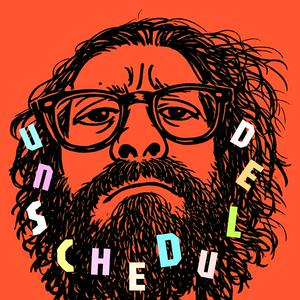
This podcast is hosted by Jonathan Courtney, a hairy, Irish, Business Man. ENJOY!
www.unscheduledceo.com
Podcast websiteListen to The Unscheduled CEO, Fashion Neurosis with Bella Freud and many other podcasts from around the world with the radio.net app
Get the free radio.net app
- Stations and podcasts to bookmark
- Stream via Wi-Fi or Bluetooth
- Supports Carplay & Android Auto
- Many other app features
Get the free radio.net app
- Stations and podcasts to bookmark
- Stream via Wi-Fi or Bluetooth
- Supports Carplay & Android Auto
- Many other app features

The Unscheduled CEO
Scan code,
download the app,
start listening.
download the app,
start listening.
The Unscheduled CEO: Podcasts in Family
 Ireland
