
Listen to this podcast in the app for free: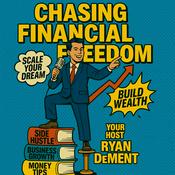 Download for free in the App Store
radio.net
Sleep timer
Save favourites
293 episodes
DSCR Loan No Tax Returns: How Self Employed Investors Qualify on Rent | Ep 404
21/10/2026 | 9 mins.Can you get a DSCR loan without tax returns? Yes. With a DSCR loan, the rental property's income qualifies you, not your personal tax return.
If you're self-employed, your tax return is built to save taxes, not to buy rentals. In this episode, Ryan walks through an example investor who shows $18,000 of income on his tax return and still qualifies for a $300,000 rental.
You'll learn:
Why your tax return works against you as a self-employed investor
How the rent covers the payment, and what a 1.39 ratio means
What to do when the rent is thin, and how more down moves a 1.17 up to 1.25
What some programs look at on credit, cash to close, and reserves
How the appraiser estimates market rent on the property
Four steps to take before you apply
The numbers in this episode are an example for illustration only. Every program is different, so talk to a licensed loan officer about your own situation.
More tools and episodes at trutalk.coDSCR Cash Out Refinance: How Much Equity You Can Actually Pull | Episode 403
14/10/2026 | 9 mins.Your $180,000 of equity may turn into only $95,000 of cash on a DSCR cash-out refinance, and that gap lands right when you were counting on the money for your next deal.
This episode shows you the math. Take the value, multiply it by the program's loan-to-value cap, and subtract what you owe. Say a rental is worth $340,000 and you owe $160,000. At 75%, that is $255,000 minus $160,000, or $95,000.
Then the lender tests the rental again on the new, larger payment. Say the ratio goes from 1.76 to 1.24, and a program that wants 1.25 would cap your cash at a lower amount. You will also hear how seasoning, which is how long you have owned the property, can change the value the program uses, and what the cash costs you in loan costs, a higher payment, and a thinner equity cushion.
You leave with five steps to run on your own rental before you count on the cash. Your cap, minimum DSCR, and how long you have owned the property depend on the program and the rental.
Run your own numbers before that cash goes into your next deal.Before You Offer on a Rental: Run the DSCR the Way Underwriting Will Ep 402
07/10/2026 | 11 mins.Run the DSCR the way underwriting will before you offer on a rental, so the ratio you close on is the one you live with.
In this episode, Ryan opens with one hypothetical rental: a 1.33 DSCR on the spreadsheet that drops to 1.11 once the lender's numbers go in. Same house, same loan, four inputs.
He walks through each. Rent: why the lender uses supportable rent from the appraisal or lease, and how to run the ratio three ways, including a vacancy month stress test. Taxes: why the seller's bill is not yours, and the three questions to ask the assessor. Insurance: why you need a bindable landlord quote before your inspection window closes, and how it hits cash to close. HOA: why a bigger down payment cannot shrink dues, and what to search for in the reserve study and board minutes.
He closes with the check: run the lowest of your three ratios before you offer.Bridge Loans Explained: How to Buy Your Next Rental Before You Sell Ep 401
30/09/2026 | 7 mins.Bridge loans explained: how to buy your next rental before you sell the one you already own. Here is exactly how the equity gets unlocked.
In this episode, Ryan lays out the entire bridge loan model in the first minute, then walks through each piece. A bridge loan borrows against the equity you already have in your current rental, typically 70 to 80 percent, so you can move on a new deal now instead of waiting months for a buyer.
He covers how the loan is secured against your existing equity, what it actually costs to carry (short-term, interest-only, 6 to 12 months, and the rate premium you trade for speed), the two ways you pay it off (selling the old property or refinancing the new one), and exactly when a bridge loan is the right call versus when it turns a good deal into a stressful one, including how it is different from hard money.
He closes with the four-step framework: confirm your real usable equity, line up the new deal's numbers against the carrying cost, have a real exit, and budget for both payments for the full term.
Know your usable equity, know what it costs to carry, and know your exit before you use a bridge loan.Fix and Flip Loans for Beginners: What You Need to Fund Your First Deal Ep 400
23/09/2026 | 8 mins.Fix and flip loans for beginners: what you need to fund your first deal, and why you do not need all the cash yourself. Here is how the money really works.
In this episode, Ryan lays out the entire fix-and-flip loan model in the first minute, then walks through each piece. A fix and flip loan funds most of your purchase and your rehab, built around the after-repair value (ARV), not just what you pay today, which is why most first-time flippers who think they need all the cash are wrong.
He covers what the loan actually funds (up to about 90 percent of purchase, up to 100 percent of rehab, capped at roughly 70 percent of ARV), the draw process that trips up every first-timer (the rehab money comes back in pieces, so you front each stage and get reimbursed after inspection), the carrying costs that eat your profit the longer you hold, and what you actually need to qualify: down payment, credit, experience, reserves, and a deal that pencils, with no tax returns.
He closes with your two exits: sell the flip and keep the spread, or refinance into a long-term DSCR loan and keep the property as a rental- the bridge from flipping into a rental portfolio.
You do not need all the cash to fund your first flip.
More Business podcasts








Trending Business podcasts





















About Chasing Financial Freedom
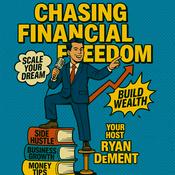
If you're an entrepreneur, small business owner, or side hustler looking for new ways to make money, scale your business, or turn your side hustle into a business, we've got something for you. We'll be interviewing successful entrepreneurs who have turned their dreams into reality. We'll learn how they did it and what they wish they'd known before they started their businesses. Your host, Ryan DeMent, has unique insights built by 25 years of experience in the financial industry and several failed businesses. So if you're looking for new ways to make money, scale your business, or turn your side hustle into a business… then this podcast is for you!
Podcast websiteListen to Chasing Financial Freedom, Better With Money and many other podcasts from around the world with the radio.net app
Get the free radio.net app
- Stations and podcasts to bookmark
- Stream via Wi-Fi or Bluetooth
- Supports Carplay & Android Auto
- Many other app features
Get the free radio.net app
- Stations and podcasts to bookmark
- Stream via Wi-Fi or Bluetooth
- Supports Carplay & Android Auto
- Many other app features

Chasing Financial Freedom
Scan code,
download the app,
start listening.
download the app,
start listening.
Chasing Financial Freedom: Podcasts in Family
 Ireland
