
Listen to this podcast in the app for free: Download for free in the App Store
radio.net
Sleep timer
Save favourites
In Conversation with Janina Fisher: Wisdom Between Colleagues; Insights For Us All
Janina Fisher, PhD
Latest episode
38 episodes
Making Room for All Your Parts: A Guided Meditation with Janina Fisher
14/10/2026 | 12 mins.What if, instead of trying to silence our inner critic, push away painful feelings, or overcome distress, we simply became curious about what those experiences are trying to tell us?
In this special episode of In Conversation with Janina Fisher, Janina offers something a little different—a guided meditation inviting listeners to slow down, turn inward, and gently explore the many parts of themselves.
Drawing on her compassionate, parts-based approach to trauma healing, Janina guides us in noticing our thoughts, emotions, and bodily sensations as communications from different parts of ourselves. As we begin to recognize how these parts interact—how a critical thought might trigger shame, or how feelings of hopelessness might awaken another part that wants to fight back—we can start to understand our internal experiences with greater curiosity and less judgment.
Rather than trying to change or silence these parts, Janina invites us to make room for them, recognizing that even our most distressed or critical parts have stories to tell and deserve to be heard.
This meditation is a small gift from Janina to her listeners, an opportunity to pause, reconnect with yourself, and practice meeting all your parts with kindness and compassion.
We hope you'll return to it whenever you need a moment of understanding, connection, or gentle self-reflection.What If Telling the Story Isn’t Enough?
07/10/2026 | 38 mins.What happens when talking about our pain keeps us circling the same story instead of helping us move through it?
In this engaging episode of In Conversation with Janina Fisher, Janina sits down with clinical psychologist and psychodrama expert Dr. Tian Dayton to explore the power of experiential therapy—and why sometimes healing requires more than talking about what happened.
Tian introduces some of psychodrama’s most powerful techniques, including role reversal, doubling, and the empty chair, and explains how they can help clients move from talking about a relationship or experience to engaging with it in the present moment. By stepping into another perspective, clients may discover feelings, insights, and possibilities that weren’t accessible through the familiar story alone.
Janina and Tian explore the difference between repeatedly retelling painful experiences and revisiting them within a safe, supported therapeutic environment. Rather than remaining trapped in the role we have always occupied, experiential work can interrupt old narratives, bring the body into therapy, and allow emotions such as grief or anger to be felt and move through us.
Their conversation also explores the healing potential of groups, co-regulation, grief work, and the simple but powerful experience of encountering another person rather than remaining alone with our internal world. Tian shares how psychodrama and sociometry can create connection through shared experience, allowing group members to become therapeutic resources for one another.
Ultimately, Janina and Tian arrive at something larger than any one therapeutic method: healing is not a destination. We don’t finish our healing once and for all, and we don’t need to wait until some future moment to finally be “there.” Growth happens through experience, relationship, practice, and learning to return again and again to the present moment.
Key Takeaways:
Telling the story isn’t always the same as healing from it
Psychodrama helps clients move from talking about an experience to engaging with it
Role reversal can open perspectives that talking alone may not reach
The body and emotions need a place in therapy
Groups can become powerful sources of connection and co-regulation
Experiential work can be especially powerful for grief and unresolved relationships
Healing isn’t something we finish—it’s an ongoing process
Sometimes the most powerful therapeutic interventions are also the simplest
About Tian Dayton
Dr. Tian Dayton is a clinical psychologist, internationally recognized expert in psychodrama, trauma, addiction, and Adult Children of Alcoholics, and the author of numerous books on trauma, recovery, relationships, and experiential therapy.
A board-certified trainer in psychodrama, Tian has spent decades bringing psychodrama, sociometry, and experiential approaches into trauma and addiction treatment. She taught psychodrama at New York University for eight years and has trained generations of clinicians in methods that engage not only the thinking mind, but the body, emotions, relationships, and lived experience.
Her work includes the development of Relational Trauma Repair (RTR), an experiential model integrating psychodrama and sociometry with contemporary understandings of trauma and relational healing.
Tian’s Website:
https://www.tiandayton.com/
Books by Tian Dayton:
Growing up with Addiction: How Adult Children of Addicts Can Heal Family Trauma, C-PTSD, and Codependency
https://www.amazon.com/dp/1785046497?lv=shuf&channelId=500&plpRedirect=mhFallback#
Other books can be viewed at author’s website:
https://relationaltraumarepair.com/endorsements/
The Living Stage: A Step-by-Step Guide to Psychodrama, Sociometry and Experiential Group Therapy
Sociometrics: Embodied, Experiential Processes for Healing Trauma and Addiction
The ACoA Trauma Syndrome
Emotional Sobriety
Trauma and Addiction
The Soulful Journey of Recovery
Treating Adult Children of Relational TraumaYou Can Want Love and Still Push It Away
30/09/2026 | 38 mins.What if the relationships we long for most are also the ones that activate our deepest protective patterns?
In this warm and insightful episode of In Conversation with Janina Fisher, Janina sits down with attachment expert and longtime Somatic Experiencing trainer Diane Poole Heller to explore how our earliest relationships shape the way we connect, protect ourselves, and respond to intimacy throughout our lives.
Together, they discuss why healing trauma doesn’t automatically heal attachment wounds—and why understanding attachment intellectually is very different from changing the patterns held in the body. Diane explains how early experiences can show up as the impulse to withdraw, cling, distrust, or even push away the very love and connection we desperately want.
Most importantly, their conversation offers a hopeful message: secure attachment can be learned. Through awareness, co-regulation, corrective experiences, and practice, we can gradually build a greater capacity for intimacy, repair, trust, and receiving care.
Drawing from clinical work as well as her own experience learning to receive love rather than deflect it, Diane brings attachment theory out of the abstract and into the lived, embodied moments where relationships actually happen. As she and Janina explore, healing isn't simply about understanding our patterns—it's about practicing something different until our nervous system begins to believe it too.
Attachment patterns aren’t fixed overnight
Trauma healing and attachment healing aren’t necessarily the same thing
Our relationship reactions often have a history
Sometimes we want love but can’t comfortably receive it
Attachment work has to involve the body
Small doses of connection can create meaningful change
Secure attachment affects more than romantic relationships
About Diane Poole Heller
As a therapist and practitioner in the field of attachment theory and trauma resolution, my driving passion and life’s mission have been dedicated to helping people understand how to create deep and lasting relationships by strengthening secure attachment skills, repairing attachment wounds and supporting resilience and post-traumatic growth.
I’ve spent over 30 years discovering, practicing and teaching new tools, approaches and strategies that alleviate suffering and foster healing—from corrective exercises that resolve trauma to complete frameworks and training that “repatterns” insecure attachment adaptations.
I’ve helped clients diminish the intensity of their symptoms, shift their behaviors, enhance resilience and often recover completely—and I’ve spent decades guiding and training other therapists in this work.
And after working with thousands of clients and therapists worldwide, I am convinced that not only do we all have the potential and capability to heal and build resilience—but that we are in fact innately designed to do so!
Diane’s Website:
https://traumasolutions.com/
Diane’s Books:
https://www.amazon.com/Power-Attachment-Lasting-Intimate-Relationships-ebook/dp/B07FDQW9QW/ref=sr_1_3?dib=eyJ2IjoiMSJ9.JQLuItjncm1sxFoZr72I-wvaohXniRyrUBUeVaz2kg0.Tr5UjJKANzRmsqqrMTkr5lTovUPJAwpc76PS87k9Dtc&dib_tag=se&qid=1785967976&refinements=p_27%3ADiane+Poole+Heller+Ph.D.&s=books&sr=1-3
HEALING YOUR ATTACHMENT WOUNDS:
How To Create Deep And Lasting Intimate Relationships
https://www.amazon.com/dp/1622038738?lv=shuf&channelId=500&plpRedirect=mhFallback
Free Attachment Quiz on their website
Take it multiple times
Great resourceYou Want Closeness. So Why Does It Scare You?
23/09/2026 | 44 mins.What happens when the person we most want to feel safe with is also the person who triggers our deepest wounds?
In this insightful episode of In Conversation with Janina Fisher, Janina sits down with pioneering couples therapist Dr. Ellyn Bader to explore why intimate relationships can so easily activate old wounds—and why those same relationships can also become powerful opportunities for growth.
Together, they unpack how childhood trauma, fear of intimacy, and unresolved disappointments can keep couples trapped in the same conflicts, even when both partners desperately want connection. Ellyn shares how her Developmental Model of Couples Therapy helps partners move beyond blame, understand what each person brings to the relationship, and learn to stay connected without abandoning themselves.
Janina and Ellyn also explore what therapists need to understand about working with couples, why individual therapists should be careful about taking sides, and how collaboration between couples and trauma therapists can open new pathways toward healing.
This episode offers a compassionate and nuanced look at relationships not simply as places where our wounds are activated, but as places where growth, differentiation, and healing can become possible.
Trauma can make intimacy feel threatening. People may deeply desire closeness while simultaneously becoming fearful or dysregulated when it occurs.
Repeated conflicts often point to something deeper. Unresolved trauma, early disappointments, and longstanding coping patterns can keep couples trapped in the same cycles.
Disillusionment can become an opportunity for growth. Learning to navigate disappointment and difference can help partners develop greater maturity and intimacy.
Healthy relationships require differentiation. Each partner must learn to express their own needs and values without abandoning themselves or expecting the other person to provide perfect safety.
Couples therapists need to actively interrupt destructive patterns. Simply allowing partners to reenact their conflicts in therapy rarely creates meaningful change.
Collaboration between couples and trauma therapists matters. Working together can help clinicians address both individual trauma and the relational patterns it influences.
About Ellyn Bader
Dr. Ellyn Bader is a psychotherapist, co-founder of The Couples Institute®, and co-creator of the Developmental Model of Couples Therapy. A pioneer in the field of couples therapy, she has spent more than four decades advancing approaches that help partners grow, change, and stay connected.
The Developmental Model, now used by therapists in more than 74 countries, is widely taught in graduate programs and featured in her award-winning textbook, In Quest of the Mythical Mate. She is also the co-author of Tell Me No Lies with her husband and longtime collaborator, Dr. Peter Pearson.
Through The Couples Institute®, Ellyn continues to train therapists around the world in the art and practice of effective couples therapy.
Upcoming Conference:
2026 Couples Conference - October 8-10, 2026
https://www.amazon.com/portal/customer-reviews/srp/-/R268UI916X5O1Z/ref=cm_cr_arp_d_rvw_ttl?ie=UTF8
Training:
Couples Institute Training Program
https://www.couplesinstitute.com/developmentalmodeltraining-wl/
Books:
https://www.amazon.com/stores/author/B001KIVSSY?ccs_id=df3d1f88-c175-4725-9788-72a7706dadbeWhen Good Therapists Cross Boundaries
19/08/2026 | 46 mins.In this reflective episode of In Conversation with Janina Fisher, Janina sits down with pioneering trauma clinician, researcher, and author Dr. Christine Courtois to look back on the evolution of trauma treatment—and the work that still lies ahead.
From the early days when childhood trauma and dissociation were largely dismissed by the mental health field, Janina and Christine revisit the groundbreaking ideas that transformed psychotherapy, including Courtois's enduring reminder that "remembering is not recovering." Together, they explore why healing requires far more than uncovering memories.
Their conversation courageously examines one of the profession's least-discussed topics: sexual boundary violations by therapists. Drawing from painful firsthand experiences as a clinical director, Courtois reflects on how these violations occur, why even skilled clinicians can become vulnerable, and why openness, supervision, and ongoing self-awareness are essential to protecting both therapists and clients.
Along the way, Janina and Christine discuss the importance of phase-oriented treatment, the growing integration of neuroscience and somatic therapies into trauma care, the challenges of treating dissociation, and the urgent need for trauma-informed education within graduate training programs. Their dialogue is both a tribute to how far the field has come and a passionate call to continue improving how clinicians understand and respond to complex trauma.
Healing is more than remembering
Boundaries protect healing
Stabilization is not a delay—it is treatment
Trauma therapy is relational
Graduate programs devote far too little attention to trauma and dissociation
Dissociation deserves greater recognition
Neuroscience and somatic approaches are reshaping the field
The field of trauma has made remarkable progress—but the work continues
Christine A. Courtois, PhD, ABPP, a board-certified counseling psychologist, retired from 35 years of clinical practice in Washington, DC, is now a licensed psychologist, author and consultant/trainer on trauma psychology and treatment in Lewes, Delaware. She is known for her work on adult survivors of incest and other developmental trauma in childhood and complex trauma and its treatment.
Dr. Courtois has published numerous chapters and journal articles as well as a dozen books. Sexual Boundary Violations in Psychotherapy co-edited with Drs. Lu Steinberg and Judie Alpert and the revised edition of Treating Complex Traumatic Stress Disorders, co-edited with Dr. Julian Ford were published in 2020. The revised edition of Treatment of Complex Trauma: A Sequenced, Relationship-Based Approach co-authored with Dr. Ford, will be published later this year. In addition to other professional books, she has written a consumer book entitled It’s Not You, It’s What Happened to You.
Dr. Christine Courtois Books
Healing the Incest Wound: Adult Survivors in Therapy (Norton Professional Books)
https://www.amazon.com/dp/0393705471?lv=shuf&channelId=500&plpRedirect=mhFallback
Sexual Boundary Violations in Psychotherapy: Facing Therapist Indiscretions, Transgressions, and Misconduct by Arlene Lu Steinberg (Editor), Judith L. Alpert (Editor), Christine Courtois (Editor)
https://www.amazon.com/dp/143383460X?lv=shuf&channelId=500&plpRedirect=mhFallback
Treatment of Complex Trauma: A Sequenced, Relationship-Based Approach by Christine A. Courtois (Author), Julian D. Ford (Author), John Briere (Foreword)
https://www.amazon.com/dp/1462506585?lv=shuf&channelId=500&plpRedirect=mhFallback
More Health & Wellness podcasts








Trending Health & Wellness podcasts



















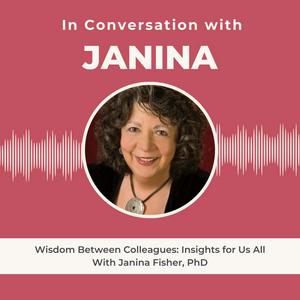
About In Conversation with Janina Fisher: Wisdom Between Colleagues; Insights For Us All
In Conversation with Janina Fisher features intimate, unscripted dialogues between Dr. Janina Fisher and leading voices in trauma therapy. Each episode explores the nuances of healing—from attachment wounds and somatics to IFS, memory reconsolidation, and anti-oppressive care. Thoughtful, relational, and deeply human, these conversations offer insight and inspiration for clinicians and curious minds alike.
Podcast websiteListen to In Conversation with Janina Fisher: Wisdom Between Colleagues; Insights For Us All, A New Day with Gerry Hussey and many other podcasts from around the world with the radio.net app
Get the free radio.net app
- Stations and podcasts to bookmark
- Stream via Wi-Fi or Bluetooth
- Supports Carplay & Android Auto
- Many other app features
Get the free radio.net app
- Stations and podcasts to bookmark
- Stream via Wi-Fi or Bluetooth
- Supports Carplay & Android Auto
- Many other app features

In Conversation with Janina Fisher: Wisdom Between Colleagues; Insights For Us All
Scan code,
download the app,
start listening.
download the app,
start listening.
 Ireland