
Listen to this podcast in the app for free: Download for free in the App Store
radio.net
Sleep timer
Save favourites
674 episodes
EXPOSED: The 3-Word Test That Keeps 97% of People Broke — And How to Pass It
24/10/2026 | 27 mins.Rich dad asked Robert Kiyosaki to rank three words. 97 out of 100 people rank them the same way, and it's why they never get rich.
In 1973, Robert was 25, just home from Vietnam, with $3,000 saved. He asked his rich dad to let him invest alongside him. The answer was "Not for you." Not long after, rich dad asked him to rank three words, and how Robert answered shaped the next twenty years of his life.
In this episode, Robert tells the full story, and why the order you put those three words in may be deciding your financial future right now.How the Financial System Works Against Ordinary Investors
21/10/2026 | 35 mins.Understanding how the financial system works is essential for anyone trying to protect their wealth, evaluate investments, and make informed financial decisions.
Most people focus on earning money, saving for retirement, and investing in traditional financial products. But few understand how banks create credit, how central banks influence financial markets, or how debt and regulation affect the assets they own.
In this special edition of The Rich Dad Radio Show, Robert Kiyosaki and Kim Kiyosaki revisit conversations with financial experts who challenge conventional thinking about money, banking, inflation, energy, and investing.
The central question: Are you making financial decisions based on how you think the system works—or how it actually operates?
What you'll learn:
-How the financial system works beyond traditional saving and investing
-Why exponential growth matters when evaluating economic trends
-How banks create credit and manage deposits
-Why bank balance sheets and financial stability matter
-What central bank digital currencies are and why they raise privacy concerns
-How central bank policies can influence inflation and asset prices
-Why energy and natural resources matter to economic activity
-How private equity firms use debt to acquire businesses
-Why corporate leverage can create risks for employees and investors
-How financial education helps investors ask better questions about money
Throughout these conversations, Robert returns to a consistent message: Financial education gives people a better foundation for making decisions about their money.
Understanding debt, banking, monetary policy, and investment structures doesn't eliminate financial risk.
But it helps investors recognize risks they might otherwise overlook.
You don't have to control the financial system to understand it. And the more you understand it, the better equipped you are to make informed financial decisions.
00:00 Best Of Rewind
00:05 Three Es Framework
00:39 Exponential Growth Basics
01:18 Stadium Eyedropper Story
04:03 We Are Near The Top
04:48 Debt And Fake Money
06:41 Energy Powers Economy
09:36 Banks Create Dollars
11:31 CBDC Privacy Threat
15:48 FDIC And Eurodollars
19:02 Central Banks Fabricate Money
26:58 What Private Equity Is
30:09 Unregulated And Unaccountable
33:17 Pensions And Bankruptcy Risk
36:28 Final Takeaways
-----
FREE Rich Dad Kit: 3 guides to help shield your retirement savings. Go to 🌐 prioritygold.com/richdad, 📱call 866-703-9895 or text GUIDE to 24999. (U.S. residents only).
-----
Disclaimer: The information provided in this video is for educational and informational purposes only. It should not be considered as financial advice or a recommendation to buy or sell any financial instrument or engage in any financial activity.
The content presented here is based on the speaker's personal opinions and research, which may not always be accurate or up-to-date. Financial markets and investments carry inherent risks, and individuals should conduct their own research and seek professional advice before making any financial decisions.How the Rich Get Tax-Free Cash Without Selling Anything
17/10/2026 | 28 mins.When the poor need money, they sell. When the rich need money, they do something
completely different.
Here's what YOU were never taught.
Most people were trained to liquidate. Need cash? Sell the gold. Sell the stock. Sell the
property. Robert Kiyosaki explains why that one habit costs you twice: you lose the
asset's protection, and you may hand the government a piece of the gain. Then he
shows why the rich borrow instead, why a loan is not taxable income, and the rules that
separate the investor who keeps his assets from the one who loses them anyway.
In This Episode:
● Why selling your gold or stocks for cash can cost you twice
● How the rich borrow against their assets instead of selling them
● Why borrowed money is not taxed as income
● How a cash-out refinance lets you keep a rental property and get your money
back
● Why a home equity loan (HELOC) is not the same as borrowing against a rental
● What a margin call is, and how lenders decide when to send one
● The 25% loan-to-value rule for borrowing against gold, silver, and paper assets
● Rich dad's rule: borrowed money must buy an asset that pays the loan
● Sell vs. borrow: a $27,500 down payment case study, run both ways
● How one investor who swore he'd never sell was forced to sell at the bottom
This episode is for educational purposes only and is not tax, legal, or investment advice.
Talk to your tax advisor before borrowing against any asset.
This Episode was sponsored by:
CapitalClub33.com
MuskMasterclass.com
OffAir26.comHow Rich Investors Find Opportunities Others Miss
14/10/2026 | 31 mins.How do the rich find investment opportunities that most people overlook?
According to Robert Kiyosaki, the difference isn't luck. It's financial education, understanding cash flow, knowing how to evaluate risk, and surrounding yourself with people who recognize opportunities others don't.
In this episode of The Rich Dad Radio Show, Robert Kiyosaki and Kim Kiyosaki welcome stock market expert Andy Tanner and resource investor Marin Katusa to explore how experienced investors identify opportunities in real estate, stocks, natural resources, and emerging investment markets.
While most people focus on market headlines, stock prices, and conventional financial advice, the Rich Dad approach asks a different set of questions:
Where is the value? How does the asset generate cash flow? What are the risks? And what does the average investor fail to understand?
Andy Tanner explains why he evaluates stocks the same way a business owner evaluates a company.
Rather than buying a stock simply because its price might rise, Andy studies the underlying business, its financial statements, and its ability to produce income.
He compares this approach to real estate investing, where investors evaluate rental income, expenses, and long-term cash flow instead of relying exclusively on property appreciation.
The lesson is simple: Understanding what an asset produces can matter more than guessing what someone will pay for it tomorrow.
Marin Katusa shares lessons from financing natural resource projects around the world.
He explains why an investment that looks attractive on paper can carry risks that many investors fail to recognize.
Government intervention, political instability, management incentives, project economics, and the price investors pay can all determine whether an opportunity deserves further consideration.
Marin challenges the belief that investors must accept enormous risks to pursue significant returns.
Instead, he emphasizes understanding an asset's underlying value, evaluating management, and recognizing when the market may have mispriced risk.
The conversation turns to carbon credits, an emerging market that Marin believes offers investment potential.
He explains how carbon credit projects work, why corporations purchase credits, and how environmental initiatives may create new business opportunities.
Robert and Kim discuss why they became interested in investing alongside Marin and how they evaluate opportunities outside conventional asset classes.
The discussion illustrates an important Rich Dad principle: Investors who continue learning may recognize unfamiliar opportunities before those markets attract widespread attention.
But early opportunities also carry uncertainty. Investors must examine regulatory exposure, business fundamentals, pricing, and the potential for loss rather than assume that a growing market guarantees profitable investments.
Robert, Kim, and Andy also discuss the importance of mentors.
Andy shares how reading Rich Dad Poor Dad changed his thinking, but finding experienced people to learn from helped him begin applying those lessons.
Kim recalls the role mentors played when she and Robert first learned about investing in publicly traded companies and resource businesses.
Their experiences reinforce a central lesson: Financial education isn't simply knowing what to buy. It's learning how to evaluate opportunities and developing relationships with people who can challenge your assumptions.
In this episode, you'll learn:
-How experienced investors find investment opportunities others overlook
-Why cash flow matters when evaluating real estate and stocks
-How to analyze a business instead of speculating on stock prices
-Why buying below an asset's underlying value matters
-How political and management risks affect investment decisions
-What carbon credits are and why investors are studying the market
-How emerging industries can create new investment opportunities
-Why mentors can accelerate financial education
-How to evaluate unfamiliar investments before committing capital
-Why continuous learning matters as markets and industries change
The wealthiest investors don't necessarily have access to a crystal ball. They develop the knowledge, relationships, and judgment to evaluate opportunities that others may not understand.
As Robert and Kim emphasize, financial education requires continuous learning—and the willingness to apply what you've learned.
The goal isn't to chase the next big investment. It's to become the kind of investor who knows how to recognize value, evaluate risk, and make informed decisions.
00:00 Introduction
01:08 Meet the Experts and Market Complexity
03:24 Why 401k Plans Fail
04:19 Marin Katusa Resource Investing Story
06:27 Political Risk and Nationalization
12:05 Rules for Safer Resource Deals
13:55 Buy Businesses Not Tickers
15:28 Carbon Credits Teaser
17:58 Carbon Credits Explained
23:01 Blue Carbon and Making Credits
26:19 Capitalism Solves Climate Problems
27:35 Keep Learning and Take Action
30:01 Final Thoughts and Thanks
AI just hacked the Pentagon. War. Inflation. The biggest stock market bubble in history. Most Americans insure their house, car, and health — but have zero protection for their money. Rich Dad's answer has never changed. Gold.
Get the free Rich Dad Wealth Kit U.S. Residents Only.
https://prioritygold.com/richdad
Text GUIDE to 24999.The 5 Money Moves YOU MUST Make Right Now
10/10/2026 | 24 mins.As markets plunged, Robert Kiyosaki and Kim were closing on a 300-unit apartment building in Tulsa for $17 million—while TV experts urged viewers to stay the course. In this episode, Kiyosaki uses that contrast to lay out five money moves: rethink the security of jobs and savings, turn paychecks into assets, distinguish borrowing for cash-flowing investments from borrowing for consumption, and question advice from people paid to sell financial products. He also tells the story of how a private-investment deal opened his eyes to who gets access to what he calls the "best investments." The episode challenges familiar ideas about financial safety—and makes a clear case for why its advice may not suit everyone.
More Business podcasts


Trending Business podcasts









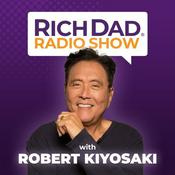
About Rich Dad Radio Show: In-Your-Face Advice on Investing, Personal Finance, & Starting a Business
Join Robert Kiyosaki, best-selling author of Rich Dad Poor Dad, for The Rich Dad Radio Show — the podcast that challenges conventional financial wisdom and delivers real-world lessons on money, investing, and entrepreneurship.
Each week, Robert and his expert guests explore how today's economy affects your wealth and reveal the strategies the rich use to thrive in any market. From real estate to precious metals, stocks to entrepreneurship, Robert breaks down complex financial topics with humor, candor, and decades of experience.
If you're ready to think differently, break free from the rat race, and take control of your financial future, this is the show for you.
Podcast websiteListen to Rich Dad Radio Show: In-Your-Face Advice on Investing, Personal Finance, & Starting a Business, Unhedged and many other podcasts from around the world with the radio.net app
Get the free radio.net app
- Stations and podcasts to bookmark
- Stream via Wi-Fi or Bluetooth
- Supports Carplay & Android Auto
- Many other app features
Get the free radio.net app
- Stations and podcasts to bookmark
- Stream via Wi-Fi or Bluetooth
- Supports Carplay & Android Auto
- Many other app features

Rich Dad Radio Show: In-Your-Face Advice on Investing, Personal Finance, & Starting a Business
Scan code,
download the app,
start listening.
download the app,
start listening.
Rich Dad Radio Show: In-Your-Face Advice on Investing, Personal Finance, & Starting a Business: Podcasts in Family
 Ireland
