

Listen to this podcast in the app for free: Download for free in the App Store
radio.net
Sleep timer
Save favourites
20 episodes
What Actually Moves the Needle for Male Fertility?
22/08/2026 | 16 mins.Episode 19: What Actually Moves the Needle for Male Fertility?
Episode Description
In this episode, Men’s Fertility Dietitian Alex Hardy looks at what actually moves the needle for male fertility — and why some factors deserve far more attention than others.
Using a simple fertility pyramid, this episode explores how major disruptors, everyday lifestyle foundations, medical and clinical factors, and more targeted strategies such as supplements fit into the bigger picture.
Rather than trying to optimise everything at once, the focus is on identifying the factors most likely to influence sperm health in your individual situation — and tackling them in the right order.
Because when it comes to male fertility, the goal isn’t to do everything. It’s to focus on leverage before optimisation.
What You’ll Learn
Which factors can have the greatest impact on male reproductive health
Why smoking, metabolic dysfunction and anabolic steroid or testosterone use can be major disruptors
How diet, sleep, physical activity and alcohol fit into the foundations of sperm health
Why medical issues such as varicocele, hormonal dysfunction and underlying health conditions shouldn’t be overlooked
Where supplements and advanced testing fit into the bigger picture
How to prioritise fertility changes without trying to optimise everything at once
Key Takeaways
Not all fertility interventions have the same potential impact
Major disruptors should be addressed before smaller optimisation strategies
Diet, sleep, physical activity and metabolic health form important foundations for sperm health
Lifestyle optimisation cannot replace appropriate medical investigation
Supplements can be useful, but they are usually a refinement rather than the foundation
Focus on leverage before optimisation
Episode Outline
The fertility pyramid
Major disruptors: smoking, metabolic health and anabolic steroids/testosterone
The foundations: diet, sleep, exercise, alcohol and environmental exposures
Medical and clinical factors: varicocele, hormones, health conditions and genetics
Supplements and other targeted refinements
How to work through the pyramid and decide where to start
Disclaimer
This podcast is for general education only and does not replace individual medical or nutrition advice. If you’re navigating fertility concerns or treatment, please consult your healthcare team.
Want Support?
If you or your partner are looking for personalised fertility nutrition support, Alex works via telehealth with men and couples across Australia.
Website: AxisDietetics.com
Instagram: @axisdieteticsUltra-Processed Foods and Male Fertility: Beyond the Hype
21/07/2026 | 9 mins.Episode Summary:
Ultra-processed foods — or UPFs — have become one of the biggest nutrition talking points in recent years. They’re often linked with obesity, inflammation, metabolic disease, and poorer long-term health outcomes. But what does the evidence actually say about sperm health and male fertility?
In Episode 19, Men’s Fertility Dietitian Alex Hardy breaks down what ultra-processed foods actually are, how they’re classified under the NOVA system, and why the conversation around them has become increasingly polarised online.
We explore the current fertility evidence linking dietary patterns high in ultra-processed foods with poorer semen parameters, including lower sperm concentration and motility, while also discussing the important limitations of the research and why observational studies can only tell us so much.
The episode also examines newer intervention research attempting to isolate whether the degree of food processing itself may influence metabolic and reproductive health, even when calories and macronutrients are similar.
Importantly, this episode avoids the “all processed food is toxic” narrative and instead focuses on nuance, context, and the broader dietary patterns that appear to support better long-term metabolic and reproductive health.
What You’ll Learn:
What ultra-processed foods actually are
How the NOVA food classification system works
Why not all UPFs are nutritionally equivalent
How dietary patterns high in UPFs may influence sperm health
What the current semen quality research shows
The limitations of observational nutrition research
Why overall dietary pattern likely matters more than individual foods
How UPFs may influence the broader environment sperm develop within
Key Takeaways:
Not all processed foods are the same
UPFs are a broad category that can include foods with very different nutritional profiles
Higher ultra-processed food intake is associated with poorer semen parameters in several observational studies
Dietary patterns high in UPFs are often linked with poorer metabolic health overall
The broader dietary pattern and lifestyle context likely matter more than one single food
The current evidence does not support panic or perfection
More minimally processed, nutrient-dense dietary patterns appear more supportive of sperm and metabolic health over time
Links and Resources:Website: www.axisdietetics.comInstagram: @axisdietetics
Read the accompanying article: Ultra-Processed Foods and Male Fertility: Beyond the Hype: https://www.axisdietetics.com/ultra-processed-foods-and-male-fertility-beyond-the-hype
Disclaimer:This podcast is intended for general information only and should not replace personalised medical, nutrition, or healthcare advice.Weight Loss and Male Fertility: How It Can Improve Sperm Health
07/07/2026 | 9 mins.Episode Summary:Weight loss is one of the most common recommendations men hear when fertility becomes a concern. But the relationship between body weight, metabolic health, and sperm quality is more complex than many people realise.
In this episode, Men’s Fertility Dietitian Alex Hardy explores how excess body fat can influence hormones, insulin sensitivity, inflammation, sleep, and the environment sperm develop within over time. We also discuss why body weight alone does not tell the full story, and why metabolic health may matter more than the number on the scale itself.
The episode breaks down what the current evidence actually shows, including intervention studies where weight loss has been associated with improvements in sperm concentration, total sperm count, motility, and other fertility markers in some men with obesity.
We also explore why two men of the same size can have very different fertility profiles, why sustainable lifestyle change matters more than extreme dieting, and how broader improvements in health and lifestyle may help create a better environment for sperm production over time.
Finally, the episode looks at practical ways men can begin improving body composition and metabolic health without overcomplicating the process, while keeping the roughly 12-week sperm development window in mind.
What You’ll Learn:
How excess body fat may influence sperm health and reproductive hormones
Why metabolic health matters more than body weight alone
What the research actually shows about weight loss and sperm quality
Why two men of the same weight can have very different fertility outcomes
The risks of crash dieting and unsustainable approaches
Practical strategies to support both metabolic health and sperm production
Key Takeaways:
Weight loss may improve sperm health in some men, particularly when excess body fat and poor metabolic health are contributing factors
The benefits are likely driven by broader improvements in metabolic health, not just the number on the scale
Sustainable lifestyle change matters more than rapid transformation
Sleep, fitness, nutrition, insulin sensitivity, and inflammation all play a role in sperm production
Fertility tends to reward consistency rather than extremes
Practical Tips:
Focus on improving overall metabolic health, not just losing weight
Build meals around whole foods and adequate protein
Include both resistance training and cardiovascular activity
Prioritise sleep consistency and recovery
Avoid crash dieting or overly aggressive approaches
Think in terms of the full 12-week sperm development window
Links:
Website: www.axisdietetics.comInstagram: @axisdietetics
Related Article:https://www.axisdietetics.com/blog/can-weight-loss-improve-male-fertility-what-the-evidence-shows-about-sperm-health
Disclaimer:This podcast is intended for general educational purposes only and should not be considered medical or personalised nutrition advice. Always speak with your doctor or qualified healthcare professional before making significant changes to your diet, exercise, supplements, or fertility treatment plan.Omega-3 for Sperm Health: Food vs Fish Oil Supplements
23/06/2026 | 8 mins.Episode Summary:
In this episode, Men’s Fertility Dietitian Alex Hardy explores one of the most commonly discussed nutrients in male fertility nutrition — omega-3. We break down why omega-3 gained so much attention in sperm health research, what the evidence actually shows, and why the conversation is often more nuanced than supplement marketing suggests.
The episode explores both food-based and supplement-based approaches, including the role of oily fish, walnuts, and Mediterranean-style dietary patterns, as well as the limitations of the current research on fish oil supplementation and fertility outcomes.
What You’ll Learn:
Why omega-3 became a focus in male fertility research
The role of DHA and sperm membrane function
What food-based studies have shown
What omega-3 supplement trials actually found
Why semen parameter improvements do not always translate to pregnancy outcomes
The difference between food-first nutrition and targeted supplementation
When omega-3 supplements may be worth considering
Key Takeaways:
Sperm membranes are naturally rich in omega-3 fatty acids, particularly DHA
Some studies suggest omega-3 may support sperm motility and morphology
Evidence across studies remains mixed and inconsistent
Improvements in semen parameters do not necessarily mean improved pregnancy or live birth outcomes
Whole-food dietary patterns likely matter more than any single supplement
Supplements may still have a role in selected situations, particularly when dietary intake is poor
Practical Tips:
Include oily fish such as salmon, sardines, trout, or mackerel regularly
Add plant omega-3 sources like walnuts, chia seeds, and flaxseeds
Focus on overall dietary quality rather than isolated nutrients
Think of supplements as targeted tools, not automatic solutions
Prioritise sustainable dietary patterns over short-term fixes
Related Resources:Website: www.axisDietetics.com.auRead the full blog article: https://www.axisdietetics.com/omega-3-for-sperm-health-food-vs-supplements-what-actually-mattersInstagram: @axisdietetics
Disclaimer:This podcast is for general information and education only and is not a substitute for personalised medical, nutrition, or healthcare advice. Please speak with your doctor or qualified healthcare professional regarding your individual situation.
Next Episode:Weight Loss and Male Fertility — When It Helps, When It HurtsFertility Diet for Men: What to Eat to Improve Sperm Health
09/06/2026 | 6 mins.Episode Summary:
Nutrition advice for male fertility often focuses on supplements, superfoods, or extreme diet changes. But what does a fertility-supportive diet actually look like across a normal day?
In this episode, Men’s Fertility Dietitian Alex Hardy breaks down the practical foundations of a diet that may help support sperm health over time. Rather than chasing perfection, the focus is on building a consistent dietary pattern that supports the environment sperm develop within across the 12 week sperm development window.
We explore the common pattern many men fall into — where one decent dinner is trying to compensate for a fairly average day of eating — and what tends to work better in practice.
What You’ll Learn:
Why overall dietary structure matters more than individual “fertility foods”
Common eating patterns that may undermine sperm health over time
Why consistency matters more than perfection
Practical examples of balanced breakfasts, lunches, dinners, snacks, and drinks
The role of protein, fibre-rich carbohydrates, healthy fats, and less processed foods
Why one healthy meal usually isn’t enough to offset a poor overall pattern
How realistic dietary habits may help support the environment sperm develop within
Key Takeaways:
Fertility-supportive nutrition is usually built around consistent dietary patterns, not single foods
Many men rely too heavily on dinner to carry the nutritional quality of the day
Protein, plant foods, and overall diet quality tend to work best when distributed more consistently across the day
Water, less processed foods, and practical meal structure often matter more than perfection or complexity
Nutrition may help support sperm health, but it does not guarantee fertility outcomes
Practical Tips:
Build more nutrition into the first half of the day, not just dinner
Create a small rotation of balanced meals that are realistic to repeat consistently
Reduce reliance on takeaway, sugary drinks, alcohol, and highly processed convenience foods becoming daily defaults
Links:Website: www.axisdietetics.comBlog Article: https://www.axisdietetics.com/fertility-diet-for-men-what-to-eat-to-support-sperm-healthInstagram: @axisdietetics
Disclaimer:This podcast is for general education only and is not a substitute for individual medical advice. Always speak with your healthcare team about your specific situation.
More Health & Wellness podcasts







Trending Health & Wellness podcasts




















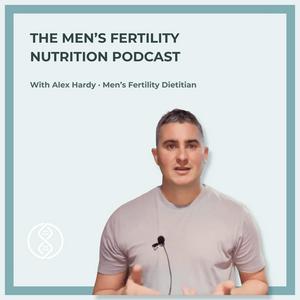
About The Men's Fertility Nutrition Podcast
Fertility is often framed as a women’s issue. But male factors contribute to around half of all fertility challenges.
The Men’s Fertility Nutrition Podcast explores what influences sperm health, male fertility, and reproductive outcomes — and what men can realistically do to support them.
Hosted by Accredited Practising Dietitian Alex Hardy, each episode breaks down evidence-based nutrition, lifestyle, and fertility science into clear, practical guidance for men trying to conceive or preparing for IVF and ICSI.
Podcast websiteListen to The Men's Fertility Nutrition Podcast, ZOE Science & Nutrition and many other podcasts from around the world with the radio.net app
Get the free radio.net app
- Stations and podcasts to bookmark
- Stream via Wi-Fi or Bluetooth
- Supports Carplay & Android Auto
- Many other app features
Get the free radio.net app
- Stations and podcasts to bookmark
- Stream via Wi-Fi or Bluetooth
- Supports Carplay & Android Auto
- Many other app features

The Men's Fertility Nutrition Podcast
Scan code,
download the app,
start listening.
download the app,
start listening.
 Ireland