PodcastsHealth & WellnessCompassion in a T-Shirt

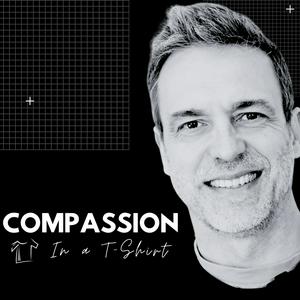
Compassion in a T-Shirt

Dr Stan Steindl
Compassion in a T-Shirt
Latest episode

141 episodes

  • Compassion in a T-Shirt

    Listening Without Fixing: Why Advice Often Backfires

    11/07/2026 | 13 mins.
    The more I tried to help, the less effective I sometimes became.
    It sounds backwards, but years ago I discovered that the harder I pushed with advice, solutions, or persuasion, the more resistance I often encountered. That experience led me to one of the most important lessons I've learned as a psychologist: sometimes the most compassionate thing we can do is stop trying to fix and start trying to understand.
    In this episode, I explore why our urge to fix is usually well-intentioned, but can sometimes get in the way of genuinely helping. Drawing on Compassion Focused Therapy, Motivational Interviewing, and three fascinating psychological theories—Self-Perception Theory, Psychological Reactance, and Self-Determination Theory—we look at why people are often more likely to discover their own answers than adopt ours.
    You'll also learn practical ways to become a more compassionate listener by replacing advice with curiosity, reflection, and thoughtful questions that help others find their own way forward.
    If you've ever found yourself wanting to solve someone else's problems (or wishing someone would simply listen to yours!) I hope this episode gives you a different way of thinking about what it means to help.
    If you enjoyed this episode, I'd love to hear your thoughts in the comments. Have you ever experienced a conversation where being listened to was more helpful than receiving advice?
    Timestamps:
    00:00 Why Trying to Fix Fails
    01:14 The Urge to Fix
    02:57 Compassion Means Understanding
    03:22 Why Advice Needs Understanding
    04:07 How Talking Creates Clarity
    05:15 Why We Resist Advice 07:21
    Why Autonomy Drives Change
    08:23 Listening Is Real Help
    09:13 Three Ways to Listen Better
    11:02 Listening as Compassion
    12:08 A Simple Experiment This Week
    12:54 Final Thoughts
    Links:
    If you would like to learn more about compassion focused therapy, you can find Dr Stan Steindl's book The Gifts of Compassion here: https://www.ausapress.com/p/the-gifts-of-compassion-how-to-understand-and-overcome-suffering/
    Say hi on social:
    Facebook: https://www.facebook.com/drstansteindl
    Twitter/X: https://twitter.com/StanSteindl
    Instagram: https://www.instagram.com/dr_stan_steindl/
    LinkedIn: https://www.linkedin.com/in/stan-steindl-150a5264/
    Website: https://www.stansteindl.com/

    YouTube Video URL: https://youtu.be/UT29TU1-WQY

    *Affiliate Disclaimer: Note this description contains affiliate links that allow you to find the items mentioned in this video and support the channel at no cost to you. While this channel may earn minimal sums when the viewer uses the links, the viewer is in no way obligated to use these links. Thank you for your support!
    Video hashtags:
    listening, compassion, compassionfocusedtherapy, motivationalinterviewing, psychology, communication
  • Compassion in a T-Shirt

    The Three Circles Model Put to the Test | Dylan Moloney-Gibb

    10/07/2026 | 45 mins.
    Can we actually measure the Three Circles Model? And if we can, what does that tell us about what's happening in our brains, bodies, and emotions?
    For years, the Three Circles Model has been one of the central ideas in Compassion Focused Therapy, helping therapists and clients make sense of threat, drive, and soothing. But until recently, it had never really been tested scientifically.
    In this episode of Compassion in a T-Shirt, I'm joined by compassion researcher Dr Dylan Moloney-Gibb to discuss his groundbreaking research, recently published in Behaviour Research and Therapy. Together with colleagues Chase Sherwell, Sasha Lynn and James Kirby, Dylan explores whether the Three Circles Model reflects measurable changes in physiology, using heart rate variability (HRV) alongside the new digital Three Circles app.
    We explore how the app works, why it may offer advantages over traditional questionnaires, and what happens to threat, drive and soothing when people move through rest, stress, recovery and compassion. We also discuss some surprising findings—including why the compassion exercise didn't produce the changes the researchers expected—and what this might mean for the future of Compassion Focused Therapy, emotion regulation research, and clinical practice.
    Whether you're a therapist, researcher, student, or simply curious about compassion, neuroscience and emotion regulation, I think you'll find this a fascinating conversation.
    Timestamps:
    00:00 Meet Dr Dylan Moloney-Gibb
    02:16 The Three Circles app
    02:34 Understanding threat, drive and soothing
    07:59 Why this research matters
    11:21 Measuring circle dominance
    14:03 Is the soothing system more than calmness?
    16:45 The Triple R study design (Rest, Reactivity, Recovery)
    20:30 The compassion exercise
    23:04 What happened to the Three Circles?
    28:53 Comparing the circles with heart rate variability (HRV)
    31:34 Why balance between the circles matters
    38:31 Future directions for research
    42:19 What this means for therapists and the future of CFT
    Links:
    The Three Circle Model of Compassion Focused Therapy: An Experimental Paradigm to Assess Dynamic Psychophysiological Changes of Emotion Regulation Systems (Moloney-Gibb, Sherwell, Lynn & Kirby, 2026). Open Access at https://doi.org/10.1016/j.brat.2026.105028
    Find links to Dylan’s other papers here: https://www.researchgate.net/profile/Dylan-Moloney-Gibb
    Find the Three Circles App here: https://www.threecircles.io/
    If you would like to learn more about compassion focused therapy, you can find Dr Stan Steindl's book The Gifts of Compassion here: https://www.ausapress.com/p/the-gifts-of-compassion-how-to-understand-and-overcome-suffering/
    Say hi on social:
    Facebook: https://www.facebook.com/drstansteindl
    Twitter/X: https://twitter.com/StanSteindl
    Instagram: https://www.instagram.com/dr_stan_steindl/
    LinkedIn: https://www.linkedin.com/in/stan-steindl-150a5264/
    Website: https://www.stansteindl.com/

    YouTube Video URL: https://youtu.be/ZklIRyBzpkY

    *Affiliate Disclaimer: Note this description contains affiliate links that allow you to find the items mentioned in this video and support the channel at no cost to you. While this channel may earn minimal sums when the viewer uses the links, the viewer is in no way obligated to use these links. Thank you for your support!
    Video hashtags:
    CompassionFocusedTherapy, ThreeCirclesModel, EmotionRegulation, SelfCompassion, HeartRateVariability, HRV, Neuroscience, ClinicalPsychology, Psychotherapy, CompassionScience, MentalHealth, Psychology, PaulGilbert, DylanMoloneyGibb, StanSteindl
  • Compassion in a T-Shirt

    How to Listen Better: 7 Skills of Compassionate Listening

    20/06/2026 | 11 mins.
    Most of us think listening is easy. But if we're honest, we often listen with the intention to reply, advise, fix, persuade, or tell our own story.
    In this follow-up to my recent episode on listening as compassion, I explore what compassionate listening actually looks like in practice. Drawing on ideas from compassion-focused therapy, motivational interviewing, and the work of Carl Rogers, I share seven simple skills that can help us become better listeners in our everyday lives.
    These aren't just communication techniques. They are ways of creating the kind of safety and understanding that help people feel heard, valued, and less alone.
    In this video, you'll learn:
    . Why "No Fixin'" is often the best place to start
    . How to "Ask, Don't Tell”
    . Why reflection is one of the most powerful listening skills
    . How to listen for feelings and deeper meaning
    . Why silence is often where the real conversation begins
    . What it means to put your agenda down
    . Why understanding someone doesn't require agreeing with them
    Whether you're a therapist, coach, leader, teacher, parent, partner, or friend, these skills can help you have more compassionate and meaningful conversations.
    As Carl Rogers famously said: "The curious paradox is that when I accept myself just as I am, then I can change.” Perhaps something similar is true in our conversations. When people feel accepted and understood, they often find their own way forward.
    I'd love to hear from you in the comments. Which of these listening skills comes most naturally to you? And which one do you find most challenging?
    Timestamps:
    00:00 Why Listening Is Compassion
    00:50 Threat vs Curiosity
    01:14 Tip 1 No Fixing
    02:13 Tip 2 Ask Dont Tell
    04:02 Tip 3 If In Doubt Reflect
    05:08 Tip 4 Feelings and Meaning
    07:20 Tip 5 Make Friends With Silence
    08:16 Tip 6 Put Your Agenda Down
    09:10 Tip 7 Understand Without Agreeing
    10:15 Key Takeaways and Closing
    Links:
    If you would like to learn more about compassion focused therapy, you can find Dr Stan Steindl's book The Gifts of Compassion here: https://www.ausapress.com/p/the-gifts-of-compassion-how-to-understand-and-overcome-suffering/
    Say hi on social:
    Facebook: https://www.facebook.com/drstansteindl
    Twitter/X: https://twitter.com/StanSteindl
    Instagram: https://www.instagram.com/dr_stan_steindl/
    LinkedIn: https://www.linkedin.com/in/stan-steindl-150a5264/
    Website: https://www.stansteindl.com/

    YouTube Video URL: https://youtu.be/oWHmGIjn4FA

    *Affiliate Disclaimer: Note this description contains affiliate links that allow you to find the items mentioned in this video and support the channel at no cost to you. While this channel may earn minimal sums when the viewer uses the links, the viewer is in no way obligated to use these links. Thank you for your support!
    Video hashtags:
    compassionatelistening, compassion, selfcompassion, empathy, psychology, communicationskills
  • Compassion in a T-Shirt

    Why Listening Is the Most Powerful Act of Compassion

    12/06/2026 | 14 mins.
    After the unexpected death of a dear friend, I found myself doing what many of us do when faced with grief. I tried to stay strong. I tried to carry on. But it wasn't until I sat around a campfire with friends—sharing memories, expressing sadness, and listening to one another—that something began to shift.
    That experience got me thinking about listening.
    In a world increasingly shaped by social media algorithms, advertising, political polarisation, and the constant pressure to broadcast our opinions, genuine listening can feel surprisingly rare. Yet being heard remains one of the most powerful human experiences we can offer one another.
    In this episode, I explore listening as an act of compassion. We journey from ancient oral traditions and Indigenous storytelling, through Socrates, Confucius, Carl Rogers, and motivational interviewing, to consider why listening helps reduce defensiveness, soften threat, create connection, and transform isolation into belonging.
    Listening doesn't necessarily remove suffering. A grieving friend still grieves. A difficult situation may remain difficult. But when people feel heard, something important happens. We feel less alone. We feel understood. And sometimes, that's where healing begins.
    Timestamps:
    00:00 Grief and the urge to hide
    00:39 Healing through being heard
    01:39 Listening as the core skill
    02:07 A world that rewards noise
    03:08 Listening across history
    05:20 From waiting to real listening
    05:56 Carl Rogers and empathy
    07:20 Compassion begins with listening
    08:19 How being heard changes us
    09:57 Listening as a bridge in conflict
    11:00 Motivational interviewing basics
    11:40 What compassionate listening sounds like
    12:35 Why listening matters now
    13:28 The gift of listening
    Links:
    If you would like to learn more about compassion focused therapy, you can find Dr Stan Steindl's book The Gifts of Compassion here: https://www.ausapress.com/p/the-gifts-of-compassion-how-to-understand-and-overcome-suffering/
    Say hi on social:
    Facebook: https://www.facebook.com/drstansteindl
    Twitter/X: https://twitter.com/StanSteindl

    Instagram: https://www.instagram.com/dr_stan_steindl/
    LinkedIn: https://www.linkedin.com/in/stan-steindl-150a5264/
    Website: https://www.stansteindl.com/

    YouTube Video URL: https://youtu.be/5dQZymv8lp8

    *Affiliate Disclaimer: Note this description contains affiliate links that allow you to find the items mentioned in this video and support the channel at no cost to you. While this channel may earn minimal sums when the viewer uses the links, the viewer is in no way obligated to use these links. Thank you for your support!
    Video hashtags:
    listening, compassion, empathy, psychology, communication, relationships, mentalhealth, wellbeing, connection, selfcompassion
  • Compassion in a T-Shirt

    Teacher Burnout, Stress Contagion & Self-Compassion | Dr Rita Princi-Hubbard

    04/06/2026 | 50 mins.
    Teacher burnout doesn't just affect teachers—it affects students too.
    In this episode of Compassion in a T-Shirt, Dr Stan Steindl speaks with Clinical Psychologist, educator, researcher, and founder of the Institute for Neuroscience and Education, Dr Rita Princi-Hubbard, about compassionate pedagogy, teacher wellbeing, and the fascinating ways stress and emotional regulation can flow between teachers and students.
    Drawing on her PhD research and her chapter, Teaching the New Teacher with Compassionate Pedagogy, Rita explains why many teachers enter the profession without sufficient training in child development, emotional regulation, trauma, attachment, and self-compassion. She argues that understanding how people work—not just how students learn—is one of the missing pieces in modern teacher education.
    The conversation explores the concept of "stress contagion" and the bidirectional relationship between teacher and student wellbeing. Rita shares research showing how teacher stress can influence students, how student distress can affect teachers, and why self-compassion may be one of the most important tools for preventing burnout and creating emotionally safe learning environments.
    Stan and Rita discuss:
    • Teacher burnout and the growing pressures facing educators
    • Stress contagion and emotional co-regulation in the classroom
    • Why teacher wellbeing matters for student wellbeing
    • Compassion Focused Therapy and the Three Systems Model
    • Attachment, trauma, and child development in education
    • The limits of rewards-and-consequences behaviour management
    • Self-compassion and receiving support as an educator
    • Heart rate variability research conducted in real classrooms
    • Compassionate pedagogy and social justice
    • What teacher education programs may be missing
    Whether you're a teacher, school leader, psychologist, parent, student, or simply interested in compassion and education, this conversation offers a compelling vision for how understanding, connection, and compassion can help both teachers and students flourish.
    Timestamps:
    00:00 Compassion Meets Education
    02:11 Why Teacher Training Falls Short
    03:10 Stress Contagion Explained
    04:59 Modern Teacher Stressors
    10:19 Teacher Shame and Self-Doubt
    12:03 Inside the Research Design
    15:32 The Eight Module Program
    19:51 Self-Compassion for Teachers
    25:39 Receiving Help Without Guilt
    27:46 Three Systems Model in Classrooms
    33:18 Beyond Rewards and Consequences
    37:47 Heart Rate Variability Findings
    43:14 Compassion and Social Justice
    44:47 Redesigning Teacher Education
    47:26 Advice for Burnout Beginners
    49:43 Closing Reflections and Thanks
    If you enjoyed this conversation, please like, subscribe, and share it with someone who cares about education, wellbeing, and compassion.
    Links:
    Rita Princi-Hubbard’s website:
    https://www.in-ed.com.au/copy-of-consulting
    Compassionate Pedagogy in Higher Education: International Perspectives
    https://www.amazon.com.au/Compassionate-Pedagogy-Higher-Education-International/dp/1911451448/
    If you would like to learn more about compassion focused therapy, you can find Dr Stan Steindl's book The Gifts of Compassion here: https://www.ausapress.com/p/the-gifts-of-compassion-how-to-understand-and-overcome-suffering/
    Say hi on social:
    Facebook: https://www.facebook.com/drstansteindl
    Twitter/X: https://twitter.com/StanSteindl
    Instagram: https://www.instagram.com/dr_stan_steindl/
    LinkedIn: https://www.linkedin.com/in/stan-steindl-150a5264/
    Website: https://www.stansteindl.com/

    YouTube Video URL: https://youtu.be/D_H0t8YvqMw

    *Affiliate Disclaimer: Note this description contains affiliate links that allow you to find the items mentioned in this video and support the channel at no cost to you. While this channel may earn minimal sums when the viewer uses the links, the viewer is in no way obligated to use these links. Thank you for your support!
    Video hashtags:
    teacherwellbeing, teacherburnout, compassionatepedagogy, selfcompassion, education, compassionfocusedtherapy
More Health & Wellness podcasts
About Compassion in a T-Shirt
A podcast exploring the science and practice of compassion. Offers clear and practical advice on how to cultivate compassion and self-compassion from experts in the field. Life can be difficult, and this podcast is designed to help. Compassion in a T-Shirt has featured guests including Professor Paul Gilbert, Professor Terri Moyers, Professor James Doty, Deirdre Fay, Dr Chris Germer, Dr Kristin Neff, Dr Marcela Matos, Dr James Kirby, and more.
Podcast website

Listen to Compassion in a T-Shirt, They Mess You Up with Dr. Ciara Kelly and Dr. Richard Hogan and many other podcasts from around the world with the radio.net app

Get the free radio.net app

  • Stations and podcasts to bookmark
  • Stream via Wi-Fi or Bluetooth
  • Supports Carplay & Android Auto
  • Many other app features
Compassion in a T-Shirt: Podcasts in Family