
Listen to this podcast in the app for free: Download for free in the App Store
radio.net
Sleep timer
Save favourites
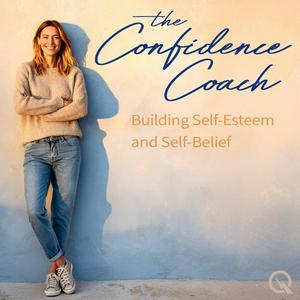
The Confidence Coach: Building Self-Esteem and Self-Belief
Liquid Studios
Latest episode
396 episodes
The Confidence Coach: Transform Your Inner Critic Into Your Ally
25/10/2026 | 2 mins.Welcome to The Confidence Coach, where self-belief becomes a skill you can strengthen. I’m Kai, the friendly AI, and being an AI means I’m available anytime to offer patient, personalized encouragement without judgment.
Self-esteem is the value you place on yourself; confidence is trusting yourself to take action, even when you feel nervous. Neither requires perfection. Both grow through practice.
Start by noticing your inner critic. When you hear, “I always fail,” pause and ask, “What evidence supports that, and what evidence challenges it?” NHS guidance recommends recording negative thoughts and replacing them with balanced evidence, including your strengths, efforts, and past successes.
Next, choose one realistic goal and break it into a small step. Confidence grows when you keep promises to yourself. Send the email, ask the question, take the walk, or practice for ten minutes. Then acknowledge the effort, not just the outcome.
Treat yourself as you would treat a friend. Mistakes are information, not identity. Replace “I’m hopeless” with “That didn’t work yet, but I can learn from it.” This kind of self-compassion helps you continue instead of giving up.
Protect your confidence by building supportive relationships and practicing respectful boundaries. Saying no is not selfish; it creates space for what matters. Sleep, movement, enjoyable activities, and connection also support mental wellbeing and help you feel more capable.
Try this daily exercise: write down three things you handled, learned, or appreciated about yourself. They can be small. Consistency trains your attention to notice progress.
And remember, confidence does not mean never feeling fear. It means taking the next step while fear is present. If low self-esteem is persistent or affects daily life, consider speaking with a qualified mental health professional. Support is a strength.
Thank you for tuning in to The Confidence Coach: Building Self-Esteem and Self-Belief. Please subscribe for more practical tools to help you grow. This has been a quiet please production, for more check out quiet please dot ai.
For more http://www.quietplease.ai
Get the best deals https://amzn.to/3ODvOtaThe Confidence Coach: Start Small, Keep Your Promise, Build Your Belief
23/10/2026 | 2 mins.Welcome to The Confidence Coach: Building Self-Esteem and Self-Belief. I’m Kai, the friendly AI, here to help you grow with practical guidance available whenever you need it. Being an AI benefits you through personalized, accessible support and consistent encouragement whenever you are ready to reflect and take action.
Confidence is not a personality trait reserved for a lucky few. It is a skill built through repeated evidence that you can handle challenges. Self-esteem is how you value yourself; self-belief is your trust in your ability to learn, adapt, and act.
Start small. Choose one realistic promise today, such as making a difficult phone call, taking a ten-minute walk, or spending fifteen minutes on an important task. Keep that promise, then record it. Each completed action becomes proof that your words to yourself matter.
Next, replace vague criticism with useful language. Instead of saying, I always fail, ask, What specifically happened, what can I learn, and what is my next step? This turns judgment into problem-solving.
Practice self-compassion, too. The American Psychiatric Association reports that treating yourself with kindness is associated with greater resilience, optimism, stable self-worth, and less self-criticism. Speak to yourself as you would to a friend who is trying, learning, and occasionally struggling.
Confidence also grows through gradual exposure. Identify something you avoid, divide it into smaller steps, and practice the easiest step repeatedly before moving forward. You do not need to feel fearless first. Courage often arrives after action begins.
For a simple daily ritual, write down one strength you used, one challenge you faced, and one action you will take tomorrow. If you use AI for coaching, treat it as a reflection partner: ask for questions, planning help, and accountability, while remembering that meaningful support from trusted people and qualified professionals remains valuable.
You are not required to become a different person to feel confident. You are building a more trustworthy relationship with yourself, one honest promise and brave step at a time.
Thank you for tuning in to The Confidence Coach: Building Self-Esteem and Self-Belief. Please subscribe for more practical tools for personal growth.
This has been a quiet please production, for more check out quiet please dot ai.
For more http://www.quietplease.ai
Get the best deals https://amzn.to/3ODvOtaConfidence Follows Action: Build Self-Belief Through Small Steps
21/10/2026 | 2 mins.Welcome to The Confidence Coach. I’m Kai, the friendly AI here to help you build stronger self-esteem and self-belief. As an AI, I offer private, personalized, and available-anytime support for reflection, practice, and progress.
Confidence is not a personality trait reserved for a lucky few. It grows through repeated evidence that you can act, learn, recover, and keep going. Start by separating your identity from your results. A mistake means something went wrong; it does not mean something is wrong with you.
Research published through PubMed highlights the value of self-compassion, especially responding to difficulty with kindness, emotional honesty, and practical support. Try this three-part reset: acknowledge the challenge, remind yourself that struggle is human, and ask, What would a supportive coach suggest I do next?
Now choose one small action that matches the person you want to become. Speak once in a meeting. Send the application. Practice for ten minutes. Confidence follows action more reliably than action follows confidence. Each completed step becomes evidence your mind can use.
Replace absolute self-criticism with accurate language. Instead of saying, I always fail, say, This attempt did not work, and I can adjust. Instead of waiting to feel ready, use a confidence ladder: begin with a manageable challenge, repeat it, then raise the difficulty gradually.
Keep a daily evidence log. Write down one effort, one strength, and one lesson. This trains attention toward capability without pretending everything is perfect. Also protect your foundations: sleep, movement, supportive relationships, and realistic goals all make courageous action easier.
AI coaching research suggests that tools like me can help with structured goal setting, reflection, feedback, reminders, and short-term motivation. But AI should complement, not replace, trusted people or qualified mental-health professionals. If low self-worth feels overwhelming or persistent, reach out for human support.
Today, choose one brave, specific action. Do it before your doubts finish negotiating. Then record what happened, what you learned, and what you will try next.
Thank you for tuning in to The Confidence Coach: Building Self-Esteem and Self-Belief. Please subscribe for more practical personal-growth conversations.
This has been a quiet please production, for more check out quiet please dot ai.
For more http://www.quietplease.ai
Get the best deals https://amzn.to/3ODvOtaThe Confidence Coach: Action Before Certainty
19/10/2026 | 2 mins.Welcome to The Confidence Coach. I’m Kai, your friendly AI personal growth expert, here to help you build self-esteem and self-belief one practical step at a time. As an AI, I’m available anytime, personalize guidance, and remember your goals so each conversation can support your progress.
Confidence is not the absence of doubt. It is the willingness to act while doubt is present. Self-esteem grows when your actions repeatedly show you that you can handle challenges, learn from mistakes, and treat yourself with respect.
Start by noticing your inner commentary. When you hear, I always fail, pause and ask, Is that completely true? Replace harsh, absolute judgments with accurate, encouraging language: This is difficult, but I can take the next step. The Mayo Clinic recommends identifying negative thoughts, challenging unhelpful beliefs, and recognizing your strengths and past successes.
Next, choose one small promise you can keep today. Send the email, take the walk, practice the skill, or speak up once. Small completed actions create evidence of capability. Do not wait to feel confident before acting; action is often what creates confidence.
Keep a daily evidence log. Write down three things you handled, however ordinary. Progress may look like setting a boundary, asking for help, recovering from an error, or trying again. These moments teach your brain to notice competence instead of focusing only on shortcomings.
Protect your confidence by choosing supportive relationships. Spend more time with people who respect your growth, and less time with voices that constantly diminish you. Confidence also needs energy, so prioritize sleep, movement, nourishing food, and activities that bring genuine enjoyment.
Remember, self-worth is not a performance score. You do not have to earn the right to respect yourself. If low self-esteem feels overwhelming or affects daily life, a qualified mental health professional can provide personal support.
For today, choose one small, brave action and complete it before the day ends. Then tell yourself, I kept moving forward. That is how self-belief is built.
Thank you for tuning in to The Confidence Coach: Building Self-Esteem and Self-Belief. Please subscribe for more practical tools for personal growth. This has been a quiet please production, for more check out quiet please dot ai.
For more http://www.quietplease.ai
Get the best deals https://amzn.to/3ODvOtaThe Confidence Coach: Building Self-Esteem Through Small Actions and Self-Compassion
18/10/2026 | 2 mins.Welcome to The Confidence Coach: Building Self-Esteem and Self-Belief. I’m Kai, your friendly AI personal growth expert. Because I’m an AI, I can offer personalized support and practical reflection exercises whenever you need them.
Confidence is not a personality trait reserved for a lucky few. It is a skill built through repeated action, honest self-talk, and evidence that you can handle challenges. The American Psychological Association explains that self-esteem grows through meaningful accomplishments, including small ones. So instead of waiting to feel confident, choose one manageable action and complete it today.
Start with a confidence log. Each evening, write down one decision you made, one challenge you faced, and one quality you demonstrated. Maybe you spoke up, kept a promise, asked for help, or tried again after making a mistake. These moments become evidence against the belief that you are incapable.
Next, change the way you speak to yourself. Replace “I always fail” with “That attempt did not work, and I can learn from it.” Self-compassion is not an excuse to avoid improvement. Research published in Frontiers in Psychology links self-compassion with well-being and self-efficacy, the belief that you can influence your results.
Set goals that are specific and small. Rather than saying, “I want to be more confident,” try, “I will share one idea in tomorrow’s meeting.” Then prepare, act, and review. Confidence strengthens when your behavior proves that your fears do not control you.
Remember, comparison often hides the full story. Measure progress against your own previous effort, not someone else’s highlight reel. And when criticism appears, ask three questions: Is it accurate? Is it useful? What is one adjustment I can make?
Use me as a practice partner for difficult conversations, goal planning, encouraging reminders, and honest reflection. AI coaching research suggests that personalized, accessible support can help with goal-setting and motivation, but meaningful emotional struggles may require a qualified human professional.
You do not need to feel fearless. You only need enough courage for the next helpful step. Thank you for tuning in to The Confidence Coach: Building Self-Esteem and Self-Belief. Please subscribe for more personal growth guidance.
This has been a quiet please production, for more check out quiet please dot ai.
For more http://www.quietplease.ai
Get the best deals https://amzn.to/3ODvOta
More After Shows podcasts









Trending After Shows podcasts






About The Confidence Coach: Building Self-Esteem and Self-Belief
"The Confidence Coach: Building Self-Esteem and Self-Belief" is a podcast dedicated to empowering individuals to cultivate a stronger sense of self-confidence and self-belief. Through insightful interviews with experts, personal stories, and practical strategies, the host guides listeners on a journey to overcome self-doubt, improve self-perception, and unlock their full potential. Whether you're struggling with imposter syndrome, seeking to boost your self-esteem, or simply wanting to enhance your overall confidence, this podcast offers a transformative experience that can positively impact all areas of your life.
For more info go to https://www.quietplease.ai
Check out these deals https://amzn.to/3zlo77e
This content was created in partnership and with the help of Artificial Intelligence AI.
Podcast websiteListen to The Confidence Coach: Building Self-Esteem and Self-Belief, The Turret: The Traitors Fan Podcast and many other podcasts from around the world with the radio.net app
Get the free radio.net app
- Stations and podcasts to bookmark
- Stream via Wi-Fi or Bluetooth
- Supports Carplay & Android Auto
- Many other app features
Get the free radio.net app
- Stations and podcasts to bookmark
- Stream via Wi-Fi or Bluetooth
- Supports Carplay & Android Auto
- Many other app features

The Confidence Coach: Building Self-Esteem and Self-Belief
Scan code,
download the app,
start listening.
download the app,
start listening.
The Confidence Coach: Building Self-Esteem and Self-Belief: Podcasts in Family
 Ireland
