
Listen to this podcast in the app for free: Download for free in the App Store
radio.net
Sleep timer
Save favourites
113 episodes
Mike Boyle & Gray Cook: The Joint-by-Joint Approach, 20 Years Later
22/10/2026 | 1h 1 mins.In this episode of the Movement Podcast, Gray Cook and Lee Burton welcome legendary strength and conditioning coach Mike Boyle to revisit one of the most influential concepts in functional training: **the Joint-by-Joint Approach**.
What began as a conversation between Mike Boyle and Gray Cook at a conference in Chicago—and a few notes scribbled on a bar napkin—became a framework that helped coaches, trainers, and rehabilitation professionals rethink the relationship between mobility, stability, and human movement.
Nearly 20 years later, they're revisiting the original idea.
Mike, Gray, and Lee discuss how the Joint-by-Joint Approach developed, why it has been both praised and criticized, and how their thinking has evolved through decades of coaching, clinical experience, and working with athletes.
The conversation moves beyond the familiar mobile-stable-mobile-stable sequence to explore how the approach can inform movement screening, program design, corrective exercise, single-leg training, functional anatomy, and the progression from rehabilitation to performance.
Mike also shares how his training philosophy has changed over the years, why he embraced unilateral training, and why good coaches must be willing to rethink their methods as they gain new information.
Topics include:
- The original story behind the Joint-by-Joint Approach
- How a conversation between Mike Boyle and Gray Cook became a widely used training framework
- Mobility versus stability and why both matter
- The ankle, knee, hip, and lumbar spine relationship
- Why movement should be evaluated in function, not isolation
- Movement screening as a filter for identifying potential limitations
- Responding to criticism of the FMS and Joint-by-Joint Approach
- Why movement asymmetries deserve attention
- How Mike Boyle incorporates mobility and stability into programming
- Why single-leg training changed his approach to strength and conditioning
- Progressions from step-ups to split squats and single-leg exercises
- Functional anatomy, diagonal movement, and rotational patterns
- The role of stability, stiffness, and motor control in athletic performance
- How landing mechanics prepare athletes for more reactive movement
- The relationship between rehabilitation, load, and speed
- Why communication between clinicians and strength coaches is essential
- The importance of learning, adapting, and evolving as a professional
The key takeaway: The Joint-by-Joint Approach was never intended to be a rigid rule for every joint or every individual. It provides a practical way to think about common movement needs, recognize potential limitations, and make more informed training decisions.
And perhaps the most important lesson from this conversation is that great coaches and clinicians don't stop learning. They challenge their assumptions, refine their methods, and continue looking for better ways to help people move and perform.
Learn more about Mike Boyle Strength & Conditioning:
https://www.bodybyboyle.com/
Learn more about Functional Movement Systems:
https://www.functionalmovement.com/
Functional Movement Systems
YouTube
Facebook
Instagram
X (Twitter)
Subscribe to the FMS NewsletterMovement, Breath, Sleep & Resilience with Dr. Arianne Missimer
08/10/2026 | 1h 11 mins.In this episode of the Movement Podcast, Gray Cook and Lee Burton sit down with Dr. Arianne Missimer, founder of The Movement Paradigm, to talk about movement, resilience, nervous system regulation, airway, sleep, functional medicine, and what it really means to treat the whole person.
Arianne’s story begins with a deep appreciation for movement and health after losing her brother to cancer. That experience helped shape her mission to help people stop taking their health and movement for granted. Later, after her own diagnosis with stage 3 liposarcoma, she adopted the motto “Challenge Accepted” and competed on American Ninja Warrior just months after treatment.
That personal and professional journey led her to build an integrative model of care that brings together movement, nutrition, physical therapy, functional medicine, nervous system regulation, and root cause thinking.
Gray, Lee, and Arianne discuss why health is not a hack, why resilience is not just about calming down, and why so many people need a better framework for understanding stress, recovery, breathing, sleep, pain, and movement.
They also explore the role of the vagus nerve, heart rate variability, chronic inflammation, airway screening, sleep apnea, broken sleep, and why movement professionals should understand when a client or patient may need a bigger team around them.
Topics include:
• Dr. Arianne Missimer’s background and personal health journey
• Why movement and health should never be taken for granted
• Resilience as adaptability, not just relaxation
• Nervous system regulation and chronic burnout
• Functional medicine, holistic physical therapy, and root cause care
• Why “health is not a hack”
• The vagus nerve and the gut-brain connection
• HRV, breathing, tone, and feedback loops
• How airway issues can affect sleep, recovery, pain, and movement
• Simple airway screening concepts
• Why sleep apnea and broken sleep are often overlooked
• The connection between inflammation, recovery, and musculoskeletal pain
• What comes after a reset
• Building capacity from surviving to thriving
• Team-based care and when to refer
• Why movement is freedom
• Health span, walking speed, and independence
• Helping patients build awareness without overwhelming them
The key takeaway: better health is not about chasing one magic solution. It is about understanding the person in front of you, identifying the biggest opportunity for change, and creating a realistic path that helps them move better, recover better, and live with more freedom.
Join Dr. Arianne Missimer at the FMS Summit
https://www.performbetter.com/2027-FMS-Summit-January-29-30-2027/
Learn more about The Movement Paradigm:
https://themovementparadigm.com/
Learn more about Functional Movement Systems:
https://www.functionalmovement.com/
Functional Movement Systems
YouTube
Facebook
Instagram
X (Twitter)
Subscribe to the FMS NewsletterThomas Dewey on Wearables, Movement Quality & Readiness
24/09/2026 | 57 mins.In this episode of the Movement Podcast, Gray Cook and Lee Burton sit down with Thomas Dewey to talk about data, wearables, movement health, and the future of human performance.
Thomas is an athletic trainer and strength coach by background, with experience across Functional Movement Systems, Naval Special Warfare, Sparta Science, and ŌURA. His career has focused on helping professionals turn complex human performance information into practical decisions.
The conversation explores one of the biggest challenges in health, fitness, sports medicine, tactical performance, and wearable technology:
We have more data than ever.
But what do we do with it?
Gray, Lee, and Thomas discuss how force plates, wearables, readiness scores, sleep data, balance, movement screens, and performance metrics can all help professionals better understand the person in front of them — but only if that information is organized, interpreted, and applied in a meaningful way.
They also explore why movement quality is still one of the missing pieces in the wearable technology conversation. Wearables can track a lot of movement quantity, recovery, sleep, heart rate variability, and physiological stress, but understanding how someone moves — their balance, symmetry, mobility, stability, and readiness to move — is still a major opportunity.
Topics include:
• Thomas Dewey’s background in athletic training, strength and conditioning, military human performance, Sparta Science, and ŌURA
• Why data needs to become actionable, not overwhelming
• How Sparta Science helped make force-plate data more useful
• Load, explode, and drive as simplified movement metrics
• Fast responders versus slow responders
• Movement quality versus movement quantity
• Why balance may become a future vital sign
• How wearables can support better sleep, recovery, and readiness decisions
• Why movement health still needs to be part of the data conversation
• How data can help create better feedback loops
• Why professionals need data literacy
• How AI, large language models, and integrated platforms may shape the future
• Why the best data should lead to better questions, better trials, and better decisions
The key takeaway: data alone is not the answer. The real opportunity is learning how to filter it, simplify it, and use it to help people move better, recover better, and make more informed decisions about their health and performance.
Learn more about Functional Movement Systems:
https://www.functionalmovement.com/
https://ouraring.com/
Symmio: https://www.symmio.com/whats-your-wellness-score
FMS Courses: https://www.functionalmovement.com/store?category=online_courses
Functional Movement Systems
YouTube
Facebook
Instagram
X (Twitter)
Subscribe to the FMS NewsletterLow Back Pain: Awareness, Protection & Better Movement
10/09/2026 | 1h 16 mins.What are the best exercises for low back pain?
Gray Cook says that may be the wrong first question.
In this episode of the Movement Podcast, Gray is joined by Dr. Kyle Kiesel, one of the leading researchers in rehabilitation and low back pain, for a deeper conversation about why low back pain is not always a simple weakness problem — and why “strengthen your core” does not always solve the issue.
Gray and Kyle discuss inhibition, the multifidus, high-threshold strategies, pain, inflammation, movement patterns, breathing, rolling, and the importance of individualizing care instead of handing every person the same low back pain exercise list.
The conversation starts with a common question: what are your three favorite exercises for low back pain?
But instead of giving a generic answer, Gray and Kyle explain why professionals need to ask better questions first:
What movement patterns are painful?
What movement patterns are dysfunctional?
Is this a mobility problem?
Is this a stability problem?
Is the person weak — or is something being inhibited?
Can the body roll, breathe, squat, touch the toes, and balance?
What needs to be protected before it can be corrected?
They also explore how the multifidus can be affected by pain, inflammation, trauma, compensation, and long-standing movement issues — and why restoring better movement is often about more than simply adding exercises.
This episode covers:
• Why low back pain is not always a weakness problem
• The difference between weakness and inhibition
• Why the multifidus matters
• How pain and inflammation can change muscle function
• High-threshold strategies and “planking your way through life”
• Why toe touch, squat, and single-leg stance matter in low back pain
• Breathing and rolling as key awareness tools
• Why movement patterns can reveal whether the back is ready
• How tape, touch, and position can provide useful feedback
• Why awareness and protection come before correction
• The difference between generic protocols and individualized care
• Why evidence-based care still needs to be personalized
The key takeaway: low back pain deserves more than a generic exercise list. The goal is to understand the person, identify the movement pattern, protect what needs protection, and build the right path back to better function.
Learn more about Functional Movement Systems:
https://www.functionalmovement.com/
Clinical Integration: The LBP Solutions Online Masterclass
https://www.functionalmovement.com/Store/1271/clinical_integration_the_lbp_solutions_online_masterclass
FMS Quick Screen Course
https://www.functionalmovement.com/Store/1275/quick_screen_movement_readiness_screen
Functional Movement Systems
YouTube
Facebook
Instagram
X (Twitter)
Subscribe to the FMS NewsletterWhat It Really Takes to Become a Movement Expert
27/08/2026 | 58 mins.In this episode of the Movement Podcast, Gray Cook and Lee Burton explore what it really takes to become more than an exercise professional, clinician, coach, or practitioner who simply applies protocols.
The conversation begins with a question Gray has been reflecting on for years: what separates someone who works with movement from someone who has developed true movement expertise?
Gray and Lee discuss imposter syndrome, professional growth, mentorship, confirmation bias, movement screening, self-screening, corrective trials, protection, retesting, and the importance of building systems that help professionals check their own work.
They also outline a practical process for developing movement expertise:
Start with the big picture
Use filters before going specific
Look at lifestyle, recovery, breathing, pain, and previous injury history
Screen movement before prescribing exercise
Use trials to determine whether change happens quickly or slowly
Create awareness through experience
Clarify what needs protection
Vet the correction instead of simply issuing exercises
Build a development path that supports the person’s goals
The key message: movement expertise is not about knowing more exercises.
It is about knowing how to observe, filter, test, retest, protect, correct, and develop the person in front of you without missing the bigger picture.
Learn more about Functional Movement Systems:
https://www.functionalmovement.com/
Functional Movement Systems
YouTube
Facebook
Instagram
X (Twitter)
Subscribe to the FMS Newsletter
More Fitness podcasts






Trending Fitness podcasts



About Movement Podcast
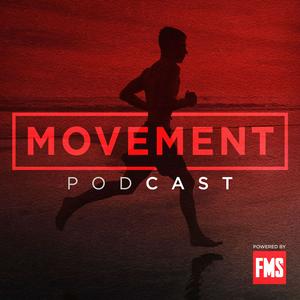
Human movement is complex, fascinating, and affects us all. Our hosts, Gray Cook and Dr. Lee Burton, have dedicated their lives to understanding movement and have trained thousands of fitness and healthcare professionals worldwide with their holistic philosophy and approach. Listen as they discuss topics, speak with other industry experts, answer questions & give practical advice on how you can optimize the human body to be the best it can be.
Podcast websiteListen to Movement Podcast, Mind Pump: Raw Fitness Truth and many other podcasts from around the world with the radio.net app
Get the free radio.net app
- Stations and podcasts to bookmark
- Stream via Wi-Fi or Bluetooth
- Supports Carplay & Android Auto
- Many other app features
Get the free radio.net app
- Stations and podcasts to bookmark
- Stream via Wi-Fi or Bluetooth
- Supports Carplay & Android Auto
- Many other app features

Movement Podcast
Scan code,
download the app,
start listening.
download the app,
start listening.
 Ireland
