

Listen to this podcast in the app for free: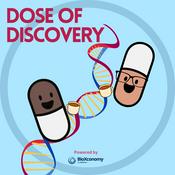 Download for free in the App Store
radio.net
Sleep timer
Save favourites
7 episodes
‘Nobody Called’: Katalin Karikó on the mRNA breakthrough that changed medicine
23/09/2026 | 1h 13 mins.Decades of curiosity and determination helped Katalin Karikó turn overlooked research into a technology that changed the course of a pandemic. The mRNA pioneer and Nobel laureate joins Søren and AJ to discuss how she navigated demotion and threats of deportation to find peace and joy in the lab.
Kati grew up in Hungary before leaving with her family to start a new life in the US – smuggling money hidden in her daughter’s teddy bear as she left.
She faced a language barrier and intense career headwinds upon arrival in the States. Then, one day, a serendipitous encounter with Drew Weissman at a photocopier triggered a collaboration that would lead to one of medicine’s biggest breakthroughs and the 2023 Nobel Prize in Physiology or Medicine.
Kati talks about rejected grants, losing academic positions, and finding a new home for her research at BioNTech. She reflects on what it was like receiving the phone call confirming the COVID-19 vaccine worked. Søren and AJ reflect on the myriad uses for mRNA tech beyond vaccines and Kati explains why scientists need to get better at talking about what they do to prevent misinformation from filling the gaps.
In this episode
04:18 – Explainer: What is mRNA and why does it matter?
09:04 – Nourishing a thirst for science in Hungary
15:20 – How Kati found her way into RNA research
16:53 – Leaving Hungary and starting again in the US
24:08 – Facing unemployment and the threat of deportation
29:01 – Meeting Drew Weissman at the photocopier
36:34 – “Nobody was interested”: when a breakthrough goes unnoticed
38:54 – Losing her position at Penn and finding a way forward
44:16 – Founding RNARx and the trouble with university patents
48:49 – Finding a new home for mRNA research at BioNTech
51:03 – The call that confirmed the COVID vaccine worked
52:49 – What could mRNA do beyond vaccines?
55:24 – Why scientists need to explain their work
60:01 – Being an immigrant and a woman in science
63:38 – Learning to handle setbacks and keep going
65:46 – Wrap-up and key takeaways
71:11 – Season one reflections
About the guest
Katalin Karikó is a biochemist whose pioneering work with Drew Weissman helped make mRNA vaccines and therapeutics possible. After decades working on the technology in academic labs and later at BioNTech, Kati was awarded the 2023 Nobel Prize in Physiology or Medicine alongside Weissman. She is currently a professor at the University of Szeged and an adjunct professor at the University of Pennsylvania.
Dose of Discovery is cohosted by Søren Hough and Ayokunmi Ajetunmobi (AJ) and produced by Suze Cooper.
Read more
From not likely to Nobel Prize: mRNA’s rise to fame by Millie Nelson (BioProcess Insider)
‘Absolutely horrified’: Experts reject HHS officials’ disparagement of mRNA technology by Søren Hough
Improving parenthood chances with endometrium-targeted mRNA by Millie Hoe
AI-designed, bespoke mRNA therapy reduces melanoma recurrence, metastasis, and death by Søren Hough
Transcript in the machine: How AI paved the way for customized mRNA cancer treatments by Søren Hough
mRNA HIV vaccine clears hurdles in proof-of-concept clinical trials by Søren Hough
You can find a fully annotated transcript of the episode here.
Hosted on Acast. See acast.com/privacy for more information.Snail Chemistry: Anne Conibear on how small changes reshape peptide and protein biology
26/08/2026 | 54 mins.What can cone snail venom teach us about peptides and new medicines?
Anne Conibear joins Søren and AJ to explain how small chemical changes can affect protein and peptide behavior in the cell.
A lockdown project investigating cone snail venom gave Anne the opportunity to explore how these slow-moving predators use potent peptide toxins to paralyze their prey and how small modifications can make those toxins even more effective.
She also discusses how scientists build and study proteins in the lab and how understanding post-translational changes could eventually help develop more targeted medicines.
Anne reflects on a career that has taken her from South Africa to Australia and Europe and what she’s learned from working in different research cultures. The discussion moves into the different priorities of academia and industry, how teaching has helped shape Anne’s career, and what the future might hold for peptide medicines.
In this episode
02:40 – Explainer: What are peptides and GLP-1s?
07:25 – How Anne got into peptide research
08:00 – What is NMR?
12:57 – The chemical changes that alter how proteins behave
16:23 – In the lab: peptides as a tool and subject of study
18:43 – Anne’s journey from South Africa to Australia and Europe
25:38 – Moving between academia and industry
32:06 – Impacting science through teaching
33:51 – Wherein lockdown leads to a cone snail venom project
36:47 – How chemical changes make snail toxins more potent
40:31 – What does HMGN1 do and why study it?
44:09 – The effect of post-translational modification on HMGN1
49:08 – Wrap-up and key takeaways
About the guest
Anne Conibear is an assistant professor at the Institute of Applied Synthetic Chemistry at the Technical University of Vienna (TU Wien). Her research combines peptide chemistry and structural biology to understand how proteins are modified after they’re made and how those changes affect their behavior. Her work has touched on everything from improving our understanding of cone snail venom to proteins involved in DNA packing in the cell.
Dose of Discovery is cohosted by Søren Hough and Ayokunmi Ajetunmobi (AJ) and produced by Suze Cooper.
Read more
Making peptides a ‘staple’ of cancer treatment by Søren Hough (Interview with Peter ‘t Hart, Part 1)
AI-designed peptides 'blew minds' of researchers, says professor by Søren Hough (Interview with Peter ‘t Hart, Part 2)
The pharma industry finally believes in peptides, says leading professor by Nnenna Ohaka (Interview with David Craik)
An academic’s journey into peptide therapeutics by Søren Hough (Interview with Nathalie Grob)
GLP-1s forced industry’s hand on sustainable peptide synthesis, says expert by Søren Hough (Interview with Fernando Albericio about green synthesis)
You can find a fully annotated transcript of the episode here.
Hosted on Acast. See acast.com/privacy for more information.CRISPR’s 'Wild West': Erik Sontheimer on the evolution of genome editing
29/07/2026 | 1h 3 mins.CRISPR pioneer Erik Sontheimer joins hosts Søren and AJ to discuss how curiosity-driven research revealed a powerful genome editing technology.
Their conversation looks at the landmark research that revealed how CRISPR could target DNA and the scientific discoveries that have turned it into a revolutionary research tool. Erik looks back at the “Wild West” years of early CRISPR research, the unexpected discoveries that pushed the field forward, and his decision to co-found Intellia Therapeutics.
He also explains how genome editing is progressing from so-called “genome vandalism” towards increasingly precise technologies, including base editing, prime editing, and prime assembly, allowing it to move into the clinic. Erik also considers the ethical boundaries of genome editing and the importance of scientists taking part in wider conversations about how these technologies should be used.
In this episode
03:38 – Explainer: What is CRISPR?
06:36 – The 2008 paper that hinted at CRISPR’s potential
10:55 – How Erik started working on CRISPR
18:50 – The “Wild West” of early CRISPR research
26:57 – Career moves and finding two academic posts
32:51 – Co-founding Intellia Therapeutics
41:36 – Has CRISPR lived up to the hype?
44:38 – From gene cutting to precision editing
46:24 – Base editing, prime editing and prime assembly
51:05 – The ethics of genome editing
56:04 – Wrap-up and key takeaways
About the guest
Erik Sontheimer is the Pillar Chair in Biomedical Research and Professor at UMass Chan Medical School and Vice Chair of the RNA Therapeutics Institute. His early research helped show CRISPR could target DNA, an important step towards its use as a genome editing tool. He later co-founded Intellia Therapeutics and, alongside his academic work, advises other companies working on new approaches to genome editing.
Dose of Discovery is cohosted by Søren Hough and Ayokunmi Ajetunmobi (AJ) and produced by Suze Cooper.
Read more
CRISPR Timeline by the Broad Institute
Rewriting the genome with DNA polymerase editing by Søren Hough (Coverage of Erik Sontheimer's work)
‘Jumping genes’ may hold secret to new forms of genome editing by Søren Hough
Polymerase editing ‘clicks’ together in trailblazing study by Søren Hough
Infant treated with first in vivo CRISPR therapy by Nnenna Ohaka
‘Baby KJ’ CRISPR treatment was just the beginning by Søren Hough
Fixing what isn’t broken: CRISPR’s potential to erase biocultural diversity by Søren Hough (CRISPR ethics)
The Future of CRISPR Applications in the Lab, the Clinic and Society by Søren Hough & Ayokunmi Ajetunmobi (CRISPR ethics)
A CRISPR Moratorium Isn't Enough: We Need a Boycott by Søren Hough & Ayokunmi Ajetunmobi (CRISPR ethics)
Read more at Bioxconomy, sign up to our newsletter, and don’t forget to check out our upcoming events.
You can find a fully annotated transcript of the episode here.
Hosted on Acast. See acast.com/privacy for more information.Making the Medicine: Cheng Yi Chen on Scaling Drugs from Lab to Launch
24/06/2026 | 51 mins.It may seem obvious, but not all drugs are manufacturable. Getting an exciting new treatment from the lab to patients is only possible if the molecule or substance itself is scalable.
In this episode of Dose of Discovery, hosts Søren and AJ speak to Cheng Yi Chen, chief technology officer at Asymchem, about the chemistry, scaling up, and decision making behind moving a drug from clinical trials to commercial supply.
Cheng Yi shares the story of cancer drug adagrasib and the urgent supply challenge he faced at Mirati Therapeutics, when the original process couldn’t generate enough of the drug to support clinical trials.
Their conversation then turns to the broader world of process chemistry: how process routes are designed, the regulatory pathways they must follow, and sustainability issues they face.
They also discuss flow chemistry, continuous manufacturing, and why CDMOs play such an important role in helping new medicines reach patients – especially when it comes to dealing with regulators.
In this episode:
03:48 – Explainer: What are CDMOs?
06:50 – Introducing Cheng Yi Chen
07:09 – The adagrasib supply challenge at Mirati
11:19 – How process chemistry enables clinical progress
16:57 – Moving between big pharma, biotech, and CDMOs work
27:06 – Peptides, oligos, and the rise of TIDES manufacturing
30:44 – Green chemistry, solvents, and cost-effective production
36:56 – Flow chemistry and continuous manufacturing
44:50 – Creating a manufacturing story for regulators
39:48 – China’s growing role in biotech innovation
47:57 – Wrap-up and key takeaways
About the guest
Cheng Yi Chen is the chief technology officer at Asymchem. He has held senior process chemistry and drug development roles across Merck, Janssen, Mirati Therapeutics, and Bristol Myers Squibb. His work focuses on developing and manufacturing drug substances and products at scale.
Dose of Discovery is cohosted by Søren Hough and Ayokunmi Ajetunmobi (AJ) and produced by Suze Cooper.
LINKS:
GLP-1s forced industry’s hand on sustainable peptide synthesis, says expert by Søren Hough (Interview with Fernando Albericio)
Enzymes open the door for simpler, more efficient oligo therapeutic synthesis by Søren Hough
Adaptable manufacturing platforms enable in vivo mRNA-LNP delivery by Søren Hough
Industry pioneers solve the ‘three-body problem’ of RNA synthesis by Søren Hough
Eli Lilly’s Michael Kopach says retatrutide leads in obesity treatment and CMC innovation by Søren Hough
Read more at Bioxconomy, sign up to our newsletter, and don’t forget to check out our upcoming events.
You can find a fully annotated transcript of the episode here.
Hosted on Acast. See acast.com/privacy for more information.Genetic Mechanic: Stanley Crooke on Fixing Nano-Rare Disease with Oligos
27/05/2026 | 58 mins.In this episode of Dose of Discovery, hosts Søren and AJ speak to physician-scientist Stanley Crooke, CEO of the nonprofit n-Lorem Foundation, about how antisense oligonucleotide (ASO) technology has evolved into a revolutionary therapeutic modality.
Their conversation explores Stan's expansive career journey, from his early days building cancer programs at Bristol Labs and SmithKline to his bold decision to launch Ionis in 1989 when the industry doubted ASO technology.
Stan discusses the emotional rollercoaster of biotech drug development, the inefficiencies of traditional small molecule discovery, and what led him to establish the n-Lorem Foundation.
He shares how the regulatory frontiers of treating nano-rare genetic conditions “for free, for life” are changing rapidly and why innovations like patient-derived stem cells are driving drug development forward, one patient at a time.
In this episode:
03:41 – Explainer: What are ASOs?
06:50 – Stanley Crooke’s journey and his journey into biomedicine
10:31 – Frustrations with big pharma, founding Ionis
15:05 – Trailblazing on ASO medicinal chemistry
19:33 – Building company culture amid clinical failure
22:56 – Spinraza (nusinersen) and the economics of drug pricing
28:08 – Launching the n-Lorem Foundation for nano-rare diseases
30:57 – “Free for life” ASO therapies
36:55 – Impact on n-Lorem’s patients
39:36 – “Everything we thought we knew about developmental delay is wrong.”
34:58 – Redefining traditional diseases n-of-1 trial success
26:12 – “Just tell me what the cause is. I'll fix it.”
37:22 – 90% success rate for n-of-1 work
45:08 – Moving beyond animal models with patient-derived iPSCs
52:23 – Biology is shifting industry toward platforms
55:55 – Wrap up and key takeaways
About the guest
Physician-scientist Stanley Crooke, founder of Ionis Pharmaceuticals, and founder, chairman, and CEO of the n-Lorem Foundation. Widely regarded as a pioneer of antisense medicine, he helped lead the development and commercialization of the first approved ASO therapies. Today, his work through nonprofit organization the n-Lorem Foundation focuses on creating and providing bespoke ASO treatments to patients suffering from nano-rare genetic conditions (affecting fewer than 30 people worldwide) for free, for life. Crooke studied pharmacy at Butler University and went on to earn his MD and PhD at Baylor College of Medicine.
https://www.nlorem.org/wp-content/uploads/2023/08/Stanley-T.-Crooke-M.D.-Ph.D.-Bio.pdf
Dose of Discovery is cohosted by Søren Hough and Ayokunmi Ajetunmobi (AJ) and produced by Suze Cooper.
LINKS:
Kinds of KANDness: Battling nano-rare disease with oligos by Søren Hough
Therapeutic oligos for no profit: A discussion with n-Lorem by Søren Hough
‘For free, for life’: n-Lorem carves path for bespoke treatment by Søren Hough
Deep brain penetration by oligos enables Alzheimer’s, Parkinson’s treatment by Søren Hough (ASO treatment for neurodegeneration)
Oligo-based therapies lead charge against prion disease by Nnenna Ohaka (Getting ASOs into the brain)
Phosphorothioate antisense oligonucleotide induced innate immune activation is attenuated by tryptophan oxidation products (Making safe ASOs by Crooke and colleagues)
Establishing a commercial solution for extremely rare genetic diseases (Commercializing ASOs for rare disease by Crooke & Lo)
Read more at Bioxconomy, sign up to our newsletter, and don’t forget to check out our upcoming events.
You can find a fully annotated transcript of the episode here.
Hosted on Acast. See acast.com/privacy for more information.
More Health & Wellness podcasts


Trending Health & Wellness podcasts










About Dose of Discovery
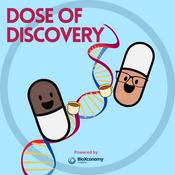
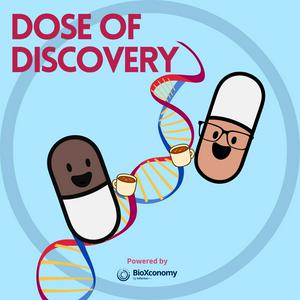
Dose of Discovery is BioXconomy's monthly science podcast about the ideas, research, and people shaping modern biomedicine.Hosts AJ and Søren bring their scientific training to make sense of biomedical discovery for listeners. The show brings thoughtful, accessible conversations to subjects that often feel closed off or over-complicated.Each month, they sit down with leading scientists to explore research shaping oligo therapeutics, mRNA technology, and advanced therapies, and more, tracing how those ideas move from research toward real-world impact.For biotech professionals, researchers, and curious listeners, Dose of Discovery offers smart, grounded science conversation with a warm over-coffee feel. Be sure to check out BioXconomy for more deep-dive conversations about the latest in biomedical research. Hosted on Acast. See acast.com/privacy for more information.
Podcast websiteListen to Dose of Discovery, On Purpose with Jay Shetty and many other podcasts from around the world with the radio.net app
Get the free radio.net app
- Stations and podcasts to bookmark
- Stream via Wi-Fi or Bluetooth
- Supports Carplay & Android Auto
- Many other app features
Get the free radio.net app
- Stations and podcasts to bookmark
- Stream via Wi-Fi or Bluetooth
- Supports Carplay & Android Auto
- Many other app features

Dose of Discovery
Scan code,
download the app,
start listening.
download the app,
start listening.
 Ireland